Xi’an Muslim Street Food: Local’s Complete Guide
- Why Is the Food on Xi'an Muslim Street So Unique?
- Top 10 Must-Try Dishes on Xi'an Muslim Street Food: Ranked by Popularity
- 1. Yangrou Paomo—Shaanxi’s Number One Signature Dish
- 2. Dried Beef Rou Jia Mo—The King of Xi'an Muslim Street Food
- 3. Liangpi—The Perfect Refreshing Summer Treat
- 4. Biangbiang Noodles—A Name More Legendary Than the Taste
- 5. Hulatang (Pepper Beef Ball Soup) — An Authentic Xi'an Muslim Food Breakfast
- 6. Suan Tang Shui Jiao—A Unique Way to Enjoy Xi'an Dumplings
- 7. Zeng Gao—A Childhood Treat for Xi'an Locals
- 8. Jing Gao—A Sweet Companion for Shopping Trips
- 9. Skewered Meat—The Soul of Hui Muslim Street Food Night Market
- 10. Soup Dumplings—The Ultimate Temptation of Thin Dough and Generous Fillings
- Practical Information
Xi’an Muslim Street Food is a culinary must-visit for every tourist coming to Xi’an.
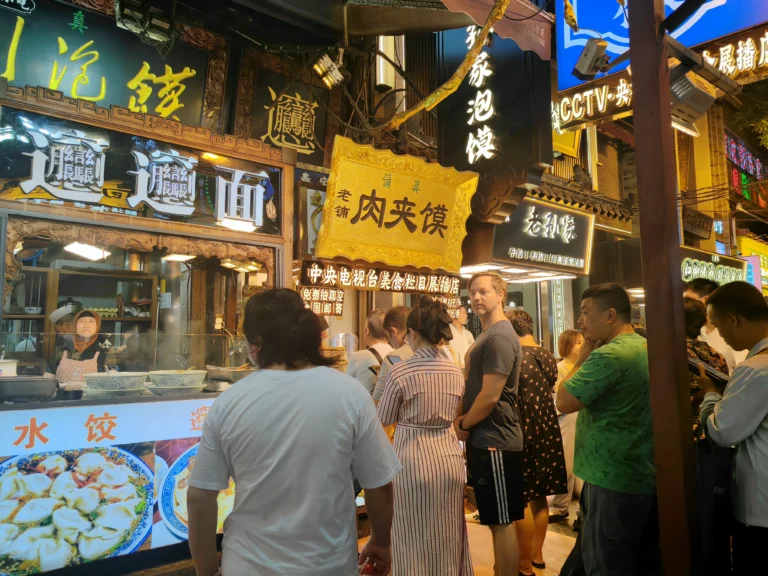
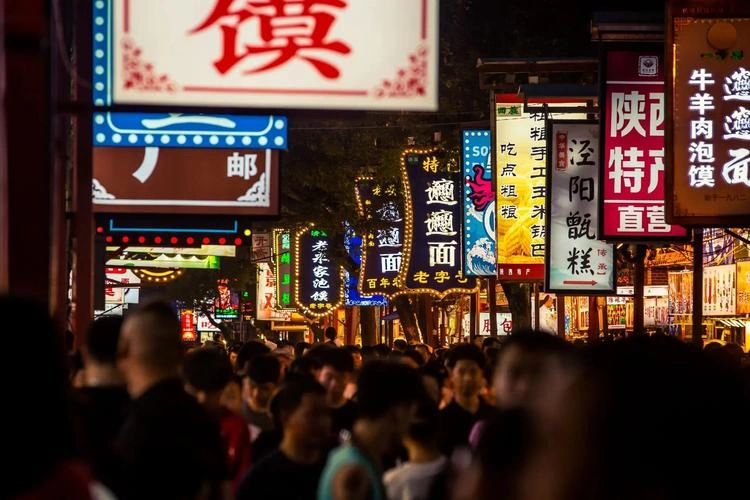
Walking down Beiyuanmen Street, the air is filled with the aroma of cumin from grilled meat, the sweetness of glutinous rice from steamed rice cakes, and the rich, savory scent of paomo and mutton soup—a fragrance that has drifted here all the way from the Tang Dynasty. The street’s actual name is “Hui Fang,” though locals call it “Fang Shang.” It is not merely a food street but a cultural microcosm of the Central Asian Muslim merchants who have put down roots in Chang’an for 1,300 years. Today, Xi’an Muslim Street offers nearly 300 varieties of specialty snacks, making it the most representative hub for halal cuisine in Northern China. Whether you’re coming specifically for the paomo or plan to eat your way from one end of the street to the other, this guide will help you pinpoint the best spots and steer clear of the pitfalls.
Why Is the Food on Xi’an Muslim Street So Unique?
The fundamental reason for the uniqueness of the cuisine on Xi’an Muslim Street lies in its cultural heritage.
During the Tang Dynasty, Chang’an served as the eastern terminus of the Silk Road. Muslim merchants from Arabia, Persia, and Central Asia traveled along the trade routes to Chang’an, bringing with them the culture of halal cuisine—beef and lamb slaughtered and prepared on the spot, an emphasis on fresh ingredients, the prohibition of lard, and the use of sesame oil as a substitute. Halal cuisine emphasizes “purity,” which goes beyond mere hygiene to encompass a sense of religious purity. It is precisely for this reason that the beef and lamb snacks produced in the Xi’an Muslim Street are prepared with exceptional care, resulting in a distinct and unique flavor profile.
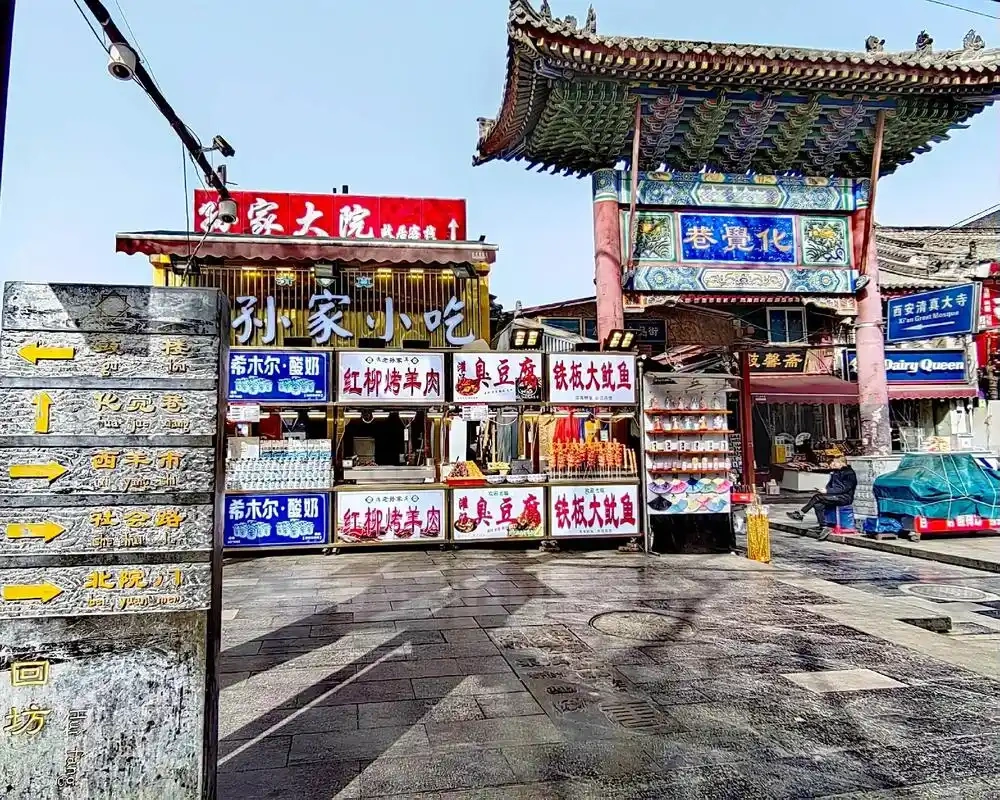
The Xi’an Muslim Street also features a unique “mosque-centered” layout—with the mosque at the core and residential areas radiating out from it. This layout, which has persisted since the Yuan Dynasty, has shaped the distinctive street pattern of Xi’an Muslim Street Food: Dapi Yard, Sajin Bridge, Xiyang Market… Each small street boasts its own signature flavors.
Top 10 Must-Try Dishes on Xi’an Muslim Street Food: Ranked by Popularity
1. Yangrou Paomo—Shaanxi’s Number One Signature Dish
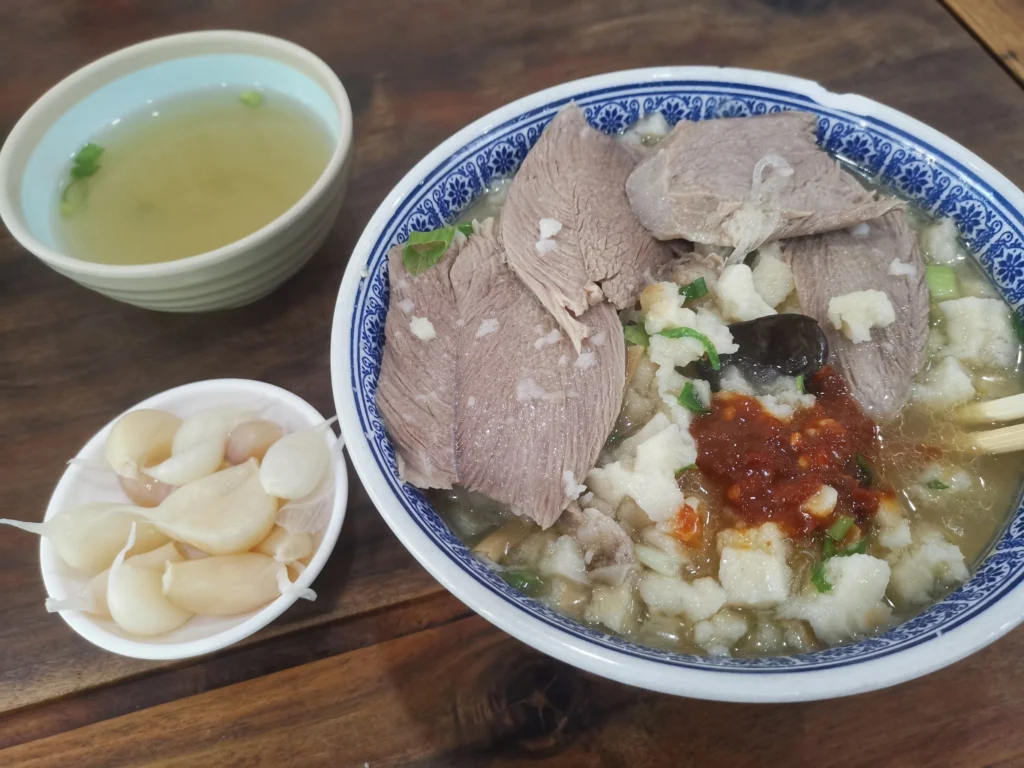
If there were only one dish to represent Xi’an’s cuisine, it would undoubtedly be Yangrou Paomo. With a history spanning over a thousand years, the renowned writer Jia Pingwa once described it as “the soul food of the Shaanxi people.”
There is an interesting custom when eating Yangrou Paomo: the server brings two flatbreads and a bowl of clear mutton broth, and the guest must tear the flatbread into small pieces the size of a fingernail—this process is called “breaking the bread” and is part of the Paomo culture. Locals enjoy chatting while tearing the bread, believing that bread torn by hand tastes better than machine-cut bread. Once torn, the bread is sent to the kitchen, where the broth is reheated and the pieces are simmered until they soak up the broth. The dish is then topped with slices of lamb and glass noodles, served with a small dish of pickled garlic. One bowl is enough to satisfy your appetite, offering a warm, savory, and filling meal. Enjoy a bowl in winter, and it will warm you from head to toe.
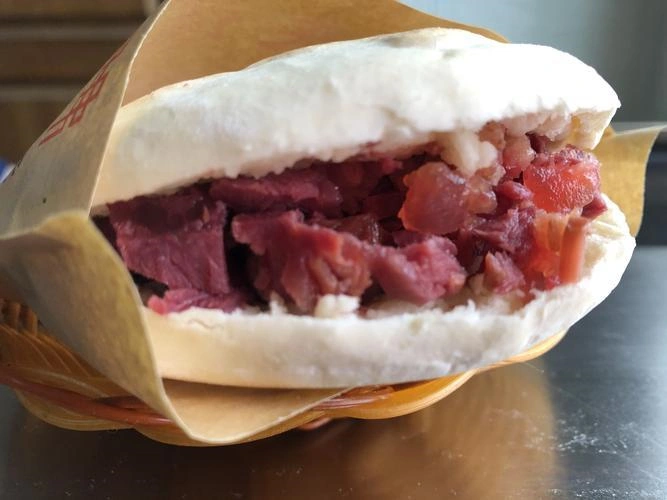
2. Dried Beef Rou Jia Mo—The King of Xi’an Muslim Street Food
The Xi’an Muslim Street version of Rou Jia Mo uses braised beef, which is more aromatic and chewy than the pork version. The Baiji bread is freshly baked, crispy on the outside and soft on the inside, while the braised beef is marbled with fat and melts in your mouth. When sandwiched together, each bite bursts with juices, offering a crispy and satisfying texture. Grab one from a street vendor, eat it on the go—this is the most authentic taste of Xi’an.
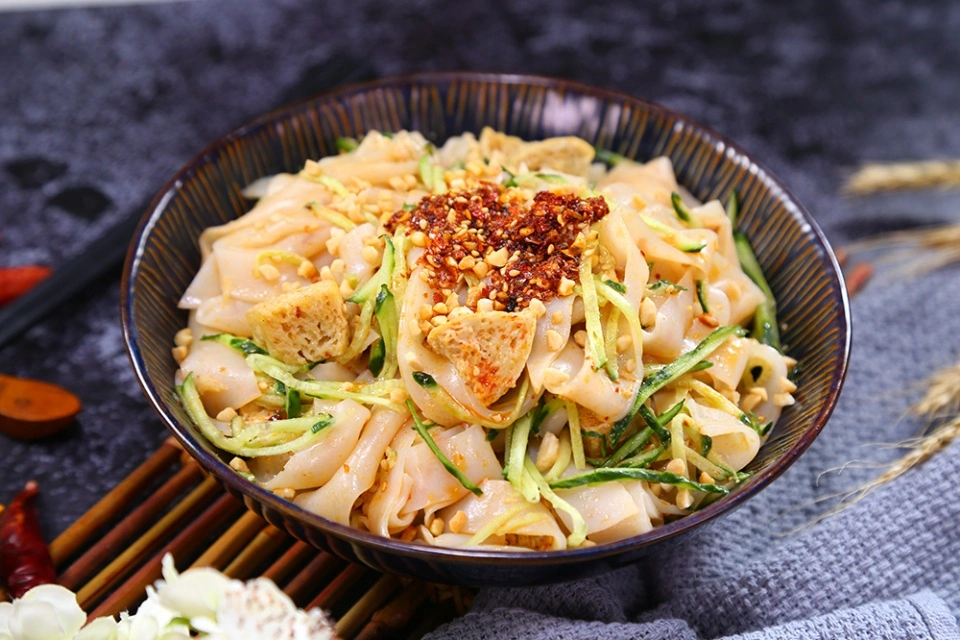
3. Liangpi—The Perfect Refreshing Summer Treat
Liang Pi is the most popular summer snack among Xi’an locals, and you can find it at almost every stall on Xi’an Muslim Street. It’s made by steaming rice batter, slicing it into wide strips, and mixing it with shredded cucumber and bean sprouts. The dish is then topped with chili oil, garlic water, and vinegar, resulting in a smooth, slightly spicy texture with a subtle rice aroma. For those who can’t handle spicy food, the sesame paste version is just as delicious.
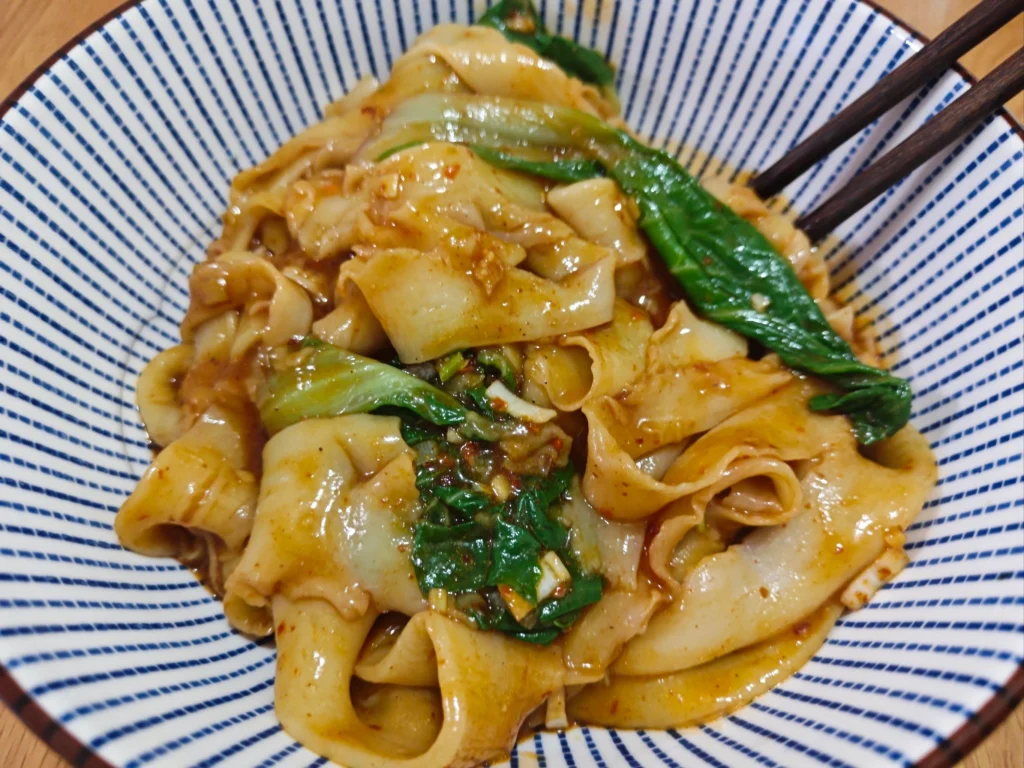
4. Biangbiang Noodles—A Name More Legendary Than the Taste
The character “Biang” has a total of 58 strokes, making it arguably the most complex character in the Chinese writing system. Its name comes from the “biang biang” sound made when the dough is slapped against the cutting board during the hand-rolling process. A bowl of Biangbiang Noodles features wide noodles floating in a rich meat broth, served with vegetables such as potatoes, Chinese cabbage, carrots, and dried tofu. The noodles should be firm and chewy, and the broth rich and aromatic. A splash of vinegar and chili oil adds a tangy, spicy kick that whets the appetite, leaving you feeling thoroughly satisfied after every bite.
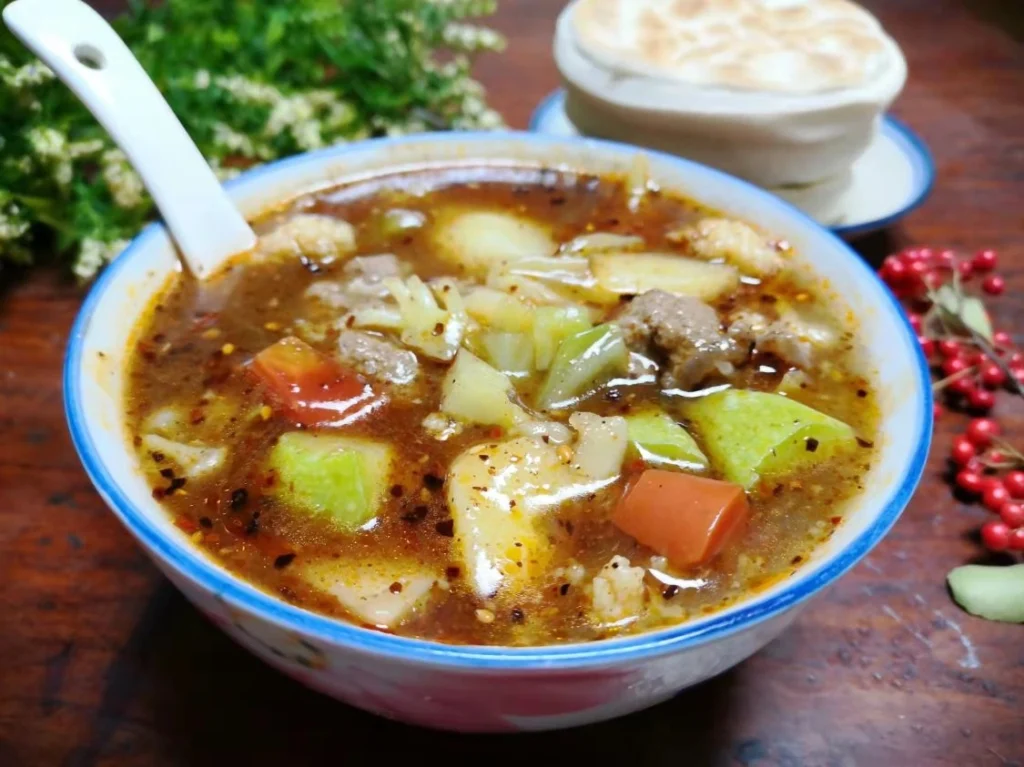
5. Hulatang (Pepper Beef Ball Soup) — An Authentic Xi’an Muslim Food Breakfast
Hulatang is a common sight in Xi’an’s Hui Quarter, where street vendors set up large pots and start selling early in the morning. The broth is made with plenty of starch, Sichuan peppercorns, and chili oil; the numbing sensation of the peppercorns and the spicy aroma of the chili hit your palate simultaneously—it can be a bit overwhelming the first time you try it. The soup contains a variety of ingredients, including handmade beef meatballs, napa cabbage, potatoes, and carrots. Hui people typically pair it with a roujiamo for breakfast, making it a particularly filling meal.
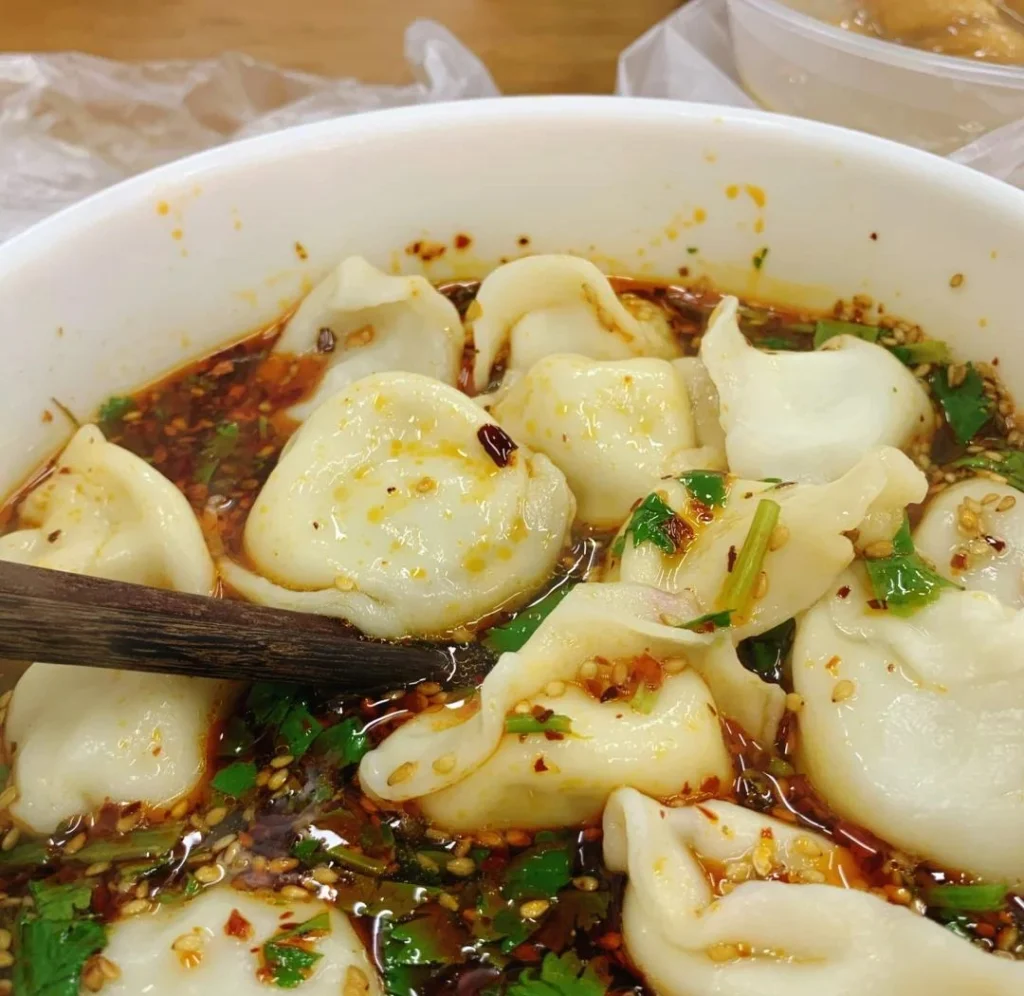
6. Suan Tang Shui Jiao—A Unique Way to Enjoy Xi’an Dumplings
Dumplings can be found all over China, but Xi’an’s Suan Tang Shui Jiao is truly one of a kind. The dumplings feature thin wrappers and generous fillings of beef mixed with vegetables, but the real star is the sour soup—made with a vinegar base and simmered with spices and Chinese herbs, resulting in a rich, tangy broth. When eating, you take a bite of both the dumpling and the soup together, experiencing a burst of sourness, aroma, umami, and heat. A bowl of this in winter warms you right through.
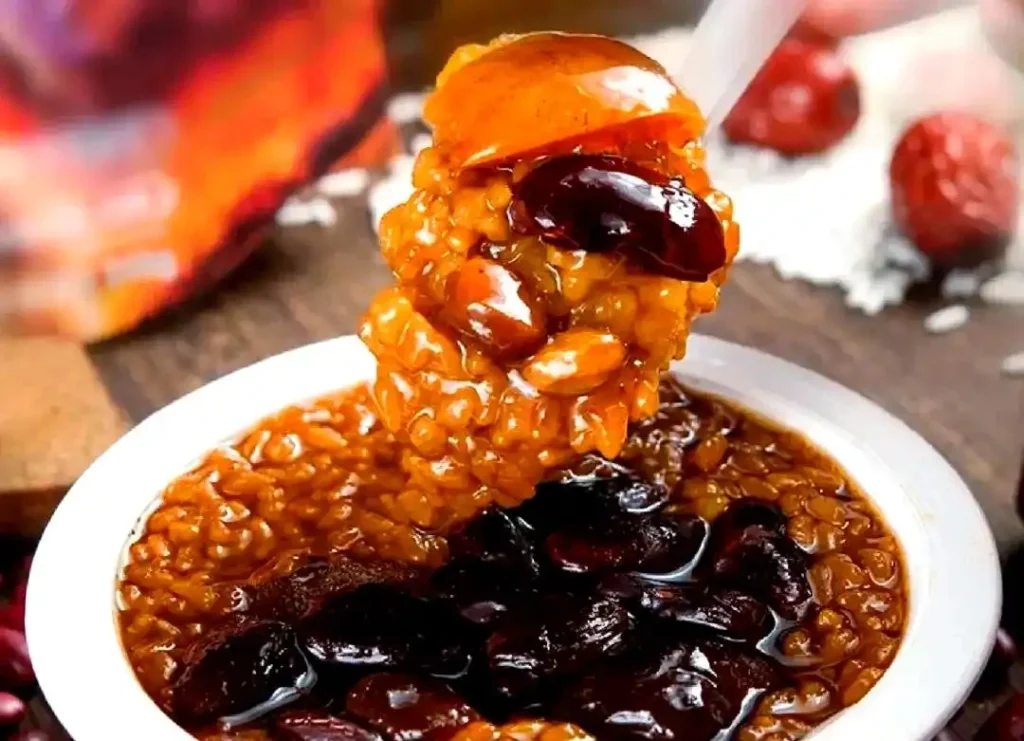
7. Zeng Gao—A Childhood Treat for Xi’an Locals
Zeng Gao is one of Xi’an’s oldest traditional snacks. Made by steaming glutinous rice and red dates, it has a golden color and a sweet, chewy texture. A “zeng” is an ancient steaming vessel; cakes steamed in this vessel have a particularly soft and chewy texture. The aroma of the red dates layered on top permeates the glutinous rice, creating a stack of alternating layers of red dates and glutinous rice. Aunts pushing carts selling Zeng Gao are a common sight on Xi’an Muslim Street, and at about 5 yuan per piece, it is the most affordable street dessert.
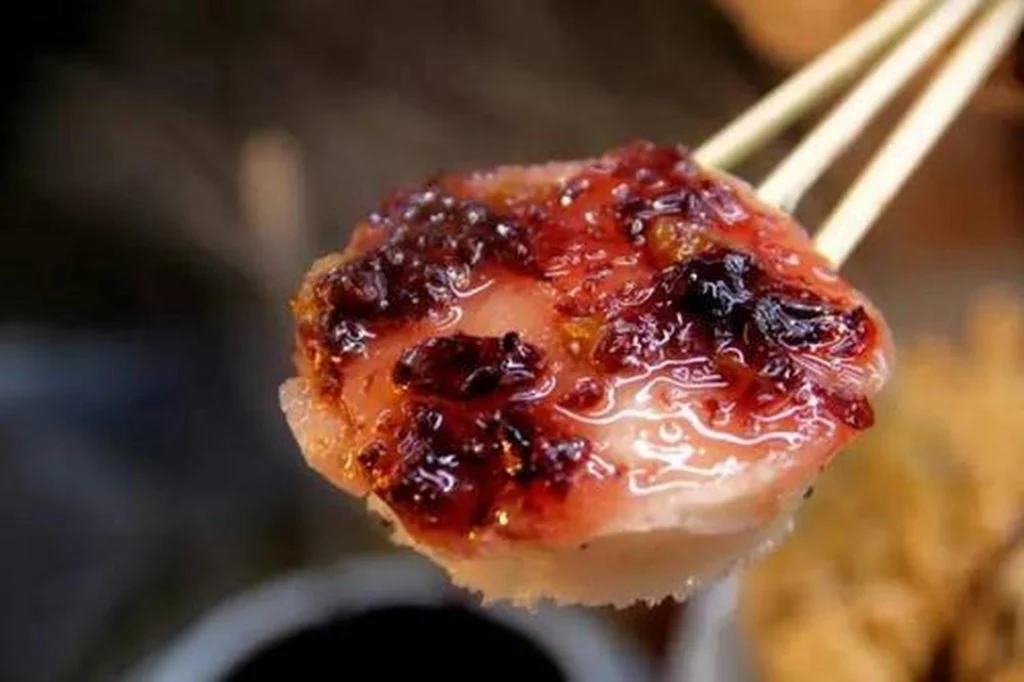
8. Jing Gao—A Sweet Companion for Shopping Trips
Jing Gao and Zeng Gao have similar names but are eaten slightly differently: after steaming, Jing Gao is cut into small round pieces and sprinkled with white sugar or soybean flour, or dipped in osmanthus syrup. With its soft, chewy texture and sweet flavor, along with its compact size, it’s perfect for eating on the go. Jing Gao is commonly found in Xi’an Muslim Street and the Yongxingfang Night Market, and it’s a childhood favorite among Xi’an locals.
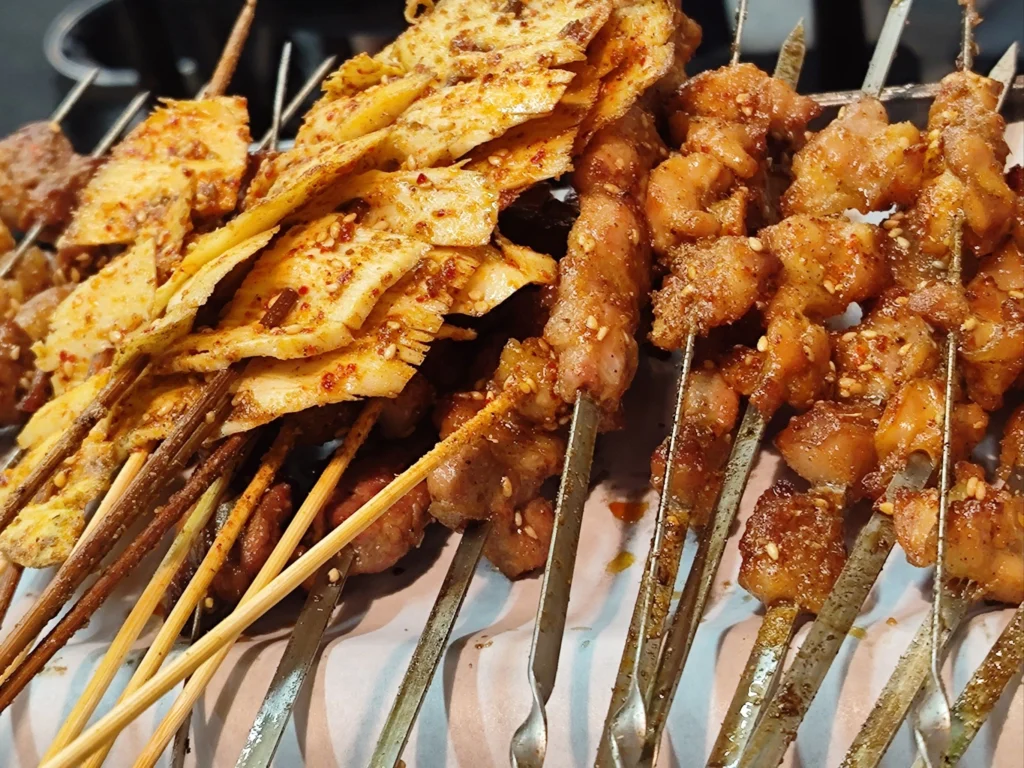
9. Skewered Meat—The Soul of Hui Muslim Street Food Night Market
The nights on Xi’an Muslim Street belong to skewered meat. There are two types of skewered meat in Xi’an: small metal skewers with small pieces of lamb that cook quickly and are eaten by the handful; and traditional large skewers made from red osier branches, which hold large chunks of lamb coated in chili powder and cumin and slow-roasted. The tenderness of the lamb blends with the aroma of the red osier, leaving you wanting another skewer as soon as you finish one.
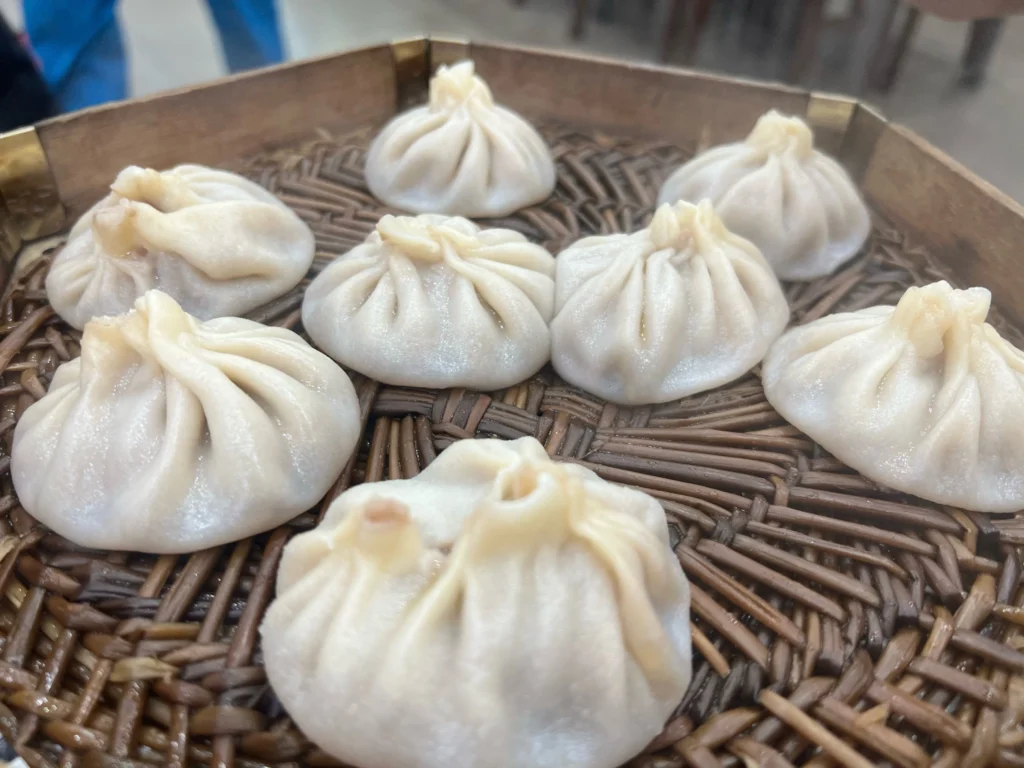
10. Soup Dumplings—The Ultimate Temptation of Thin Dough and Generous Fillings
Soup dumplings are the Xi’an snack that most tests a chef’s skill—the dough must be so thin it’s translucent, yet filled to the brim with broth. There’s a proper way to eat them: first take a small bite to sip the broth, then eat the dough and meat filling together—be careful not to burn your mouth. The most famous brand on Xi’an Muslim Street is Jia San Guan Tang Bao Zi, with branches in Xiyangshi and Beiyuanmen, where they’re freshly wrapped and steamed daily.
Practical Information
Directions
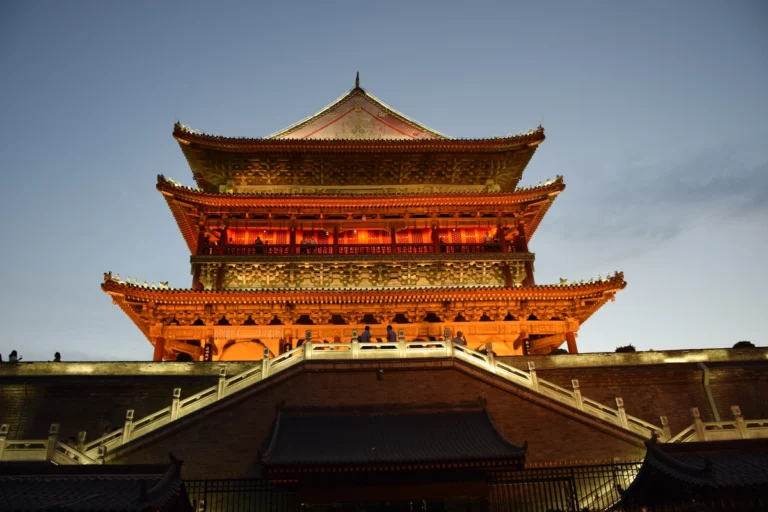
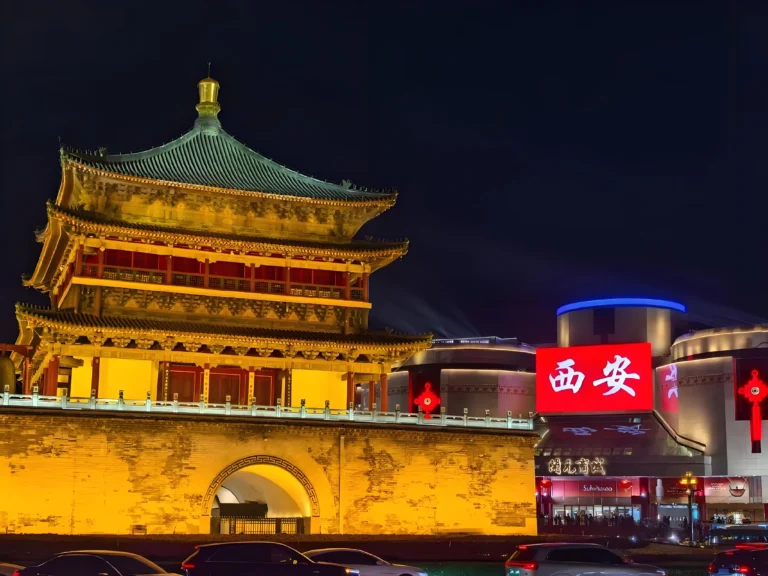
Xi’an Muslim Street is located in the center of Xi’an, north of the Bell Tower. The most convenient way to get there is to take Metro Line 2 to Bell Tower Station; exit at Exit C and walk about 5 minutes to the Beiyuanmen intersection. If taking a taxi, simply tell the driver to go to “Beiyuanmen” or “Xi’an Muslim Street.”
Opening Hours
The open-air street is accessible 24 hours a day. Most restaurants and eateries are open from 9:00 AM to 10:00 PM, while some barbecue stalls stay open until the early hours of the morning. To experience the lively atmosphere of the night market, we recommend arriving after 5:00 PM.
Suggested Visit Duration
It takes about 2–3 hours to explore the main thoroughfare of Xi’an Muslim Street. If you include the Huajue Alley Mosque and the Bell and Drum Tower Square, you can plan for a half-day visit.
Tips to Avoid Pitfalls
Spend your budget on food, not shopping. Xi’an Muslim Street is now fully commercialized, with souvenirs and local specialties priced on the high side; locals rarely buy souvenirs here. The best way to enjoy the experience is to save your time and money for the street food.
Han Chinese restaurants and halal restaurants are clearly distinct. When entering a halal restaurant, please respect dietary regulations and do not bring pork products inside.
Don’t be fooled by the long lines at trendy spots. Xi’an Muslim Street gets very crowded on weekends and holidays, and some places have long lines but only average quality. The shops recommended above are time-tested, market-proven establishments, so there’s no need to insist on going to the one with the longest line.
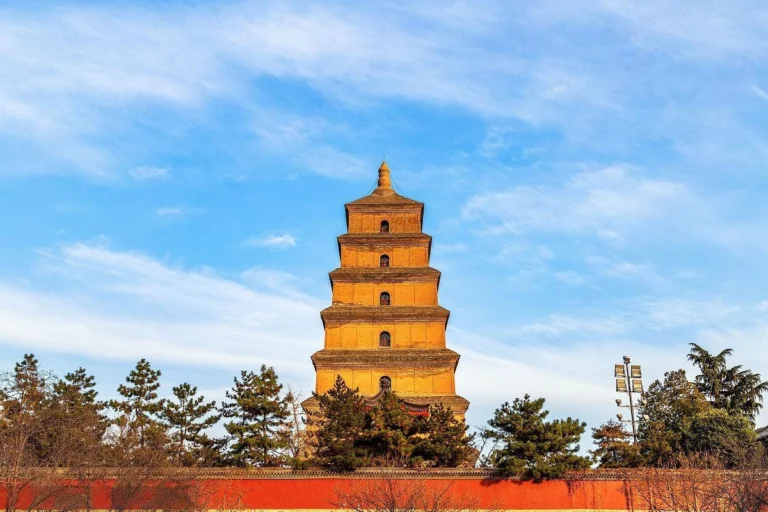
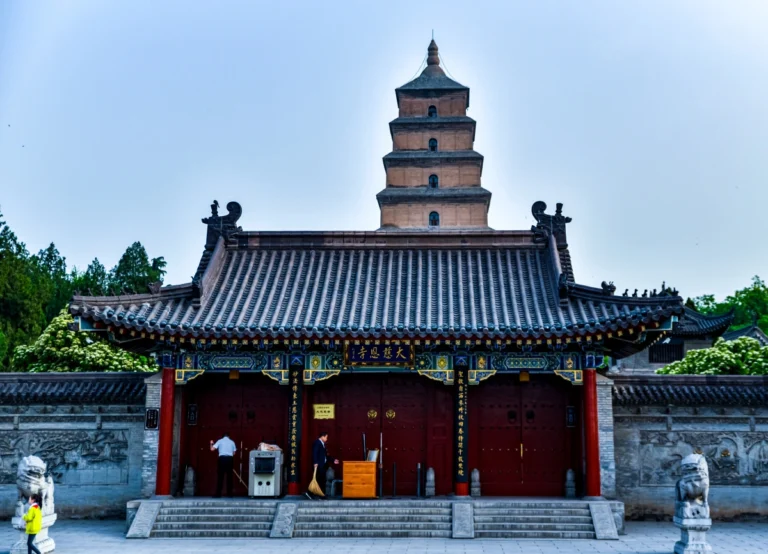
Xi’an’s Hui Muslim Street is not just a food street; it is a “museum of flavors” where Chinese and Western cultures have blended for 1,300 years. From the Silk Road of the Tang Dynasty to the bustling life of today, this culinary legacy has never been interrupted. Next time you visit Xi’an, don’t just focus on the Terracotta Army—set aside half a day to eat your way through the entire street. You’ll discover that half of Xi’an’s surprises are hidden right here.