Xi’an Famous Noodles Guide: 8 Must-Try Noodles with History & Where to Eat
- What Are Xi’an Famous Noodles? A Deep Dive into 8 Must-Try Bowls
- ① Biangbiang Noodles — The Boldness of “Belt-Wide” Noodles
- ② Xi’an Youpo Mian (Oil-Drizzled Noodles) — Pouring hot oil over them is the secret to success
- ③ Qishan Saozi Mian (Qishan Spicy Noodles) — Sour and Spicy Intangible Cultural Heritage
- ④ Xi’an Yangrou Paomo (Lamb Paomo) — Tear It Apart and Eat It Yourself
- ⑤ Xi’an Liang Pi (Cold Skin Noodles) — 2,000 Years of Refreshment
- ⑥ Yangling Zhan Shui Mian (Dipping Noodles) — Noodles and Soup Separated
- ⑦ Buckwheat Noodles & Ma Shi — Whole Grains and Home-Style Cuisine
- Where to Find Xi’an Famous Noodles? Three Streets Have You Covered
- The Silk Road Heritage of Xi’an Famous Noodles
Xi’an, the ancient capital of thirteen dynasties and the starting point of the Silk Road. Visitors come to Xi’an for the Terracotta Army and the ancient city walls, but what truly lingers in the memory is the aroma of noodles wafting through the streets and alleys. People in Xi’an could eat noodles for every meal of the day without ever getting tired of them. This guide to Xi’an famous noodles will tell you what makes each type special, where to find them, and the stories behind them. Only by mastering how to eat Xi’an famous noodles can you truly unlock the city’s carb code. When talking about Xi’an’famous noodles, you have to start with these eight bowls. Today’s guide to Xi’an famous noodles is just for you.
What Are Xi’an Famous Noodles? A Deep Dive into 8 Must-Try Bowls
This city, raised on wheat, has taken noodles to new heights. When it comes to Xi’an famous noodles, the following bowls are absolutely not to be missed. Biangbiang noodles and Youpo noodles are the mainstays, but the others are the locals’ everyday favorites.
① Biangbiang Noodles — The Boldness of “Belt-Wide” Noodles
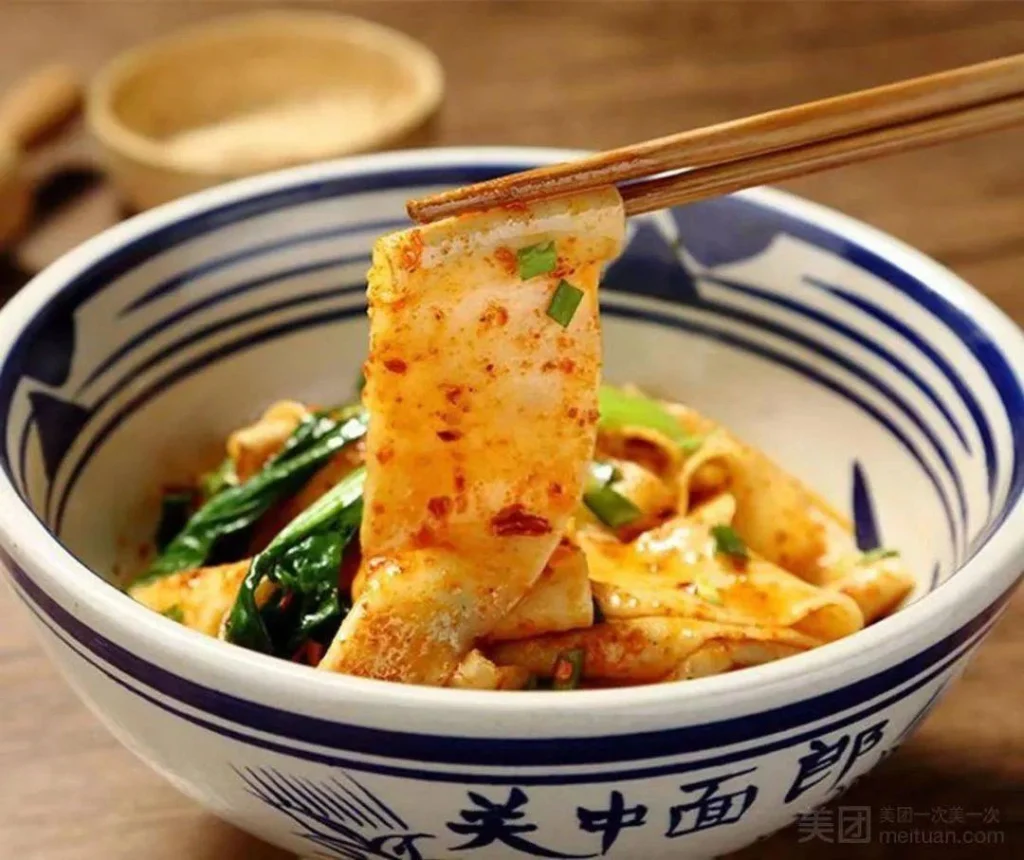
Biangbiang noodles are Xi’an’s number one claim to fame when it comes to noodles. The noodles are as wide as a belt, with just 3–5 strands per bowl, but each strand is nearly a meter long. The dough is slapped against the surface to produce a “biang biang” sound—hence the name. The width and thickness of biangbiang noodles allow them to hold more meat topping and chili oil. The character “biang” has 56 strokes, making it the character with the most strokes in the Chinese writing system. This dish was even served at a state banquet in 2014. The standard serving features a “three-in-one” combination: minced meat, tomatoes and eggs, and chili oil. When hot oil is poured over the noodles, it sizzles and fills the air with a fragrant aroma.
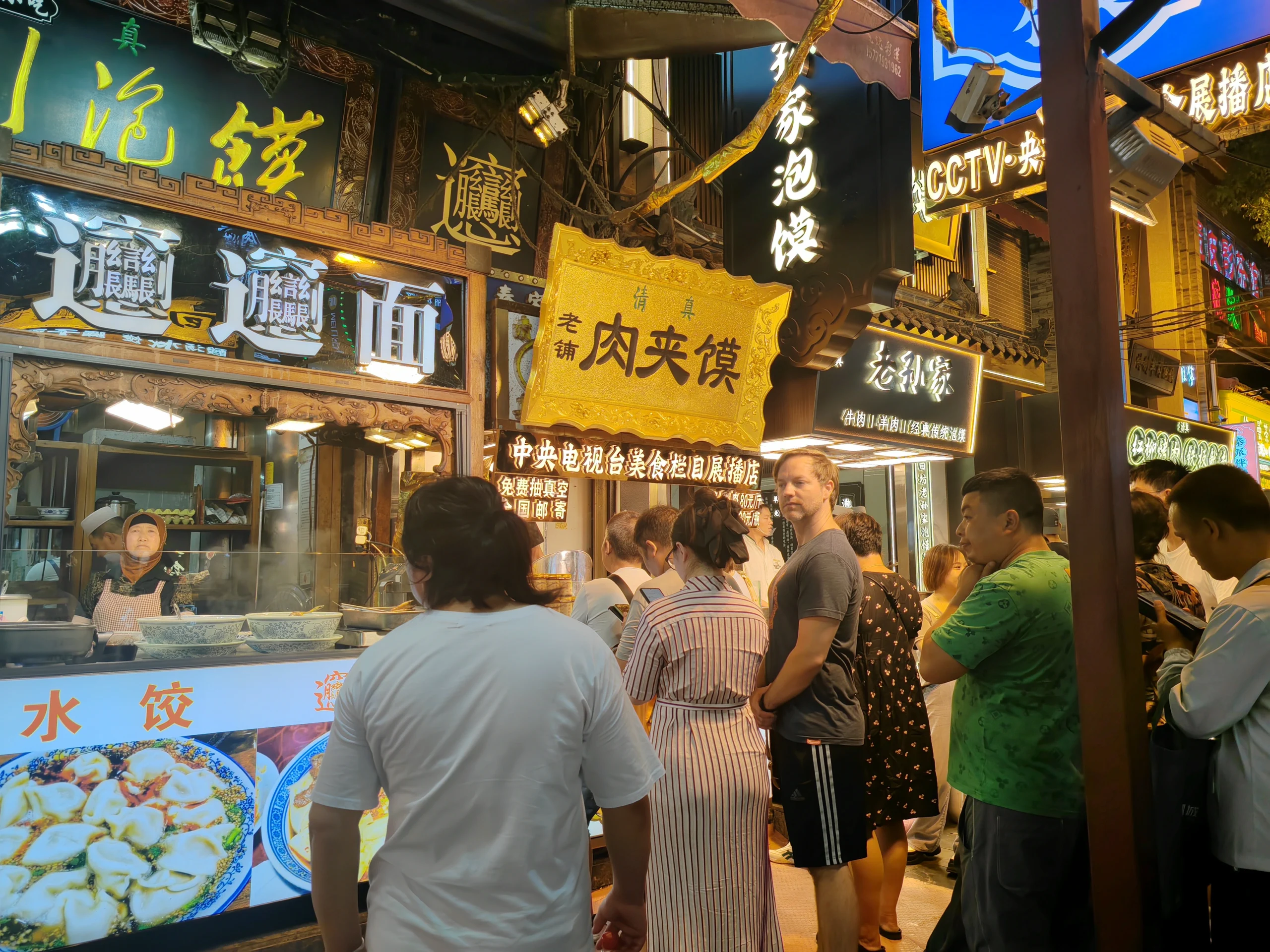
In the streets and alleys of Xi’an’s Muslim Quarter, biangbiang noodles are the most common specialty. When you go to the Muslim Quarter to find Xi’an Muslim Quarter noodles, you can’t go wrong by choosing a shop where someone is kneading the dough at the entrance. There are countless options for Xi’an Muslim Quarter noodles along the entire street, ranging from biangbiang to youpo mian. Where to eat: Biang Biang Noodle House, No. 88 Beiyuanmen.
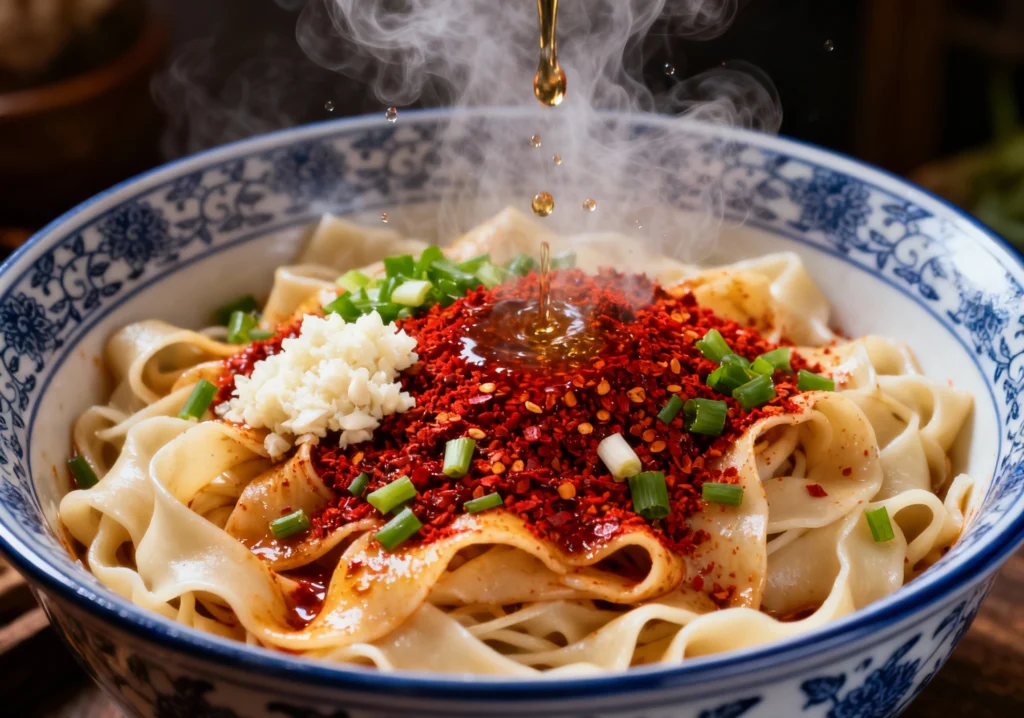
② Xi’an Youpo Mian (Oil-Drizzled Noodles) — Pouring hot oil over them is the secret to success
Xi’an youpo mian is the minimalist king of Xi’an’s noodle scene. Hand-pulled noodles are boiled, then topped with chili flakes, Sichuan pepper powder, minced garlic, and chopped scallions. A spoonful of smoking-hot rapeseed oil is poured over them—and the aroma explodes instantly. Once tossed, the noodles are chewy and smooth, coated in a savory, spicy red oil. From ordering to eating, Xi’an Youpo Mian takes no more than five minutes—its greatest appeal lies in its speed and satisfaction. Among Xi’an famous noodles, this bowl offers the best value for money. It’s safe to say that no other dish in Xi’an’s famous noodle repertoire can match Youpo Mian in its ability to create such an intense flavor using the simplest ingredients. Where to eat: You’ll find it at small roadside stalls on Sajinqiao Road and on the Yongxingfang Intangible Cultural Heritage Food Street.
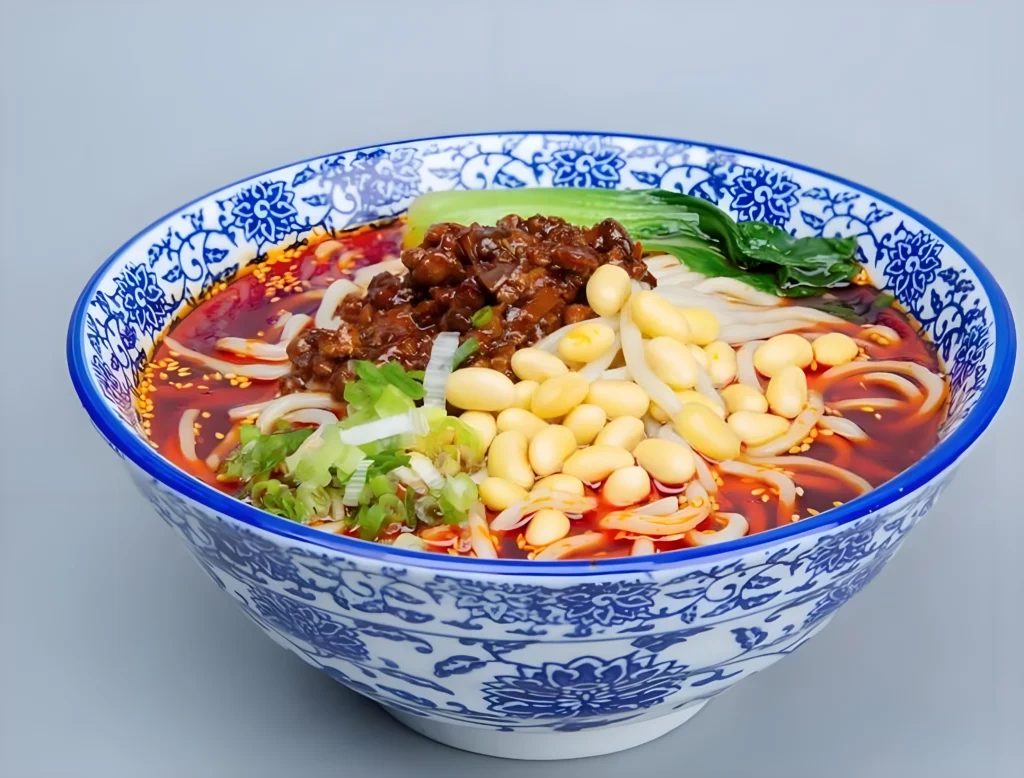
③ Qishan Saozi Mian (Qishan Spicy Noodles) — Sour and Spicy Intangible Cultural Heritage
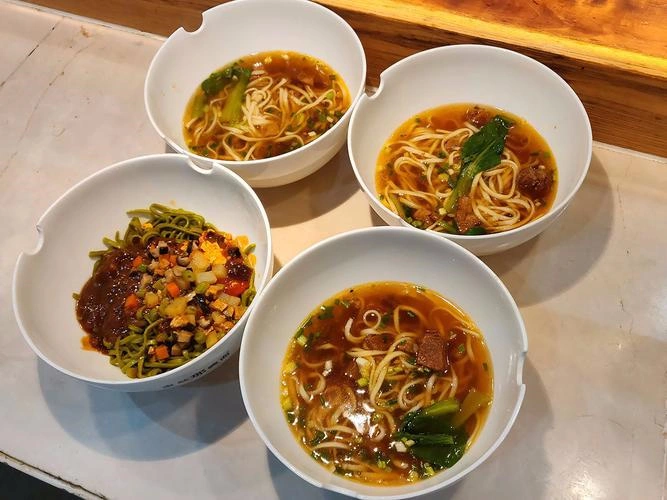
Xi’an saozi mian originated in Qishan and is a Shaanxi Intangible Cultural Heritage dish. An authentic bowl adheres to the nine-character mantra: “thin, chewy, glossy, sour, spicy, fragrant, pan-fried, and broth-rich.” The noodles are thin, delicate, and chewy, and the soul of the dish lies in the sour broth paired with a five-color topping—wood ear mushrooms, egg crepes, carrots, tofu, and Chinese chives. According to Shaanxi tradition, one eats only the noodles and does not drink the soup; the soup is returned to the pot to be reheated and infused with additional flavor. Some compare Xi’an saozi mian to a sour-and-spicy symphony in the world of noodles—once you try it, you’ll understand. Where to eat: Yongming Qishan Noodles is an authentic, time-honored establishment.
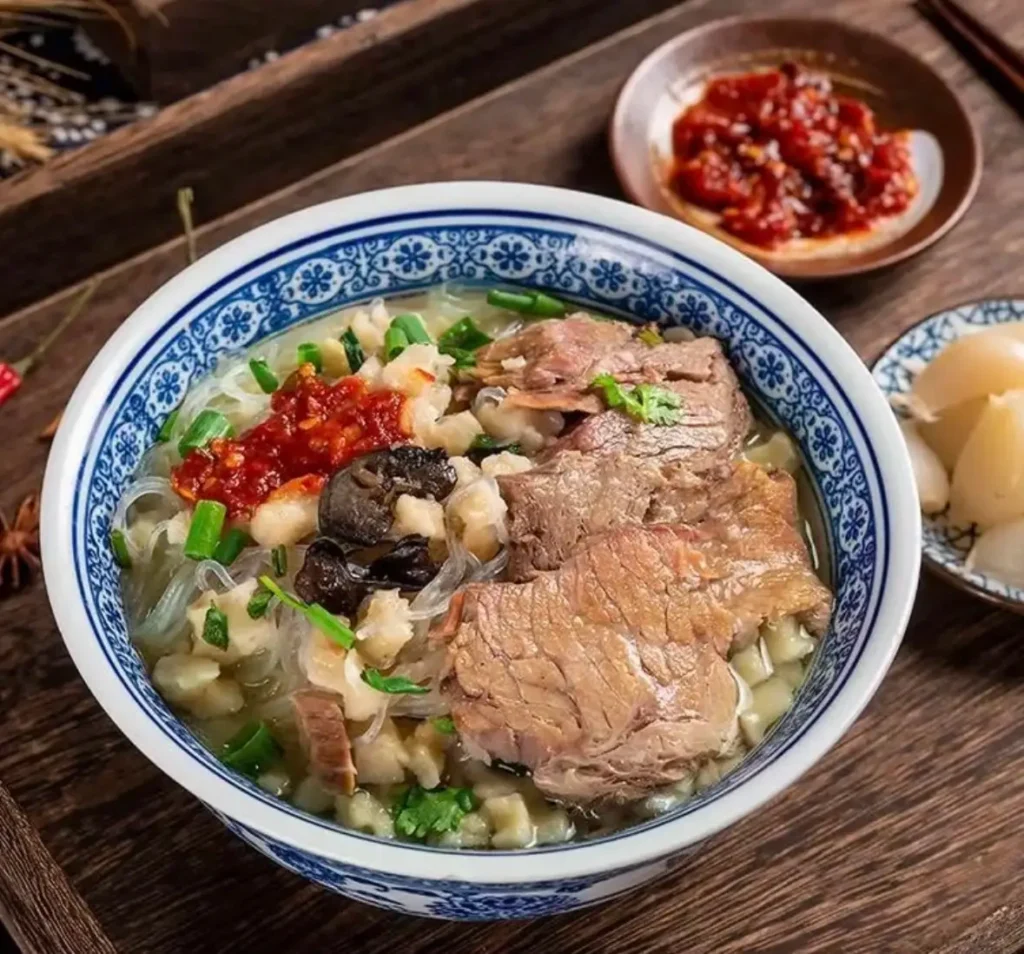
④ Xi’an Yangrou Paomo (Lamb Paomo) — Tear It Apart and Eat It Yourself
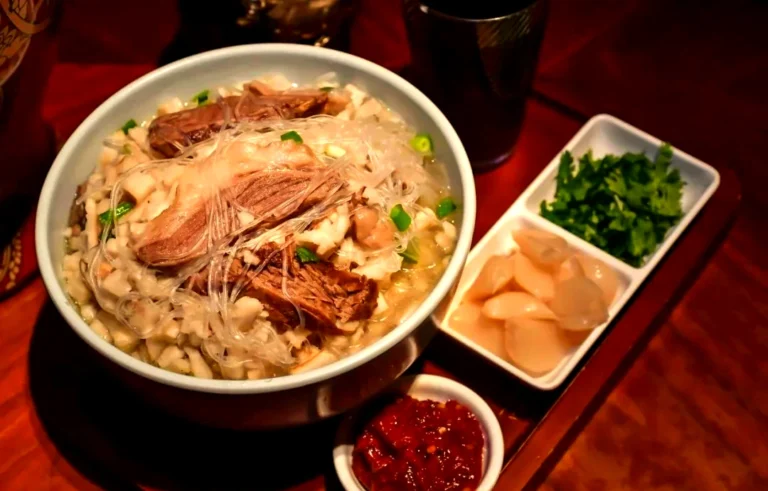
Strictly speaking, Xi’an yangrou paomo is made from bread, not noodles, but no guide to Xi’an cuisine would be complete without mentioning it. A flatbread made from unleavened dough is torn into soybean-sized pieces. The fun of Xi’an yangrou paomo lies in the process of tearing the bread—chatting while you tear it, then sending the pieces to the kitchen to be simmered in lamb broth, and finally served with sugar-pickled garlic and chili sauce. Where to eat: Lao Sun Jia and Tong Sheng Xiang are century-old establishments.
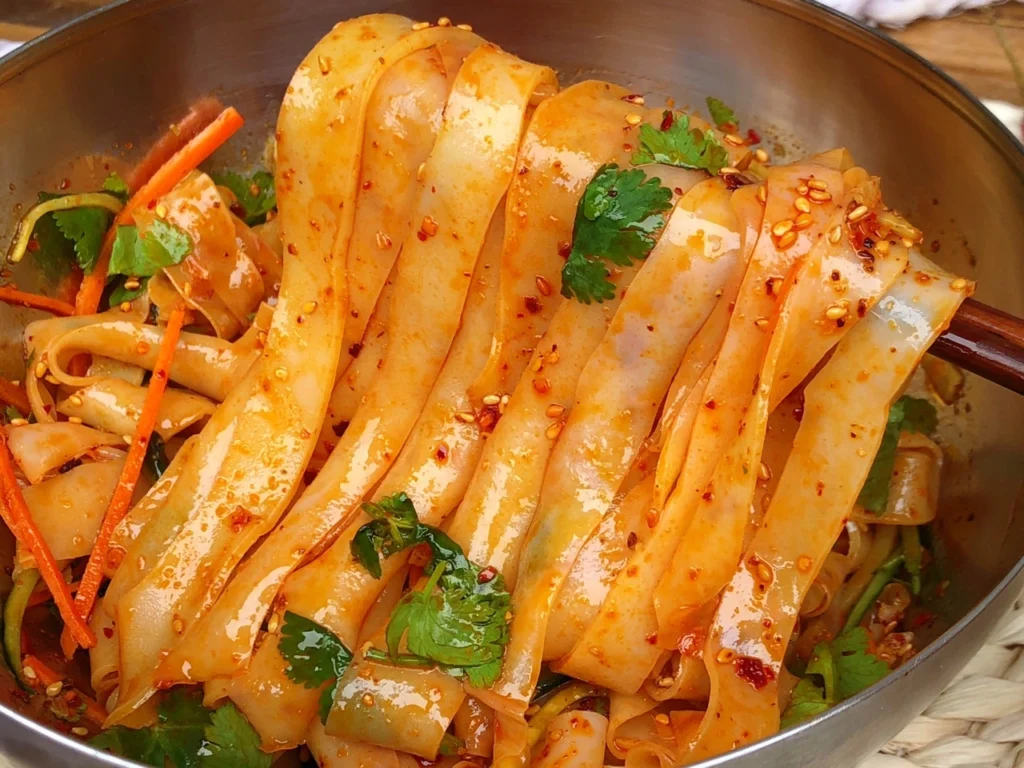
⑤ Xi’an Liang Pi (Cold Skin Noodles) — 2,000 Years of Refreshment
The history of Xi’an liang pi (cold skin noodles) dates back to the Qin Dynasty. Made with wheat or rice, the noodles are served with bean sprouts and wheat gluten, topped with red chili oil. A bowl of Xi’an liang pi is a refreshing and appetizing treat in the summer; paired with a roujiamo and Bingfeng soda, it makes up the “Sanqin Set Meal.” Where to Eat: Sheng Zhiwang Sesame Paste Liangpi Shop, Qin Town Liangpi Old Store.
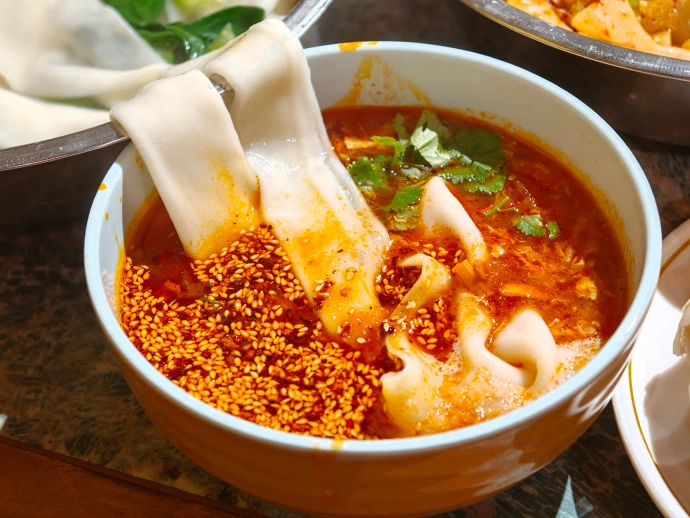
⑥ Yangling Zhan Shui Mian (Dipping Noodles) — Noodles and Soup Separated
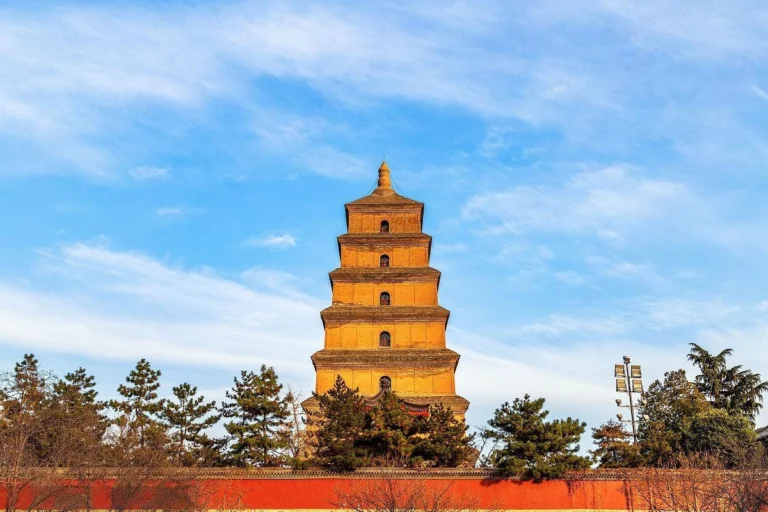
A large bowl of boiled noodles served with a small bowl of tomato-and-egg dipping sauce. Dip a strand of noodles into the sauce—it’s chewy, smooth, and springy, with a sweet-and-sour flavor and a hint of garlic. Dip only as much as you’re going to eat—it’s refreshing and never greasy. It’s a “breath of fresh air” among Xi’an famous noodles. Where to eat: There are specialty shops near the Big Wild Goose Pagoda.
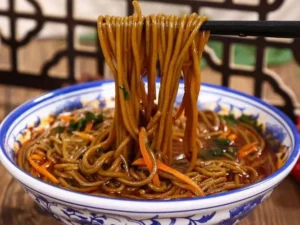
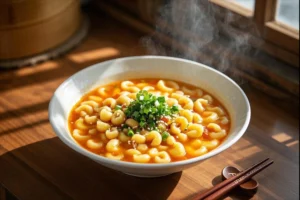
⑦ Buckwheat Noodles & Ma Shi — Whole Grains and Home-Style Cuisine
Buckwheat noodles are made by pressing buckwheat into thin, round strands; served cold with a sour and spicy dressing, they’re refreshing, while hot versions paired with mutton soup warm the body. Ma Shi (Cat’s Ears) are hand-rolled noodles served in a stew with potatoes and tomatoes, resulting in a thick, flavorful dish. Where to Eat: Xi’an Restaurant.
Where to Find Xi’an Famous Noodles? Three Streets Have You Covered
Xi’an Muslim Street: Xi’an’s most famous snack street. Biangbiang noodles, paomo, and liang pi are all clustered here. The nearby Dapi Yard and Sajin Bridge offer more reasonable prices and more authentic flavors.
Sajinqiao: A breakfast paradise for locals. From hu la tang to you po mian and smoked beef buns, it’s open from 6 a.m. through late-night snacks.
Yongxingfang: A hub for intangible cultural heritage cuisine. If you want to sample all of Xi’an famous noodles in one go, this is the place to go.
The Silk Road Heritage of Xi’an Famous Noodles
Why are Xi’an’s noodles so exceptional? Wheat was introduced to China via the Silk Road and took root on the Guanzhong Plain. Zhang Qian brought back crops from his diplomatic mission to the Western Regions, while caravans introduced spices and culinary techniques. As the starting point of the Silk Road, Chang’an fused the boldness of the Western peoples with the refinement of the Central Plains into a single bowl of noodles. This is the foundation of Xi’an noodle culture—a taste steeped in the millennia-old history of the Silk Road, and the reason why Xi’an Famous Noodles has been passed down for a thousand years, growing ever more delicious. The best way to understand Xi’an noodle culture is to come to Xi’an and eat a bowl of noodles.
When you come to Xi’an to eat noodles, you’re not just consuming carbohydrates. Every bowl of Xi’an famous noodles has its own distinct character—Biangbiang noodles boast a meter-long, hearty strand; Youpo noodles offer the exhilarating sensation of hot oil being poured over them; Saozi noodles embody the artisanal craftsmanship of the “Nine-Character Mantra”; and Paomo noodles feature the ritual of tearing apart the steamed bread. Want more tips on Xi’an famous noodles? Save this page and take your time savoring them when you arrive in Xi’an.