Big Wild Goose Pagoda: What Can You See Inside This 1,300-Year-Old Tang Dynasty Tower?
- Inside the Big Wild Goose Pagoda: The Story of a Pagoda and a City
- Xuanzang and the Big Wild Goose Pagoda: 1,300 Years of a Man and a Pagoda
- What Can You See from Each Floor of the Big Wild Goose Pagoda? A Complete Guide to the Highlights of the 7 Floors
- First Floor: Inscriptions on the Wild Goose Pagoda and Xuanzang’s Footsteps
- Second Floor: Gilded Buddhist Statues from the Ming Dynasty
- Summary: Why the Big Wild Goose Pagoda Is Worth Seeing in Person
Inside the Big Wild Goose Pagoda: The Story of a Pagoda and a City
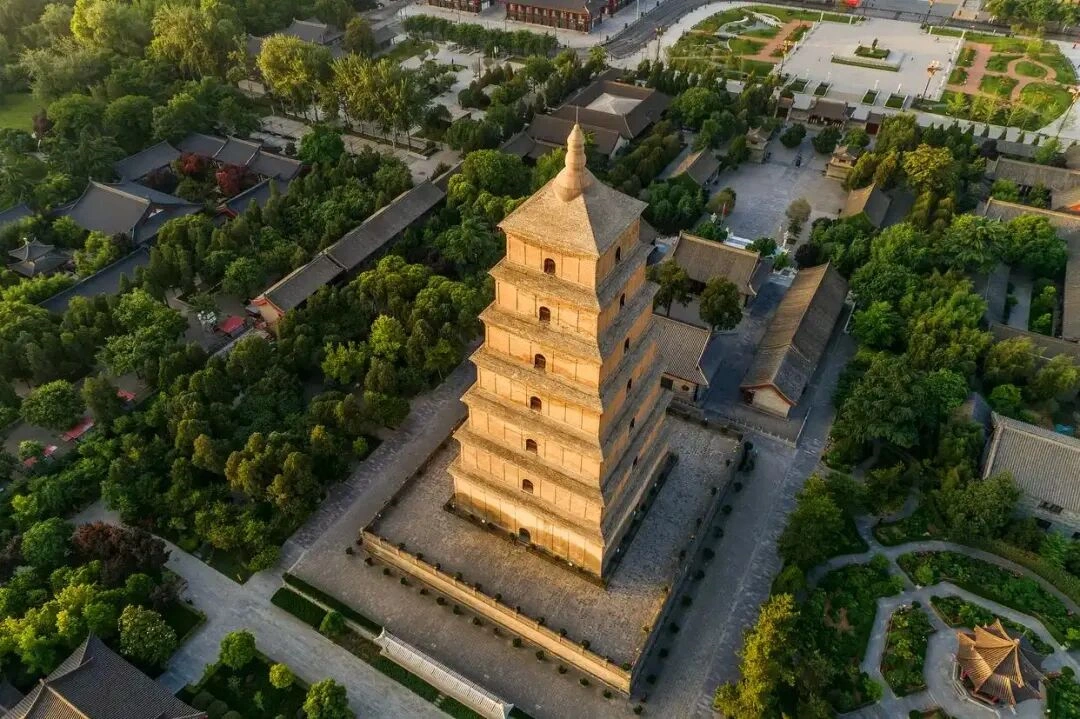
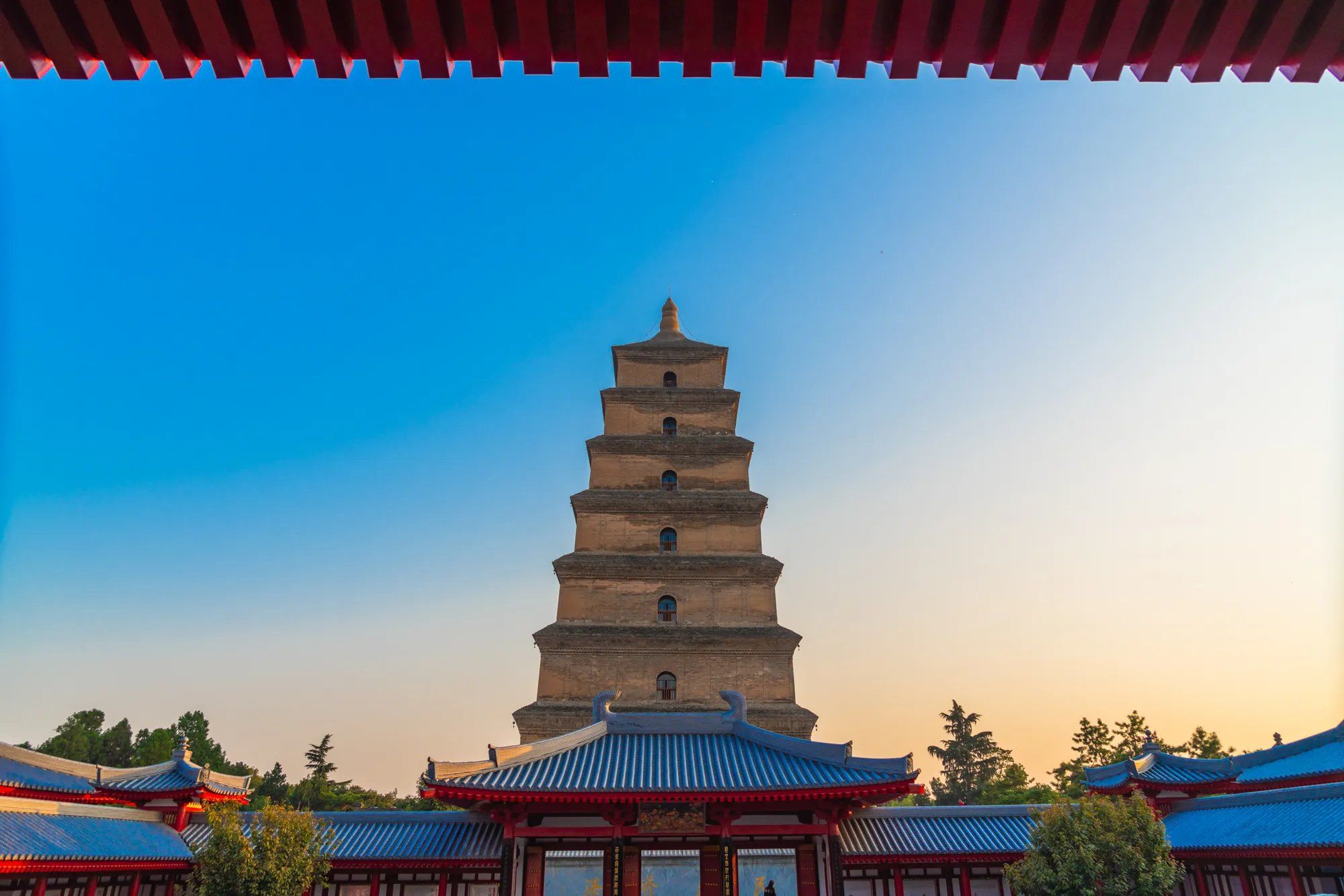
Xi’an is an ancient city with a history spanning more than 3,000 years. Within this city stands a landmark that almost everyone knows: the big wild goose pagoda , known in Chinese as the Dàyàn Tǎ.
The big wild goose pagoda is located within the Da Ci’en Temple in the southern suburbs of Xi’an. Built during the Tang Dynasty, it has a history of over 1,300 years. The pagoda stands 64.5 meters tall, equivalent to a 20-story building today. For the people of the Tang Dynasty over a thousand years ago, this was undoubtedly a “skyscraper.”
Why was this pagoda built? And how is it connected to Xi’an china history?
During the Tang Dynasty, Xi’an was known as Chang’an. At that time, Chang’an was one of the largest and most prosperous cities in the world. Buddhism flourished greatly during the Tang Dynasty. A monk named Xuanzang set out from Chang’an, traveling 50,000 li to India to study Buddhism. Seventeen years later, he returned to Chang’an with 657 Buddhist scriptures, seven Buddha statues, and a large quantity of relics.
To protect these precious items brought back from India, Xuanzang petitioned the emperor of the time to build a pagoda. And so, the Big Wild Goose Pagoda was born.
It can be said that this pagoda is more than just a building. It symbolizes the openness and inclusivity of the Tang Dynasty and stands as a testament to the cultural exchanges along the ancient Silk Road. When visiting Xi’an, the Big Wild Goose Pagoda is a must-see for everyone. In 2014, it was inscribed on the UNESCO World Heritage List. In 1961, it was designated as one of China’s first batch of National Key Cultural Relics Protection Units.
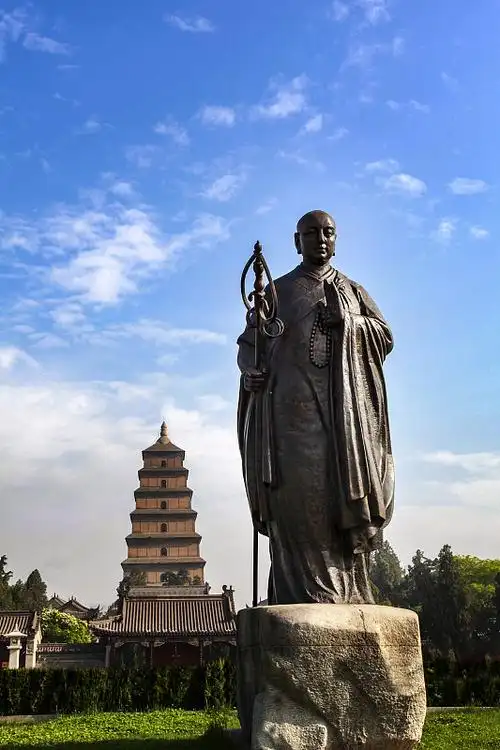
Xuanzang and the Big Wild Goose Pagoda: 1,300 Years of a Man and a Pagoda
The story of the big wild goose pagoda begins with Xuanzang. Without him, this pagoda would not exist.
Xuanzang became a monk at the age of 13. In his youth, he was troubled by a question: with so many conflicting translations of Buddhist scriptures, what was the true meaning of Buddhism? In 629 AD, he set out alone from Chang’an to India in search of the Dharma. He crossed deserts and climbed snow-capped mountains, traveling 50,000 li before finally reaching Nalanda Monastery in India. There, he studied Buddhism for five years and traveled throughout India collecting scriptures. Upon his return, he brought back 657 Buddhist scriptures, seven Buddha statues, and a large quantity of relics.
These treasures required a safe place for storage. Xuanzang therefore petitioned the emperor to build a pagoda within the Great Ci’en Temple. In 652 AD, the pagoda was completed. This was the earliest form of the big wild goose pagoda.
652 AD: The Birth of the Tower
Xuanzang originally planned to build a stone pagoda 30 zhang tall. Emperor Gaozong of Tang considered the project too ambitious and approved a design for a five-story brick pagoda instead.
Xuanzang did not object. He personally drew the blueprints, supervised the workers, and even helped carry bricks himself. He poured his heart and soul into this pagoda. Two years later, a five-story square pagoda standing approximately 60 meters tall was completed.
The original structure was “brick exterior, rammed earth core”—brick on the outside and rammed earth on the inside. It appeared sturdy, but over time, structural issues arose. This laid the groundwork for the many renovations that followed.
701–704 AD: Empress Wu Zetian had it raised to 10 stories
After only four or five decades, the pagoda began to deteriorate. Weeds and small trees grew between the bricks, and the structure showed signs of collapse.
During Empress Wu Zetian’s reign, she decided to undertake a major renovation. She did something that broke with tradition: she raised the pagoda to ten stories. It is important to note that Chinese Buddhist pagodas traditionally have an odd number of stories, such as five, seven, or nine. Ten stories was considered a very unusual design at the time.
After the expansion, the big wild goose pagoda became one of the tallest structures in Chang’an.
931 AD: Reconstructed during the Five Dynasties period, restored to seven stories
After the fall of the Tang Dynasty, China entered the turbulent period of the Five Dynasties and Ten Kingdoms.
The wars destroyed the top three stories of the pagoda. In the second year of the Changxing era of the Later Tang Dynasty—931 AD—local officials organized a restoration project. During this restoration, they rebuilt the pagoda as a seven-story structure.
Since then, seven stories have remained the standard height of the big wild goose pagoda to this day.
1604 AD: Ming-dynasty exterior, Tang-dynasty core
By the Ming Dynasty, the pagoda was in need of repair once again. In the 32nd year of the Wanli reign, the craftsmen came up with a clever solution.
Instead of tearing down the old pagoda and rebuilding it, they added a 60-centimeter-thick layer of blue bricks around the exterior of the Tang Dynasty structure. This not only protected the old pagoda but also gave it a completely new look.
So the big wild goose pagoda you see today has Ming Dynasty bricks on the outside and a Tang Dynasty core on the inside. Layer upon layer, 1,300 years of history have been perfectly preserved.
Modern Era: From National Heritage to World Heritage
In 1961, the big wild goose pagoda was included in China’s first batch of National Key Cultural Relics Protection Units. This list comprises only 180 sites, each of which is a national treasure.
In 2014, it was inscribed on the UNESCO World Heritage List as a key site along the “Silk Road.”
Today, the pagoda’s northern plaza features Asia’s largest musical fountain. To the south lies the Tang Dynasty Everbright City. Each evening, as the lights come on, the ancient pagoda and the modern city blend together. After 1,300 years, the big wild goose pagoda remains Xi’an’s liveliest spot.
One man, one pagoda, 1,300 years. Xuanzang’s story is brief, but the big wild goose pagoda he built has a long history. From five stories to ten, from ten to seven, from Tang-dynasty architecture to Ming-dynasty brickwork—each transformation bears the imprint of history.
What Can You See from Each Floor of the Big Wild Goose Pagoda? A Complete Guide to the Highlights of the 7 Floors
You can climb the big wild goose pagoda. Each floor features different artifacts and points of interest. Below is a floor-by-floor guide, starting from the bottom and working up to the top.
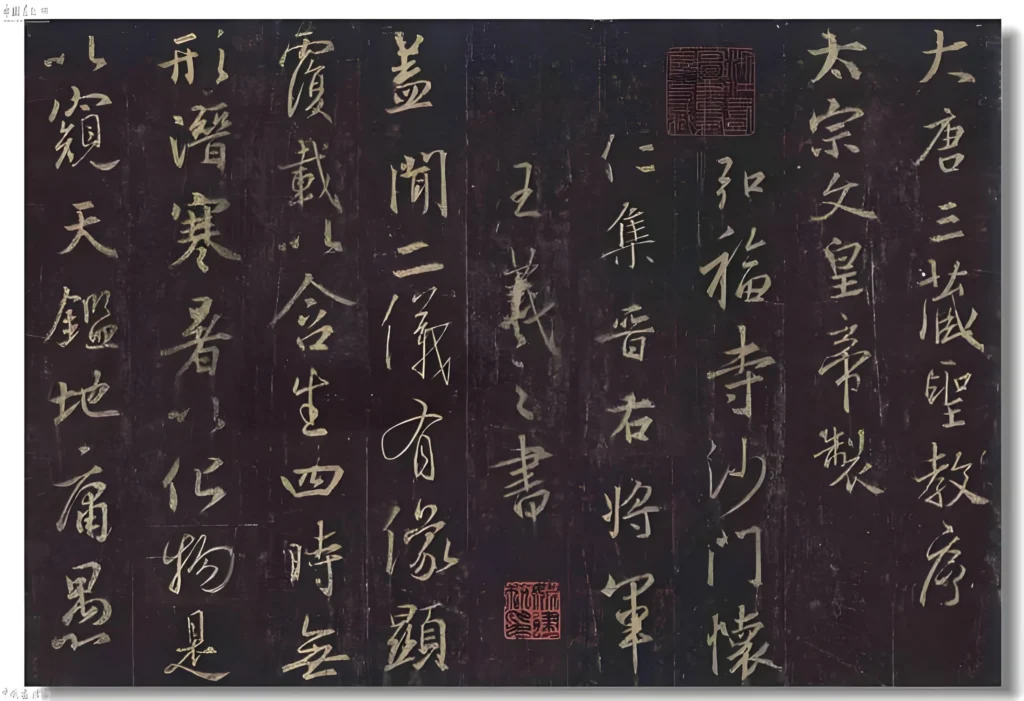
Lower Floor: The “Two Sages and Three Masterpieces Stele” on either side of the South Gate
Even before entering the pagoda, there are two treasures on either side of the south gate on the ground floor.
On the west side stands the stele inscribed with the Preface to the Sacred Teachings of the Tripitaka of the Great Tang. The text was personally composed by Emperor Taizong of Tang, Li Shimin, and calligraphed by the great calligrapher Chu Suiliang. On the east side is the stele inscribed with the Record of the Preface to the Sacred Teachings of the Tripitaka, composed by Emperor Gaozong of Tang, Li Zhi, and also calligraphed by Chu Suiliang.
Texts composed by two emperors, calligraphy by a master calligrapher—this is how the steles earned the name “The Two Sages and Three Masterpieces.” These are the most important steles at the big wild goose pagoda, so be sure to take a close look when you visit.
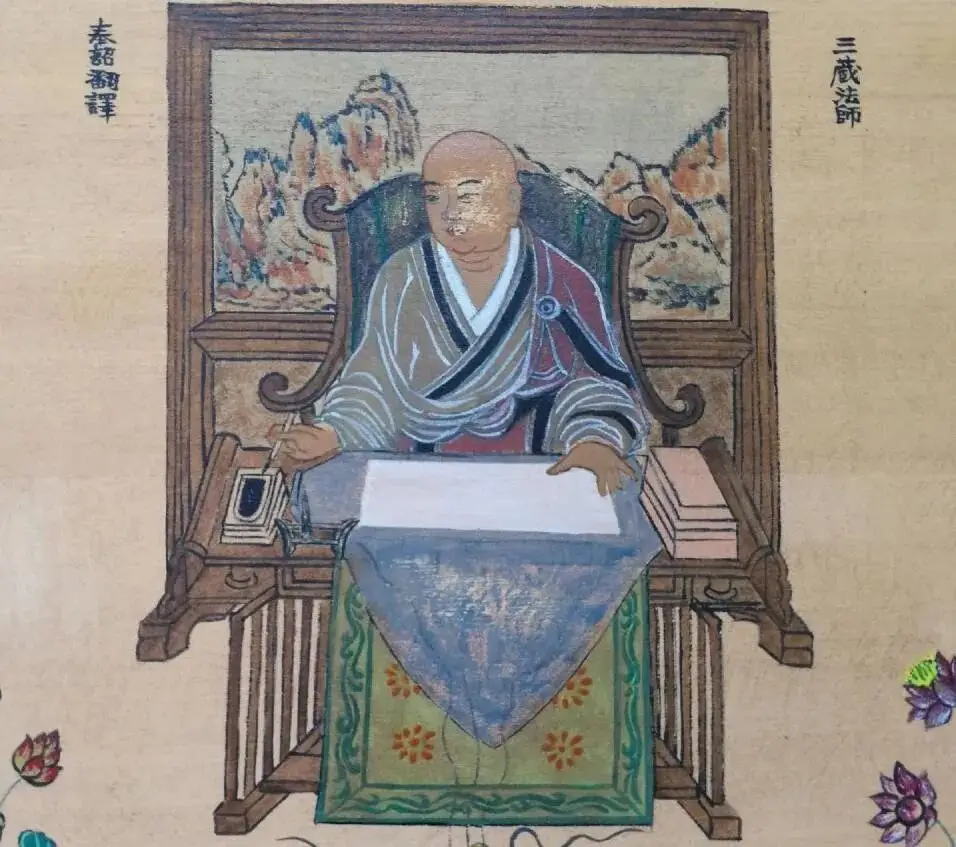
First Floor: Inscriptions on the Wild Goose Pagoda and Xuanzang’s Footsteps
Upon entering the first floor of the pagoda, you’ll notice several interesting features.
Four long couplets hang on the walls, depicting figures and stories from the Tang Dynasty. On both sides of the chamber are Ming Dynasty steles inscribed with names. This tradition stems from a Tang Dynasty custom known as “inscribing names on the Wild Goose Pagoda.” Newly appointed jinshi (imperial scholars) would come to the base of the pagoda to inscribe their names after passing the imperial examinations. When the great poet Bai Juyi passed the jinshi examination at the age of 27, he inscribed his name at the big wild goose pagoda, writing, “At the place where names are inscribed beneath the Ci’en Pagoda, I was the youngest among the seventeen.”
On the first floor, there are also the “Stele Depicting Xuanzang Carrying His Books” and the “Stele Depicting Xuanzang Translating Scriptures,” which chronicle Xuanzang’s life. Additionally, there is a “Stone Marking Xuanzang’s Footsteps on His Journey to Obtain the Scriptures” on the ground, recounting his epic journey across thousands of miles to retrieve the scriptures.
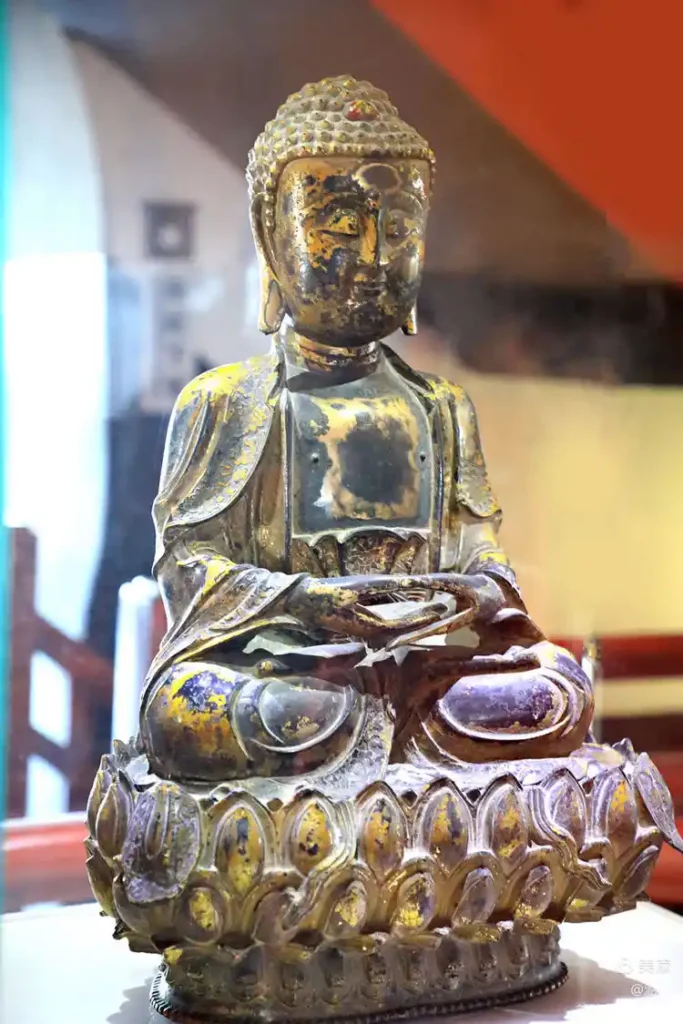
Second Floor: Gilded Buddhist Statues from the Ming Dynasty
The second floor houses a gilded bronze statue of Shakyamuni Buddha. This statue, a relic from the early Ming Dynasty, is considered the “treasure that anchors the pagoda” at the big wild goose pagoda.
The walls on either side feature murals of Manjushri Bodhisattva and Samantabhadra Bodhisattva, as well as some modern calligraphy works.
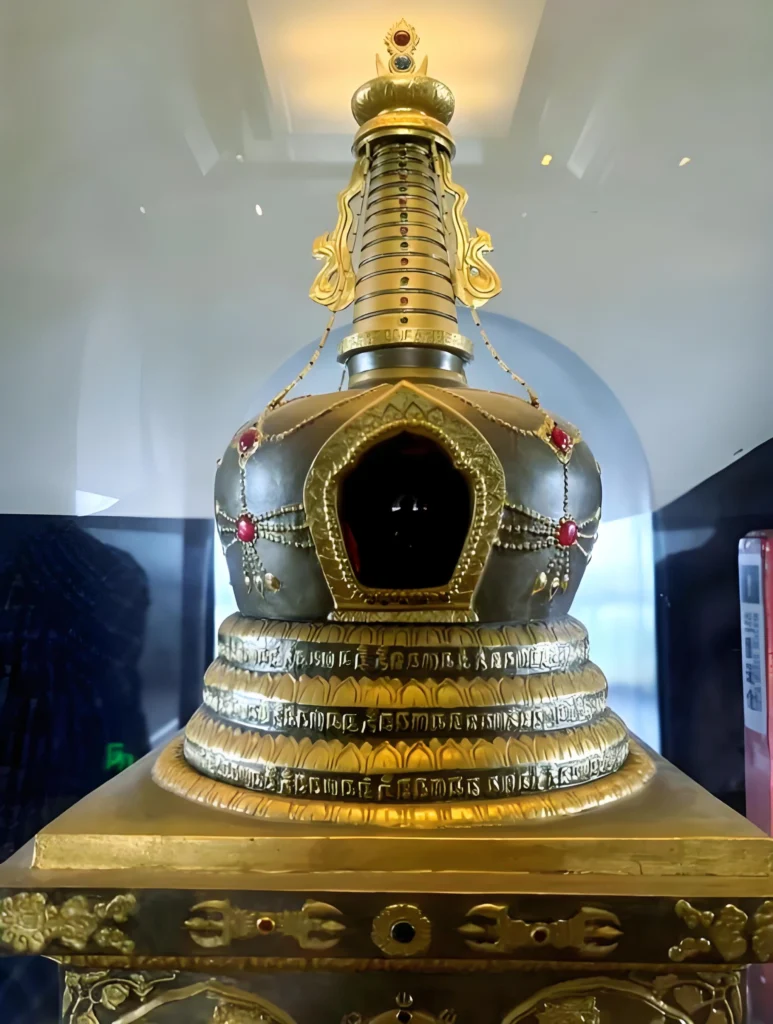
Third Floor: Buddha’s Relics
In the center of the third floor stands a wooden pedestal. Displayed on the pedestal are precious Buddha relics. These were gifted by Venerable Wuchen, the abbot of Xuan Zang Temple in India.
Also on this floor is a model of the big wild goose pagoda. Crafted on a 1:60 scale, the model is exquisitely detailed.
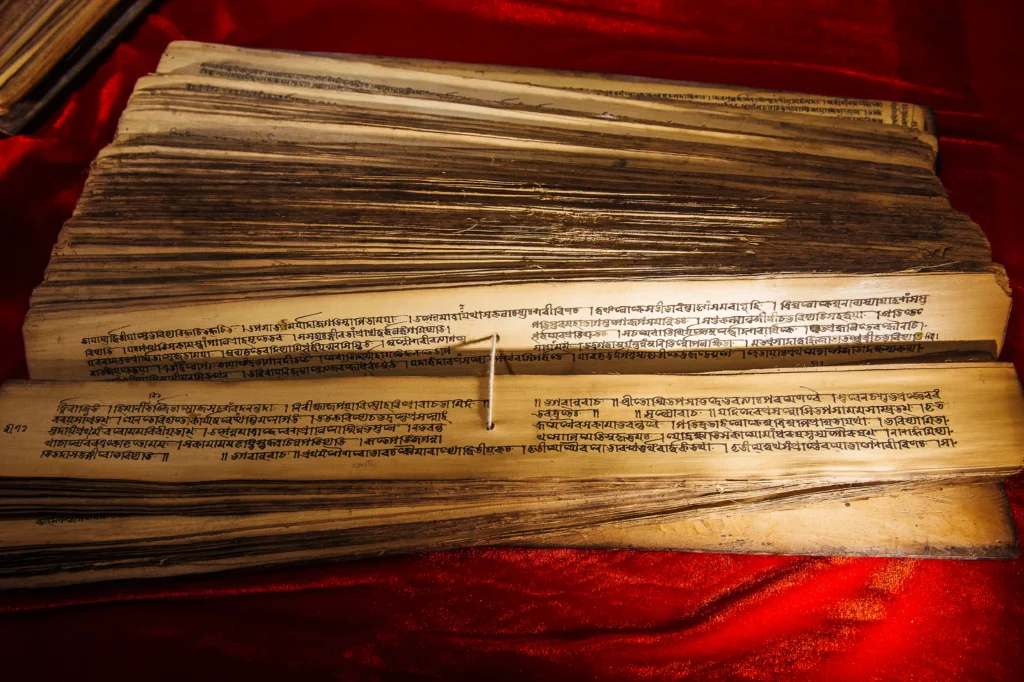
Fourth Floor: Palm-leaf Manuscripts
The fourth level is the one many visitors look forward to the most. Here, two palm-leaf manuscripts are on display.
What are palm-leaf manuscripts? The ancient Indians used the leaves of the palmyra palm tree for writing. After undergoing special treatment, these leaves could be inscribed with scriptures that would remain intact for hundreds of years. The 657 scriptures that Xuanzang brought back from India were originally all palm-leaf manuscripts.
These two palm-leaf manuscripts measure approximately 40 centimeters in length and 7 centimeters in width, densely inscribed with Sanskrit text. It is said that fewer than 10 people in the world today can decipher this script. This alone demonstrates just how precious they are.
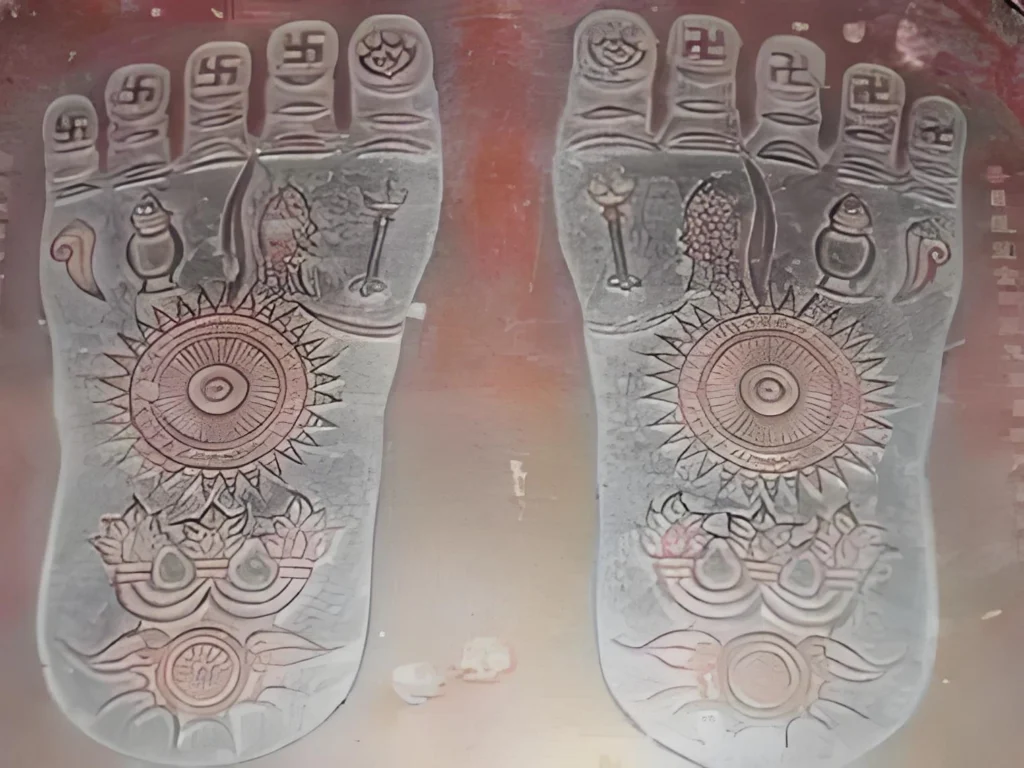
Fifth Floor: Stele Depicting the Footprints of Shakyamuni Buddha
On the fifth floor stands a stele depicting the footprints of Shakyamuni Buddha. This stele is a replica of a Buddha’s footprint image that Xuanzang commissioned to be carved in his later years. The stele is adorned with numerous Buddhist motifs. In Buddhism, there is a saying that “to see the Buddha’s footprints is to see the Buddha himself,” which is why this stele is held in such high regard.
This level also displays several poems written by Xuanzang.
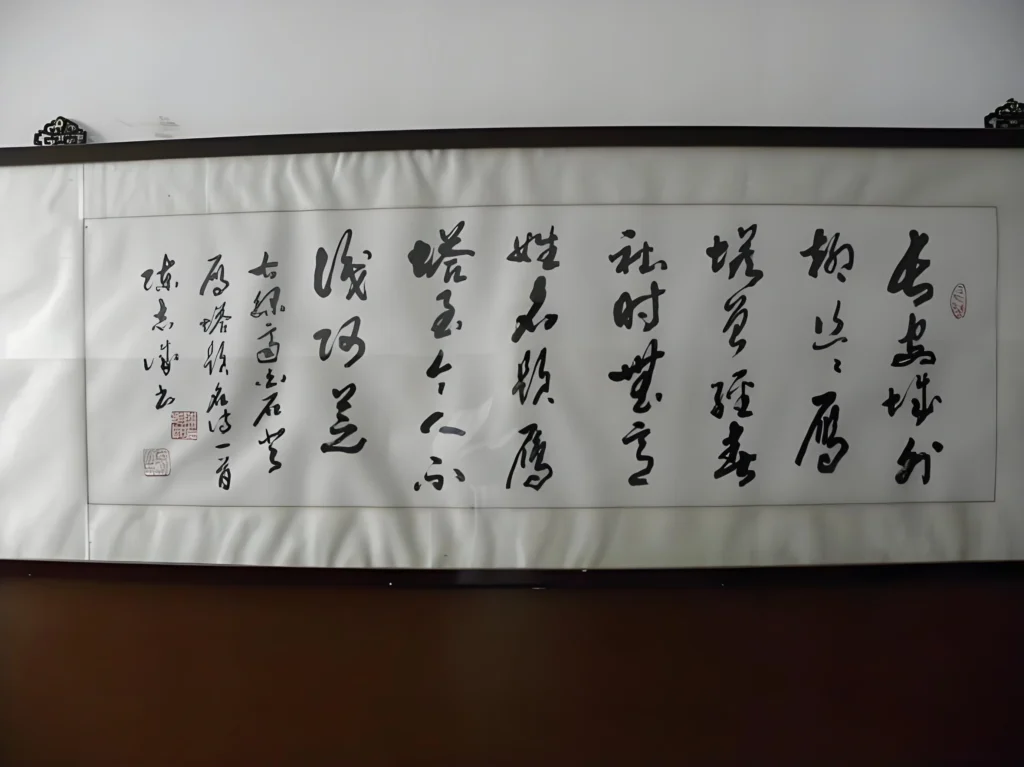
Sixth Floor: Tang Dynasty Poetry Scrolls
The sixth floor displays poems by five great poets of the Tang Dynasty. In the eleventh year of the Tianbao era (752), Du Fu, Cen Shen, Gao Shi, Xue Ju, and Chu Guangxi climbed the big wild goose pagoda together. They drank wine and composed poetry, with each writing a long poem. These poems have been passed down for over a thousand years and are extremely famous.
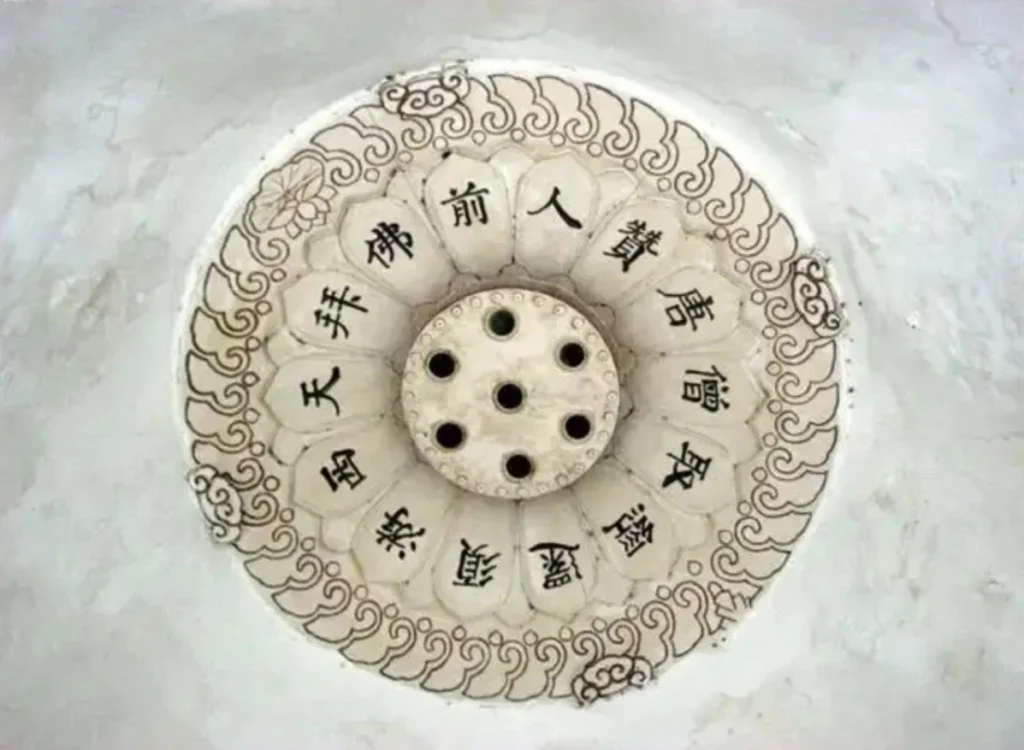
Seventh Floor: The Lotus Ceiling and the View
Upon reaching the seventh floor—the highest point of the big wild goose pagoda—look up to see a sacred lotus ceiling at the top of the tower. In the center of the lotus are 14 characters that can be arranged to form various poetic lines.
Even better, looking out through the four arched doorways offers a panoramic view of the entire city of Xi’an. 1,300 years ago, Xuanzang may have stood here gazing out over the city of Chang’an.
Here’s another secret: there might be an underground chamber hidden beneath the ground.
In 2007, while using radar to survey the interior structure of the big wild goose pagoda, staff discovered cavities underground. Many experts believe there may be an underground chamber beneath the pagoda. The vast treasures brought back by Xuanzang may well be hidden in this chamber, which has yet to be opened. This adds yet another layer of mystery to the big wild goose pagoda.
Summary: Why the Big Wild Goose Pagoda Is Worth Seeing in Person
The big wild goose pagoda is more than just an ancient brick pagoda.
It is a masterpiece of Tang Dynasty architecture dating back 1,300 years. It bears witness to Xuanzang’s heroic journey westward to retrieve Buddhist scriptures. It houses precious palm-leaf manuscripts, Buddha’s relics, and ancient inscriptions. It has heard the recitations of great poets like Bai Juyi and Du Fu. It has weathered wars, earthquakes, and countless restorations, yet it still stands tall and majestic.
From the ground floor to the seventh level, every level of the big wild goose pagoda has a story to tell. From the “Two Saints and Three Excellences” Stele to the palm-leaf manuscripts, from the Buddha’s relics to the lotus-patterned ceiling, every step is a piece of history.
If you visit Xi’an, you must climb the big wild goose pagoda yourself. Standing at the top, looking down at the city below, you will feel how 1,300 years of history have flowed through this pagoda and this city.
It is an indescribable awe. Only by seeing it with your own eyes will you truly understand.