Exploring Xi’an’s History: An Ancient City That Has Never Lost Its Charm in Over 3,000 Years
- Xi'an China History : Why Does the World Take Notice of This City?
- The Thirteen Dynasties in Xi'an China History : How many people can name them all?
- Xi'an China History : Why Did Emperors Choose This City?
- The Golden Age of Xi'an China History : How Prosperous Was Chang'an During the High Tang Dynasty?
- The Legacy of Xi'an China History : Here, History Has Not Fallen Asleep
- A New Chapter in Xi'an China History: From Chang'an to Xi'an
Xi’an China History : Why Does the World Take Notice of This City?
When you search for “Xi’an China history,” you’ll encounter a string of astonishing figures. With over 3,100 years of urban history and more than 1,100 years as a capital, these two figures alone are enough to inspire awe in any ancient city worldwide.
From the Western Zhou Dynasty to the Tang Dynasty, 13 dynasties successively established their capitals here. Thirteen dynasties, spanning 1,140 years as a capital. This makes Xi’an the earliest, most frequent, and longest-standing capital in Chinese history—without a doubt.
On the global stage, Xi’an is ranked alongside Rome, Athens, and Cairo as one of the “Four Great Ancient Capitals of the World.” Among China’s six ancient capitals, it stands at the very top. This is the significance of Xi’an’s history.
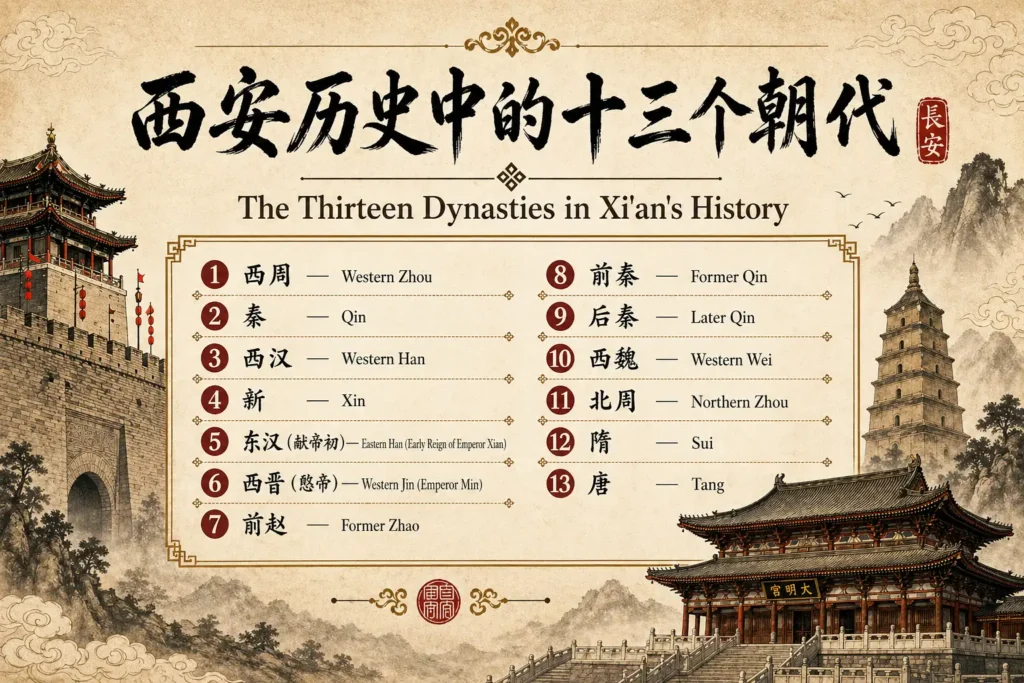
The Thirteen Dynasties in Xi’an China History : How many people can name them all?
When it comes to Xi’an china history, many people are familiar with the title “Ancient Capital of Thirteen Dynasties.” However, few can name all thirteen dynasties off the top of their heads.
According to historical records, the dynasties that successively established their capitals in Xi’an (formerly known as Chang’an and Haojing) were, in order: the Western Zhou, Qin, Western Han, Xin, Eastern Han (early reign of Emperor Xian), Western Jin (Emperor Min), Former Zhao, Former Qin, Later Qin, Western Wei, Northern Zhou, Sui, and Tang.
These 13 dynasties left a combined history of 1,140 years as capitals on the land of Xi’an. From 1057 BCE, when King Wen of Zhou established his capital at Fenghao, to 904 CE, when Emperor Zhaozong of Tang was forced to relocate the capital to Luoyang, Xi’an’s status as the political, economic, and cultural center of ancient China spanned nearly two millennia. This is the depth of Xi’an’s history.
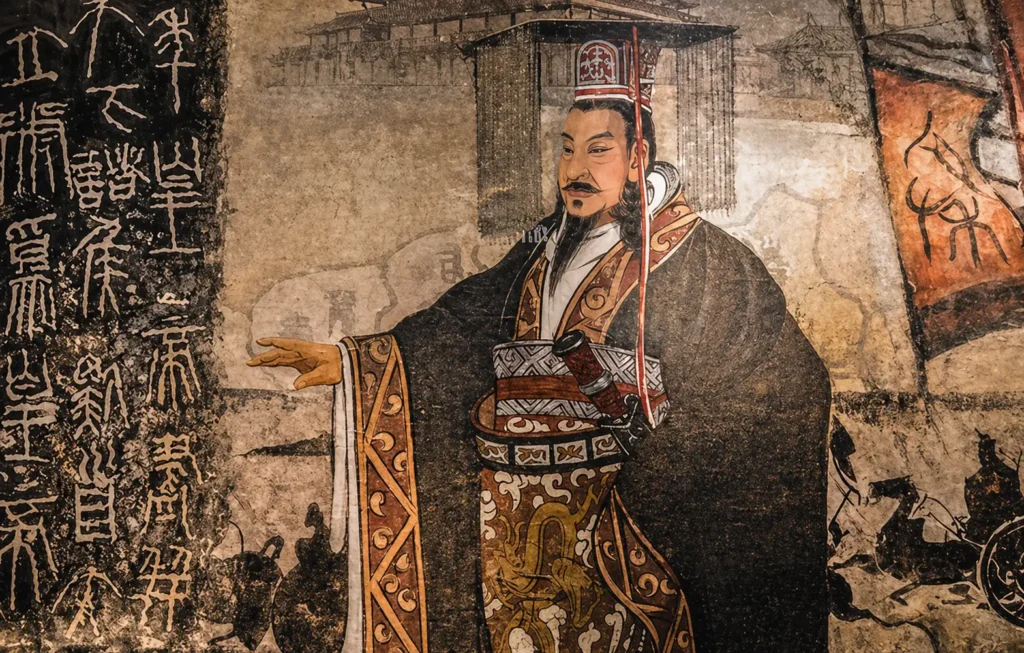
Xi’an China History : Why Did Emperors Choose This City?
When studying the history of Xi’an, China, you will come across a fascinating question. When Emperor Gaozu of Han, Liu Bang, was deciding where to establish his capital, he wavered between Luoyang and Chang’an. It was only after hearing the advice of his strategist, Zhang Liang, that he made a decisive choice in favor of Guanzhong.
Zhang Liang’s reasoning was very practical. The region was easy to defend but difficult to attack, with the natural barriers of Mount Yao and the Hangu Pass to the east. The region is rich in natural resources, with fertile lands like Longshu and Bashu to the north, ensuring an ample supply of grain and provisions. It is protected by natural barriers, with the Qilian and Yanzhi Mountains serving as a shield to the west. The area offers strategic flexibility, as the Yellow and Wei Rivers function both as supply routes for grain and as waterways for retreat. Furthermore, the region has produced a steady stream of talented individuals, and Guanzhong has a long and deep cultural heritage dating back to ancient times.
With favorable timing, strategic geography, and the support of the people, Chang’an possessed all the necessary conditions. From the Western Zhou and Western Han dynasties through the Northern Zhou, Sui, and Tang dynasties, Chang’an gradually emerged as the undisputed ancient capital of thirteen dynasties.
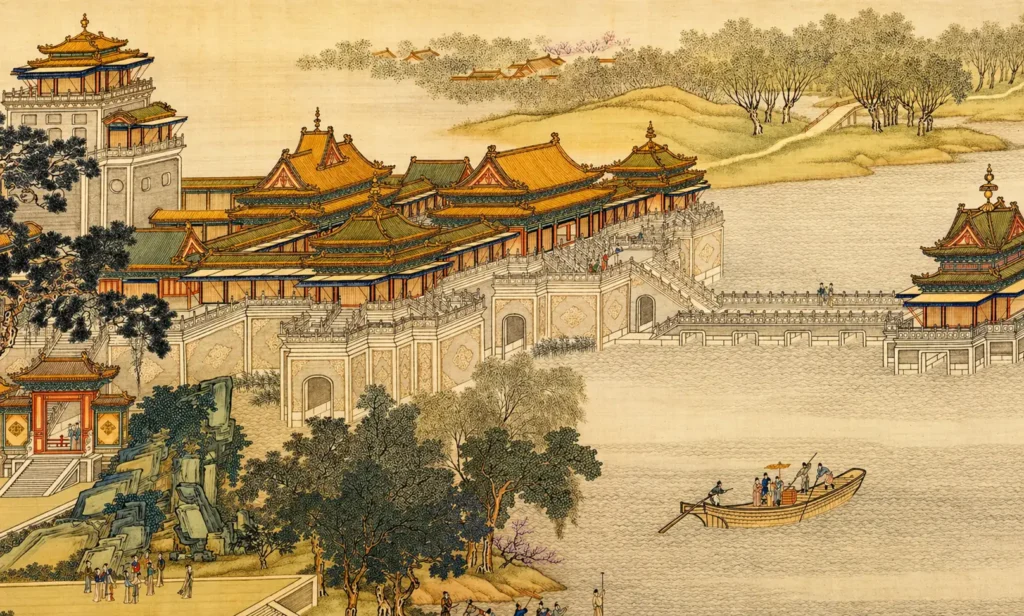
The Golden Age of Xi’an China History : How Prosperous Was Chang’an During the High Tang Dynasty?
When it comes to Xi’an china history, the Tang Dynasty undoubtedly represents its golden age. During the High Tang period, Chang’an was a truly international metropolis.
Its urban planning remains awe-inspiring to this day. A central axis ran north to south, and the city walls formed a regular square layout. With a grid-like street pattern, the 150-meter-wide Zhuque Avenue divided the city into 110 symmetrically distributed li-fang districts. This urban layout had a profound influence on the construction of capital cities in later generations.
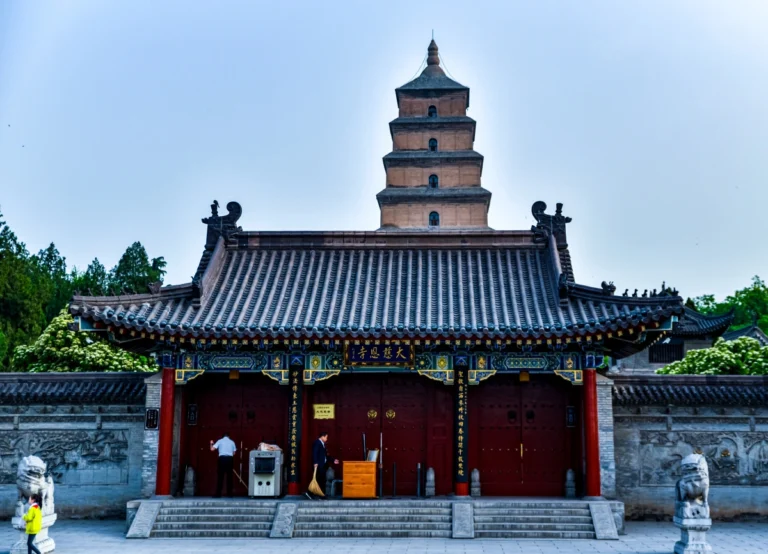
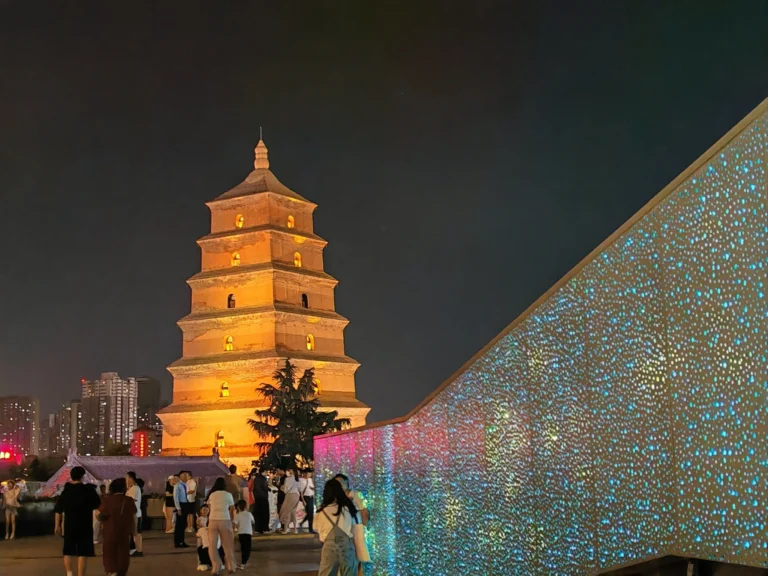
The prosperity of Chang’an far exceeded modern imagination. It brought together more than 220 industries and over 40,000 merchants. Spices, silk, and porcelain circulated through its markets. During the mid-to-late Tang Dynasty, early financial institutions such as guifang (merchant guilds) and feiqian (loans) emerged. The city maintained trade relations with over 70 states, spanning Asia, Europe, and Africa. Caravans and diplomatic missions traveled ceaselessly along the Silk Road. The Big Wild Goose Pagoda and the Small Wild Goose Pagoda still stand today, bearing witness to the splendor of cultural exchange between East and West.
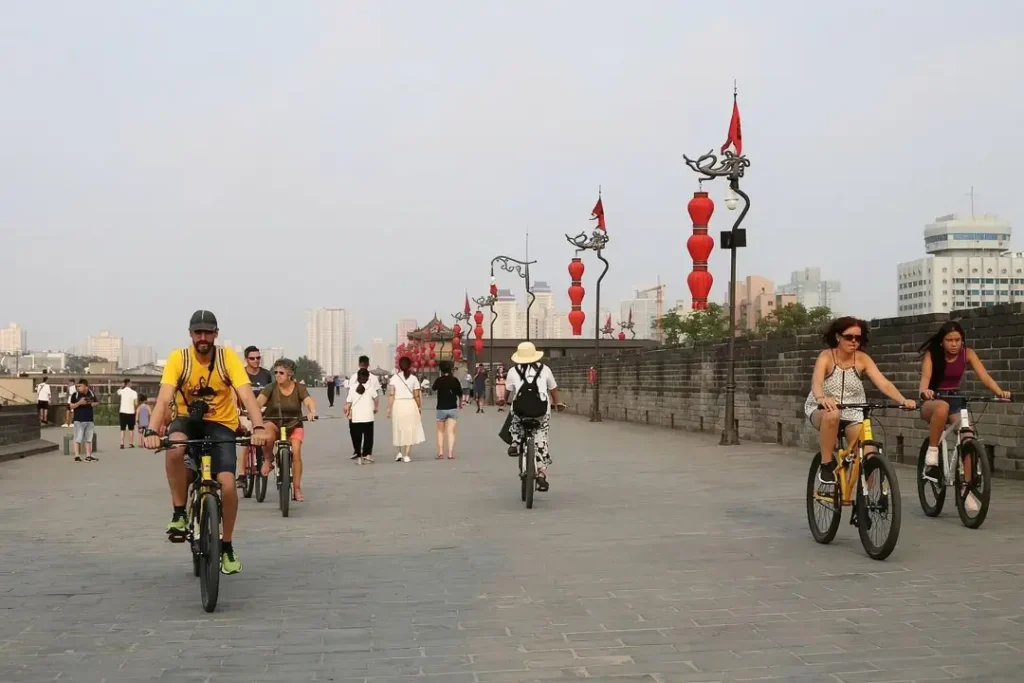
The Legacy of Xi’an China History : Here, History Has Not Fallen Asleep
In today’s Xi’an, the city’s history is not confined to the pages of books. With over 3,100 years of urban history and more than 1,100 years as a capital, these are not merely cold statistics here, but a tangible part of daily life.
This “natural museum city” boasts 3,246 immovable cultural relics, 428 cultural heritage sites, and 163 museums of various kinds. Yet Xi’an’s legacy lies not only in “preservation,” but also in “revitalization” .
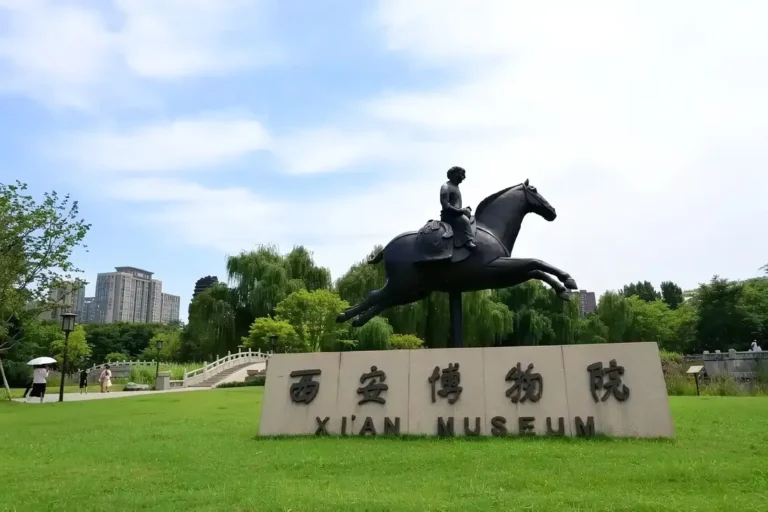
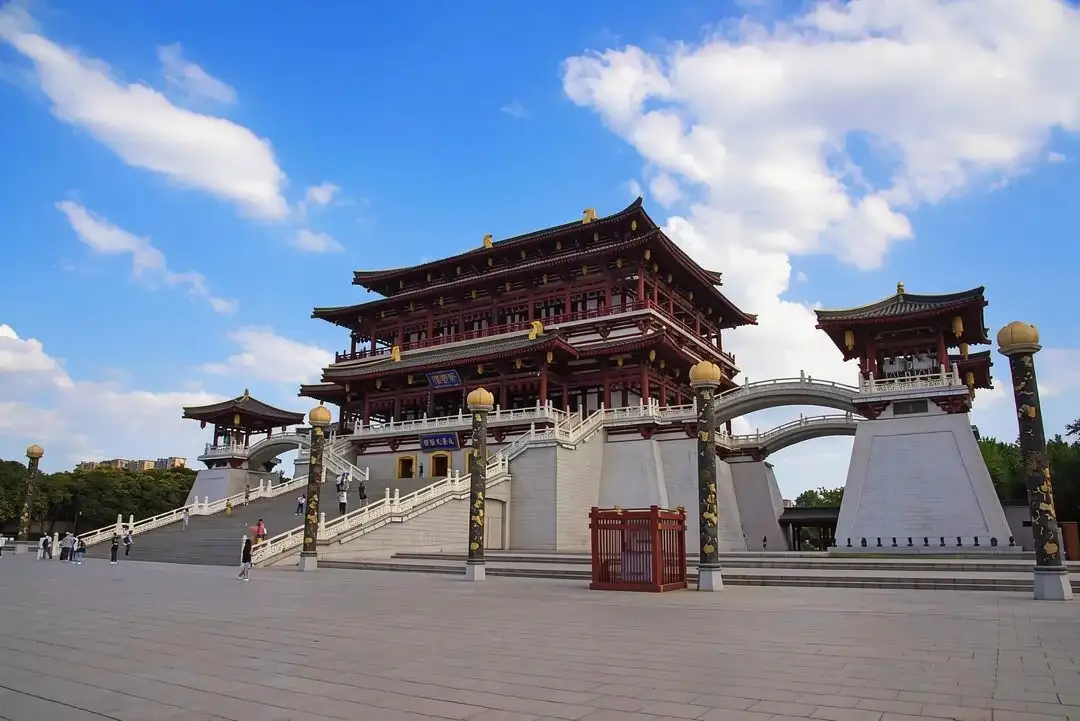
What to do in xi’an?At the Qin Shi Huang Mausoleum Museum, digital collections and AR picture books bring the museum’s weighty treasures within reach. At the Xi’an Museum, the stories of the Du Hu Fu and the Empress’s Seal are vividly told through immersive multimedia light and shadow displays. In the Tang Dynasty Ever-Bright City, “Li Bai” appears in mid-air, and his line, “Have you not seen the waters of the Yellow River coming down from the heavens?” instantly captivates the entire street. In the “The Longest Day in Chang’an” themed district, visitors can “time-travel” in an instant to play the arrow-throwing game with “Wang Wei” and engage in the “Flying Petals” game with the “Three Scholars of the Wild Goose Pagoda.” This city brings Xi’an china history to life.
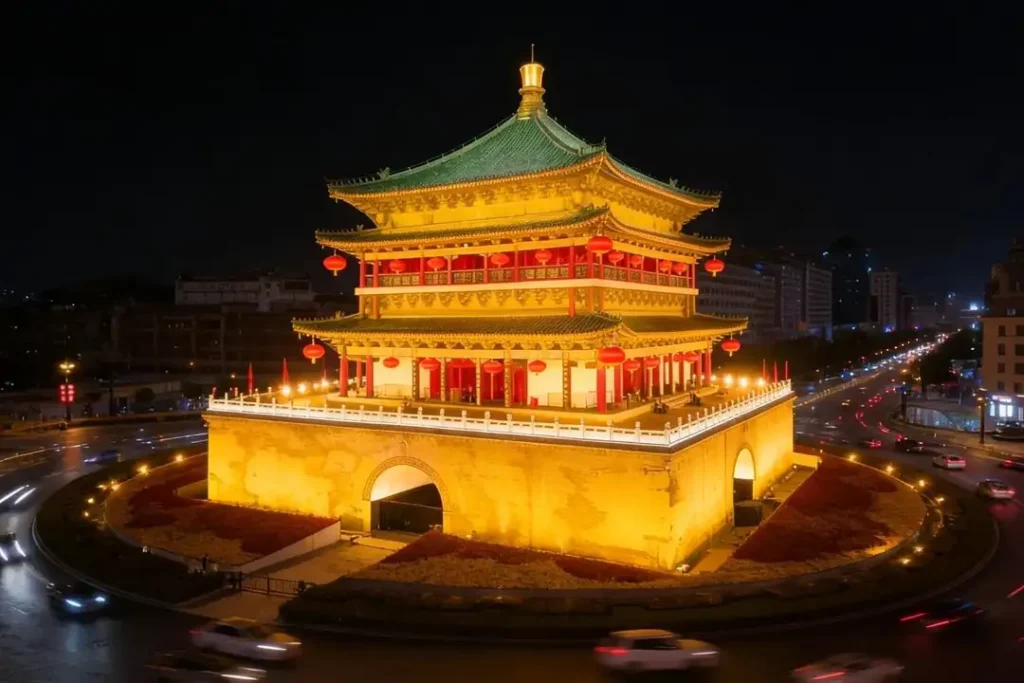
A New Chapter in Xi’an China History: From Chang’an to Xi’an
From Chang’an to Xi’an, the name has changed, but the spirit of “openness and inclusiveness” in Xi’an china history has remained unchanged. The bells of camels on the ancient Silk Road have now given way to the whistle of the “Chang’an” freight train. International freight trains loaded with goods depart from Xi’an International Port Station, heading for Central Asia, West Asia, Europe, and beyond. From ancient caravans and merchant guilds to modern steel-clad trains, Xi’an, as a core hub of the Belt and Road Initiative, continues to write a new chapter of development based on cooperation and mutual benefit.
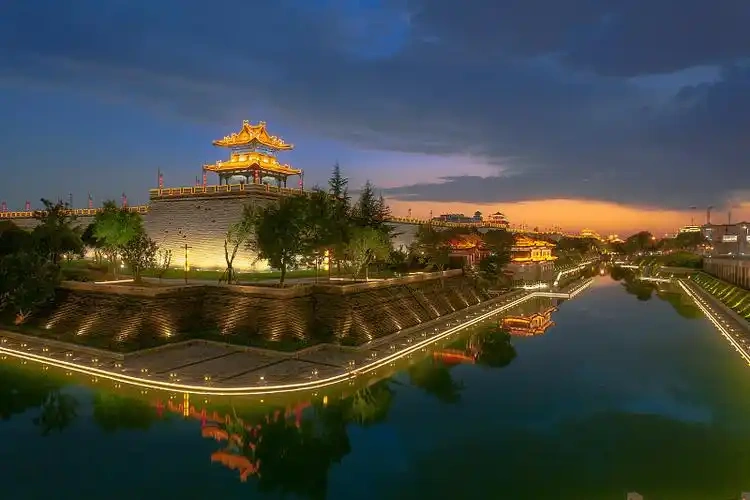
Today’s Xi’an embodies both the millennia-old heritage of Zhou rituals, Qin institutions, Han elegance, and Tang charm, as well as the modern vibrancy of its XR film industry base and immersive cultural tourism. Thirteen dynasties, 1,140 years as a capital, and over 3,100 years of urban history. Behind these numbers lie the vicissitudes of Qin bricks and Han tiles, the elegance of Tang poetry and Han prose, the grandeur of envoys from all nations paying homage, and the echoes of camel bells along the Silk Road. What makes Xi’an special is not merely that it was once the “ancient capital of thirteen dynasties,” but that it has woven three millennia of Xi’an China history into the fabric of everyday life. Standing on the city walls of Xi’an, you can sense that this city has witnessed the rise and fall of countless dynasties, yet it has never truly grown old.