
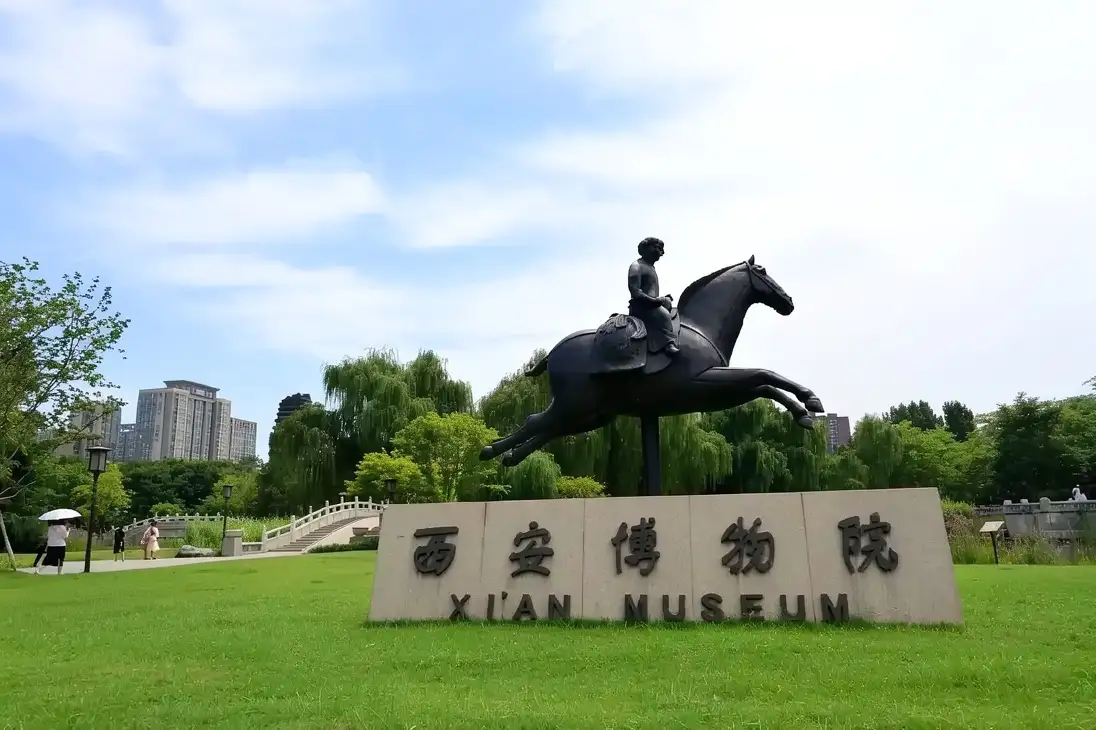
Xi’an Museum: 10 Best Exhibits You Should See Right Now [2026]
- Why the Xi'an Museum Is a Must-See Destination in China?
- The 10 Must-See Exhibits at the Xi'an Museum
- I. Three-Color Glazed Soaring Horse: The Star Attraction of the Tang Dynasty Three-Color Glazed Ceramics Collection at the Xi'an Museum
- II. Yongyu: Understanding the Living Evidence of Western Zhou History at the Xi'an Museum
- III. Jade-Becher mit verzierten Wolkenmustern: Der einzige Jade-Becher aus der Qin-Dynastie im Museum von Xi'an
- IV. Three-Color Glazed Phoenix-Headed Jar: A treasure from the Xi'an Museum showcasing the exotic charm of the Tang Dynasty
- V. Gilded Bronze Sheep-Shaped Lamp: A Han Dynasty Lamp That Changes Shape at the Xi'an Museum
- VI. Gilded Bronze Bell with Phoenix Design: Xi'an Museum—A bronze bell that has held fine wine for two thousand years
- VII. Golden-backed Mythical Beast Grape Mirror: Xi'an Museum—The Pinnacle of Tang Dynasty Bronze Mirror Craftsmanship
- VIII. Blue-Glazed, Polychrome-Decorated Mule: A Rare Blue-Glazed Masterpiece at the Xi'an Museum
- IX. The Stone Coffin of Shi Jun from the Northern Zhou Dynasty: Telling the Story of the Silk Road at the Xi'an Museum
- X. A gilded statue of Amitabha Buddha created by Dong Qin in the fourth year of the Kaihuang era of the Sui Dynasty: One of the Three Treasures of the Xi'an Museum
- How to Get to the Xi'an Museum: Tickets, Hours, and Transportation
- Summary
Why the Xi’an Museum Is a Must-See Destination in China?
Xi’an is a captivating city. It once served as the capital of thirteen Chinese dynasties. Walking the streets of Xi’an, you are literally treading on history that dates back more than a thousand years. And the Xi’an Museum is one of the city’s most overlooked treasures.
The Xi’an Museum is located at 72 Youyi West Road in Beilin District. It is connected to the Small Wild Goose Pagoda. Many people only know to visit the Terracotta Army (China Tours), yet they miss this museum, which is the closest to the city center. The Xi’an Museum houses a collection of over 110,000 artifacts. These artifacts span the long history from the Western Zhou Dynasty to the Tang Dynasty. Among them are hundreds of national first-class cultural relics.
The architecture of the Xi’an Museum is a highlight in itself. It was designed by renowned architect Zhang Jinqiu. The entire complex follows a “heaven is round, earth is square” layout. Just outside the museum stand the Small Wild Goose Pagoda and Jianfu Temple. In just half a day, you can visit both the museum and the ancient pagoda. This kind of experience is hard to find in other cities.
When traveling to China, many people head to Beijing and Shanghai first. But if you want to truly understand Chinese history, Xi’an is a must-visit. And in Xi’an, the Xi’an Museum is the place that will help you quickly grasp the essence of ancient Chang’an. It isn’t as crowded as the Shaanxi History Museum. You can quietly examine each artifact and slowly immerse yourself in stories spanning thousands of years.
The 10 Must-See Exhibits at the Xi’an Museum
There are so many wonderful things to see at the Xi’an Museum. If you’re short on time, these 10 exhibits are the ones you shouldn’t miss. Each one is a museum-defining treasure.
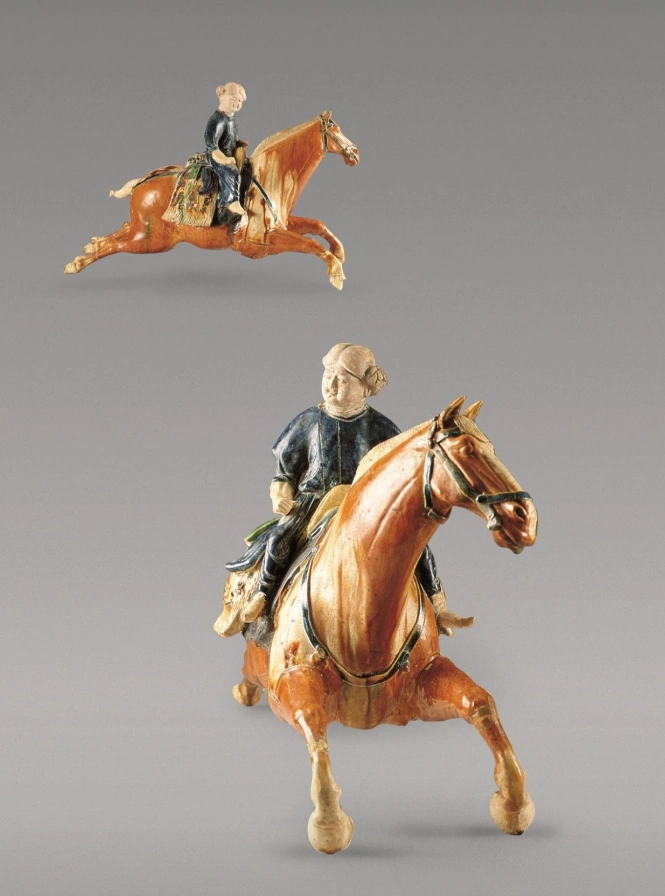
I. Three-Color Glazed Soaring Horse: The Star Attraction of the Tang Dynasty Three-Color Glazed Ceramics Collection at the Xi’an Museum
This is the most famous artifact in the Xi’an Museum. Dating from the Tang Dynasty, it stands 38 centimeters tall and measures 52 centimeters in length. It was unearthed in 1966 in Lianhu District, Xi’an.
The horse is not depicted standing still, but leaping into the air. All four hooves are off the ground, and its mane stands on end, as if it were galloping wildly in the wind. A young boy sits atop the horse. The boy’s hair is styled into two buns; he has a round face, a high nose bridge, deep-set eyes, and a faint smile at the corners of his mouth. He wears a blue robe with the sleeves rolled up to his elbows, revealing his muscular forearms. His hands grip the reins tightly.
A cargo sack is also strapped to the horse’s back. The sack features three glaze colors: green, white, and yellow. While Tang Sancai horses and camels are common, horses depicted in mid-leap are extremely rare. This piece captures the exact moment a steed is galloping. More than a thousand years have passed, yet standing before it, you can still feel that sense of speed.
Why is this a must-see? Because it is a masterpiece among Sancai pieces. Of all the Tang Sancai collections at the Xi’an Museum, this leaping horse is the most vivid.
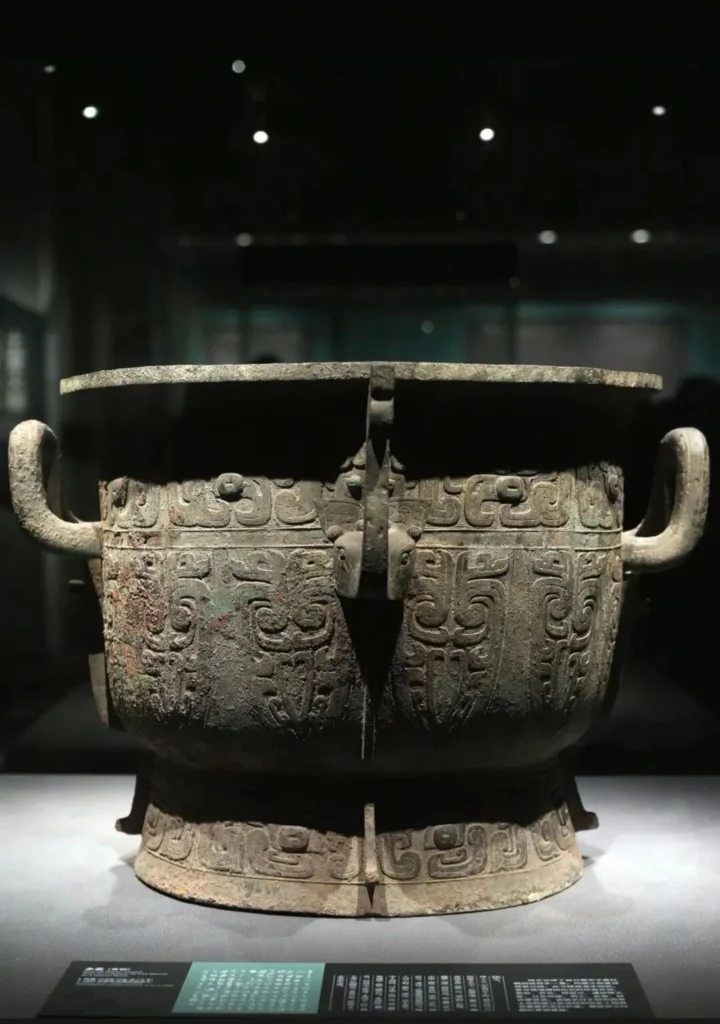
II. Yongyu: Understanding the Living Evidence of Western Zhou History at the Xi’an Museum
Das Yongyu ist ein großes Bronzegefäß aus der Westlichen Zhou-Dynastie. Es ist 47 cm hoch und hat einen Durchmesser von 58 cm. Es wurde 1969 im Kreis Lantian in der Provinz Shaanxi ausgegraben.
Dieses Gefäß ist sehr schwer und wirkt sehr würdevoll. Sein Rand ist nach außen gebogen, der Rumpf ist gerade und an beiden Seiten befinden sich Henkel. Der Sockel besteht aus einem hohen Ringfuß. Auf der Vorder- und Rückseite befindet sich jeweils ein reliefartig gearbeiteter Elefantenkopf. Die Elefantenrüssel sind nach oben gerollt und sehr detailreich gestaltet. Der gesamte Körper ist mit Mustern verziert, wobei feine Donnerblitzmuster den Hintergrund bilden und der Rumpf mit blattförmigen Tiermotiven verziert ist.
Der größte Wert des Yong-Schalen liegt nicht in ihrer äußeren Form, sondern in der darauf befindlichen Inschrift. Auf dem Innenboden der Schale sind 123 Schriftzeichen eingraviert. Diese Inschriften dokumentieren ein wichtiges historisches Ereignis: Der Kaiser entsandte Boten, um einem Adligen namens „Shi Yong“ Land zu schenken. Die Inschrift erwähnt auch die Namen der Minister, die damals anwesend waren.
Vor der Entdeckung des Yong-Bechers gab es viele Unklarheiten bezüglich des Landbesitzsystems der Westlichen Zhou-Dynastie. Dieses Objekt hat Historikern geholfen, eine große Lücke zu schließen. Wenn man heute das Xi’an Museum betritt, sieht man nicht nur ein Bronzegefäß, sondern eine authentische Aufzeichnung aus der Zeit vor dreitausend Jahren.
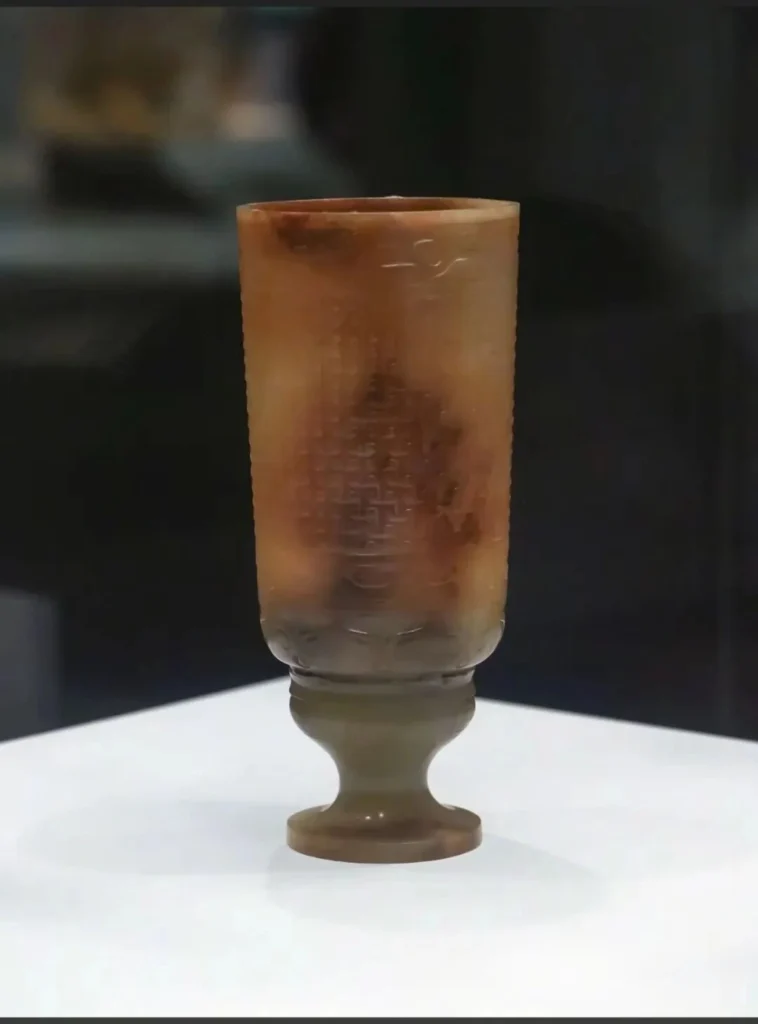
III. Jade-Becher mit verzierten Wolkenmustern: Der einzige Jade-Becher aus der Qin-Dynastie im Museum von Xi’an
This jade cup dates from the Qin Dynasty and was unearthed in 1976 at the Afang Palace site on the western outskirts of Xi’an. It stands 14.5 centimeters tall and has a mouth diameter of 6.4 centimeters. It is currently the earliest and only known example of a high-footed jade cup from the Qin Dynasty. It is housed in the Xi’an Museum.
The cup consists of two parts: the body and the base. The body has a straight rim and resembles a small barrel. The base features a tall, flared footring. The jade is of a honey-brown hue, with a smooth and delicate texture. Having been buried underground for over two thousand years, the jade has taken on a burnt-yellow color. Mercury stains and rust spots are still visible in some areas.
The body of the cup features four layers of shallow relief patterns. The first layer consists of persimmon leaf and continuous cloud motifs. The second layer features grain-shaped hooked cloud patterns. The third layer consists of geometric hooked cloud patterns. The fourth layer features stylized cloud-head patterns. Each layer is separated by string-like patterns. These designs are carved with great fluidity.
Regarding the purpose of this jade cup, there are two prevailing theories among scholars. One suggests it was used for drinking alcohol. The other posits that it was used to collect dew, as ancient people believed that the combination of jade and dew could lead to immortality. Regardless of which theory is correct, this jade cup represents the pinnacle of Qin Dynasty jade craftsmanship. In the jade exhibition hall of the Xi’an Museum, its luster remains captivating even after two millennia.
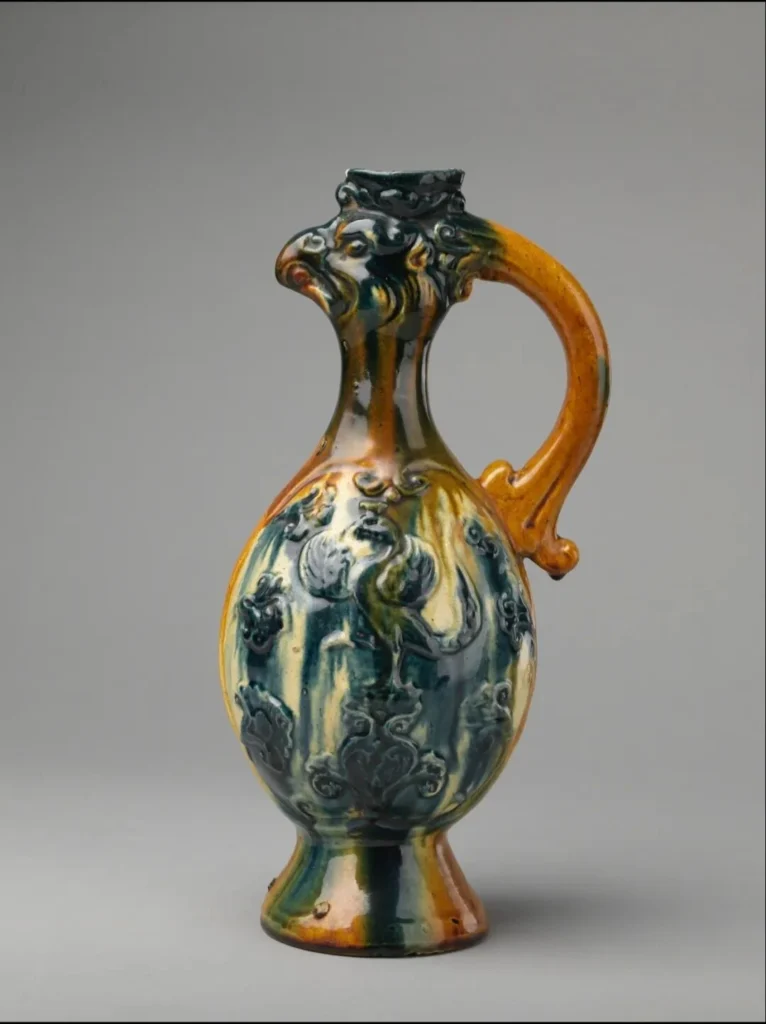
IV. Three-Color Glazed Phoenix-Headed Jar: A treasure from the Xi’an Museum showcasing the exotic charm of the Tang Dynasty
This teapot stands 32.5 centimeters tall and was unearthed at Sanqiao in Xi’an in 1959. The spout is shaped like a phoenix head. The phoenix has round eyes, a protruding beak, and a powerful beak. It holds a jewel in its mouth; the jewel has a small hole, which serves as the spout.
The body of the vase is divided into left and right sides by two raised ridges. One side features a relief carving of a phoenix standing on grass leaves with its wings spread. The other side depicts a scene of hunting on horseback. The handle is shaped like a ruyi scepter. The body is glazed in four colors: ochre, green, blue, and white. The patterns on the body are raised, resembling the effect of metal hammering.
The most remarkable aspect of this vase is its form. The phoenix head is a common motif on gold and silverware from Central Asia and Persia. However, this vase employs the firing techniques of Tang Dynasty Sancai. It is a product of cultural exchange. At the Xi’an Museum, it embodies the Tang Dynasty’s spirit of embracing the world.
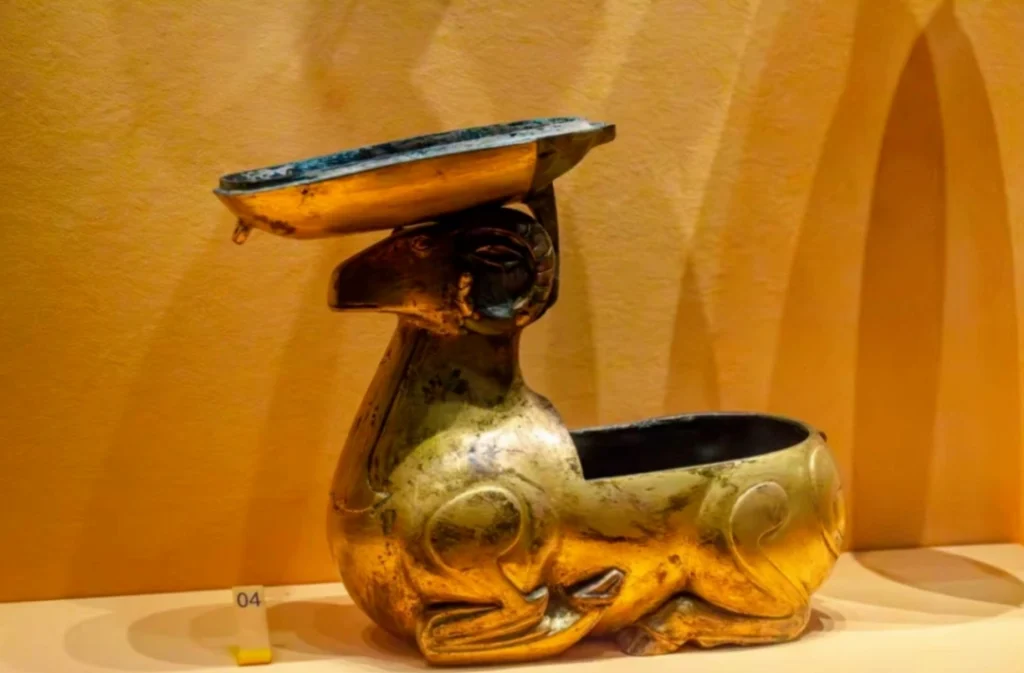
V. Gilded Bronze Sheep-Shaped Lamp: A Han Dynasty Lamp That Changes Shape at the Xi’an Museum
This sheep lamp dates from the Western Han Dynasty and was unearthed in Fengxiang, Baoji, Shaanxi Province, in 1982. It measures 27.4 centimeters in length, 21.8 centimeters in height, and weighs 3 kilograms. The entire piece is made of bronze and gilded on the outside. It is one of the most popular exhibits in the Bronze Hall of the Xi’an Museum.
The sheep is depicted in a kneeling posture. Its head is held high, and its horns curve backward. Its front legs are bent backward, while its hind legs are bent forward. Its body is plump and round, and its tail is very short. Looking at it, you get the impression of a gentle, docile sheep.
But it is more than just a sheep. The sheep’s back and body were cast separately. There is a joint at the neck, and a small handle on its hindquarters. When you lift it by the handle, the back flips open to reveal a lamp dish. The dish holds lamp oil and features a small spout for inserting a wick. When the lamp is not in use, folding the back back into place allows any remaining oil to flow back into the sheep’s belly through the spout.
This design is ingenious. A single object serves as both an ornament and a lamp, without wasting a single drop of oil. In ancient Chinese, the word for “sheep” (羊) is homophonous with the character for “auspicious” (祥). At the Xi’an Museum, the gilding on this sheep lamp is exceptionally well-preserved. Two thousand years have not dimmed its golden luster.
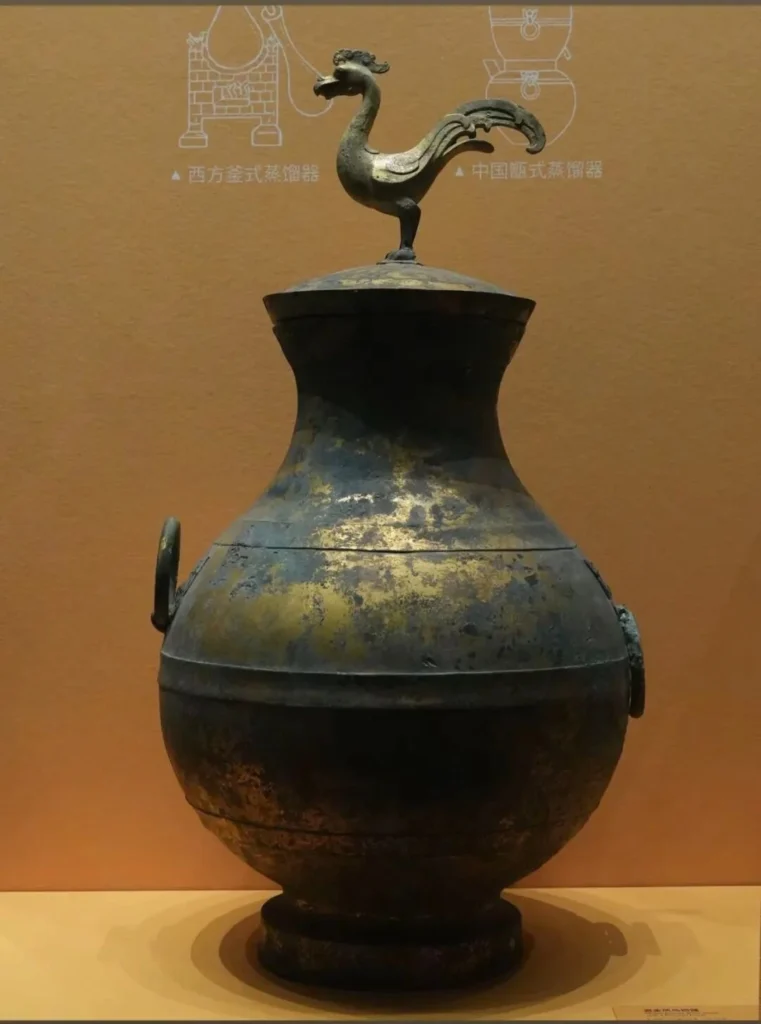
VI. Gilded Bronze Bell with Phoenix Design: Xi’an Museum—A bronze bell that has held fine wine for two thousand years
This bronze bell dates from the Western Han Dynasty and was unearthed in 2003 at the Zao Yuan Han Tomb on Wenjing Road in the northern suburbs of Xi’an. It stands 78.7 centimeters tall and weighs over 20 kilograms. Today, it is one of the most famous Western Han artifacts in the Xi’an Museum.
A phoenix is cast on the lid of the bronze bell. The phoenix holds its head high, a pearl in its beak, with its wings folded against its back. The shoulder and body of the bell feature raised ring patterns. On both sides of the upper body are ring-shaped decorations with animal-face motifs. The entire artifact is gilded.
Most remarkable is the condition in which it was unearthed. When archaeologists opened the lid of the bronze bell, they discovered it contained 26 kilograms of green liquid. Laboratory analysis confirmed that this was wine from the Western Han Dynasty. Its alcohol content was approximately 0.1%, suggesting that the original alcohol content was around 4%. This is one of the earliest physical examples of alcohol ever discovered.
Standing before this bronze bell, one cannot help but wonder: What did the wine taste like to people two thousand years ago? This artifact in the Xi’an Museum is not merely a cultural relic; it is a gift from time itself.
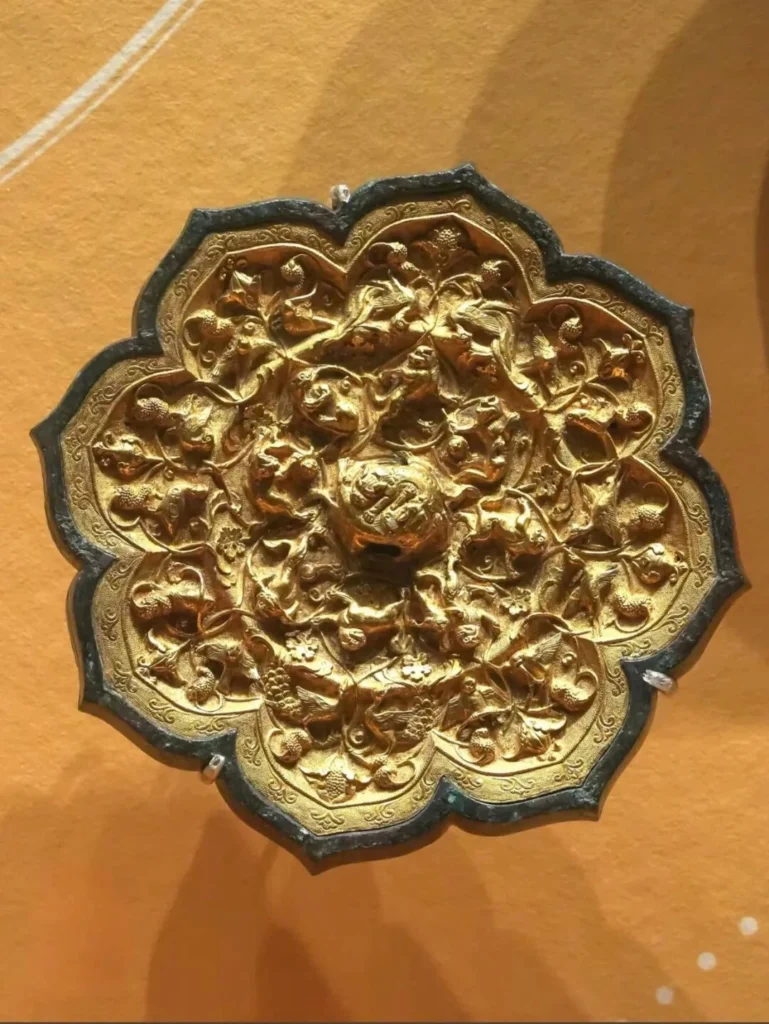
VII. Golden-backed Mythical Beast Grape Mirror: Xi’an Museum—The Pinnacle of Tang Dynasty Bronze Mirror Craftsmanship
This bronze mirror measures 19.7 centimeters in diameter and was unearthed in 2002 in Baqiao District, Xi’an. It belonged to Yan Shimwei, a Samary of Taizhou during the Tang Dynasty, and his wife. It is now one of the most dazzling pieces in the Xi’an Museum’s collection.
The back of the mirror is covered with a layer of gold. The central knob is adorned with a pair of beasts chasing each other. A raised border divides the mirror’s surface into inner and outer sections. In the inner zone, eight mythical beasts frolic among intertwined vines. The vines form a circle around each beast. Some are walking, some are lying down, and some are leaping. The outer zone features eight diamond-shaped petals, each filled with intertwined floral patterns. Grapes adorn the spaces between the flowers, and beneath the grapes, two birds are pecking at the seeds.
This mirror is truly exquisite. Among the gold-backed mirrors from the Tang Dynasty unearthed to date, it stands out as the finest in both design and craftsmanship. Standing before it, one can fully appreciate the opulence of the Tang Dynasty’s golden age. This mirror, housed in the Xi’an Museum, serves as the best introduction to the level of craftsmanship achieved during the Tang Dynasty.
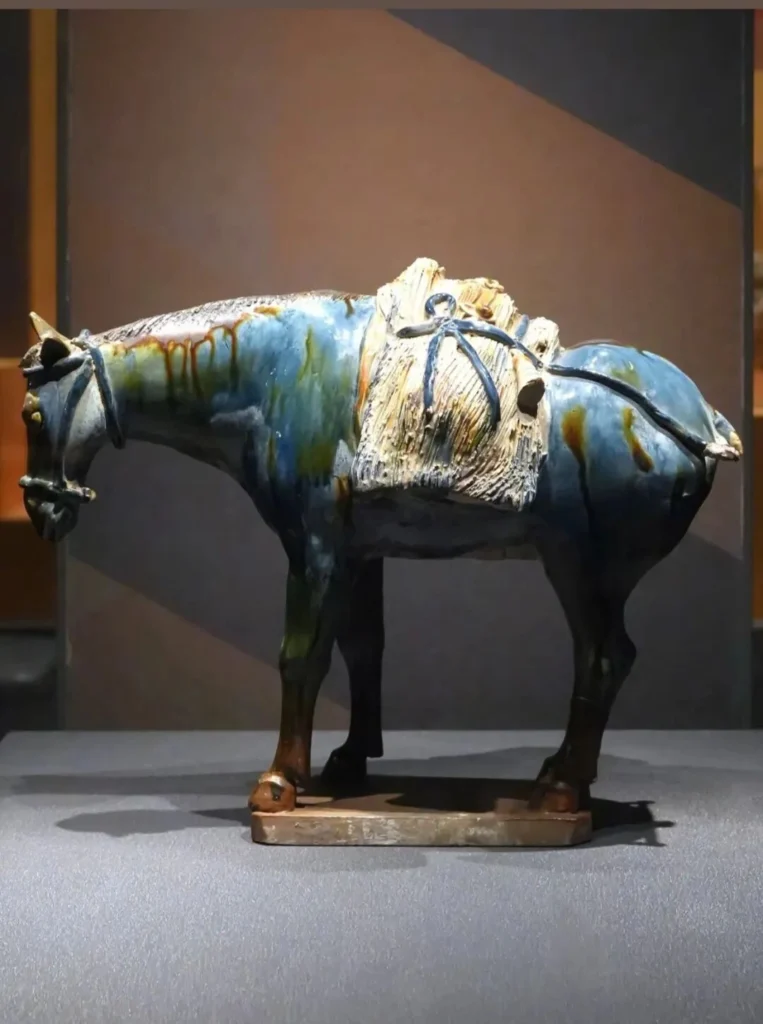
VIII. Blue-Glazed, Polychrome-Decorated Mule: A Rare Blue-Glazed Masterpiece at the Xi’an Museum
This pack mule is also from the Tang Dynasty and was unearthed in 1966 in Lianhu District, Xi’an. It stands 26.5 centimeters tall and is 33 centimeters long. In the Tang Sancai exhibition area of the Xi’an Museum, this blue-glazed pack mule always attracts the most attention.
The mule has short ears that stand straight up. Its head is lowered, giving the impression that it is straining under the load. All four legs are planted on a rectangular platform. A saddle and saddlecloth are fitted on its back, and the saddle carries a heavy pack, securely bound with ropes. The mule’s mouth is slightly open, as if catching its breath during a long journey.
The mule’s body is glazed in blue, interspersed with brown patterns. The pack features three glaze colors: yellow, white, and blue. While horses and camels are common in Tang Sancai, donkeys and mules are extremely rare. Blue glaze was particularly precious during the Tang Dynasty, as the blue glaze material came from Persia.
This pack mule is one of the most poignant pieces in the Xi’an Museum’s collection. It has carried heavy loads for over a thousand years and has yet to set them down.
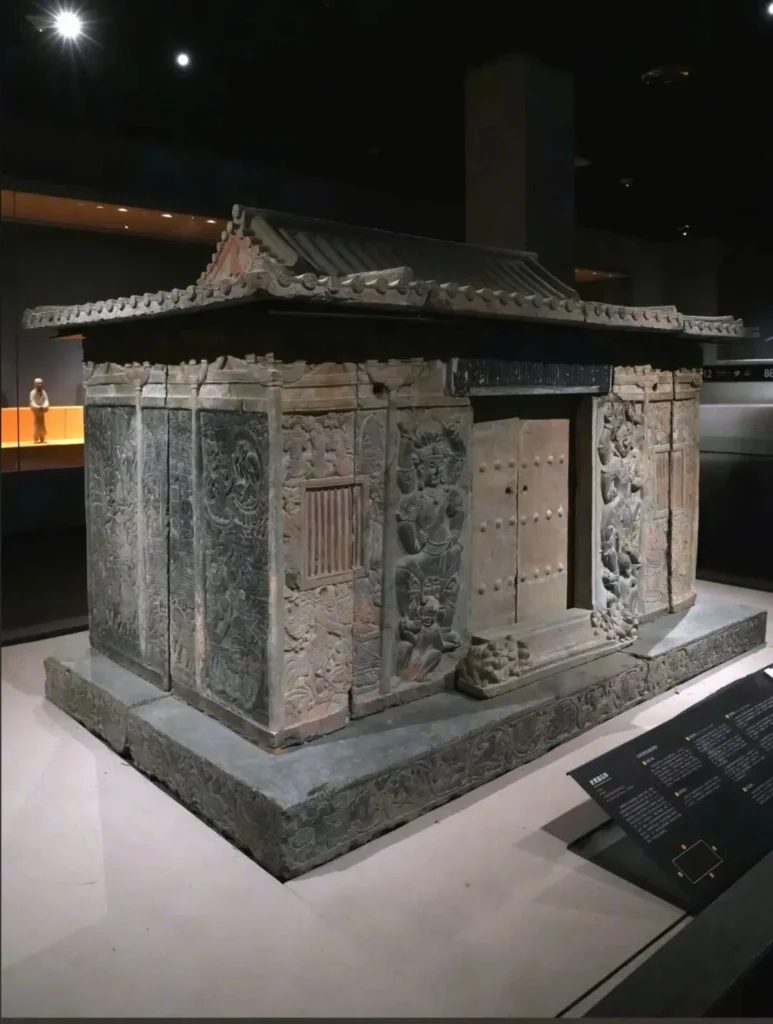
IX. The Stone Coffin of Shi Jun from the Northern Zhou Dynasty: Telling the Story of the Silk Road at the Xi’an Museum
This stone coffin was unearthed in 2003 in Jingshang Village, Xi’an. The owner of the tomb was Shi Jun, a Sogdian. The Sogdians were an ancient people who lived in Central Asia and were renowned for their business acumen. Shi Jun’s wife, whose surname was Kang, was also a Sogdian. After the family moved to Chang’an, Shi Jun was appointed as the Sabao of Liangzhou, responsible for managing the Sogdian community in China.
The stone coffin is covered with relief carvings. These depictions portray scenes from Shi Jun’s life: trading, feasting, and traveling. The images feature many elements characteristic of Central Asian styles. Through these carvings, you can glimpse the real lives of Silk Road merchants from over a thousand years ago.
In the Xi’an Museum, this stone coffin occupies a large section of the exhibition space. It serves as a reminder to every visitor that ancient Chang’an was once a major international metropolis where people of different ethnicities and faiths lived together.
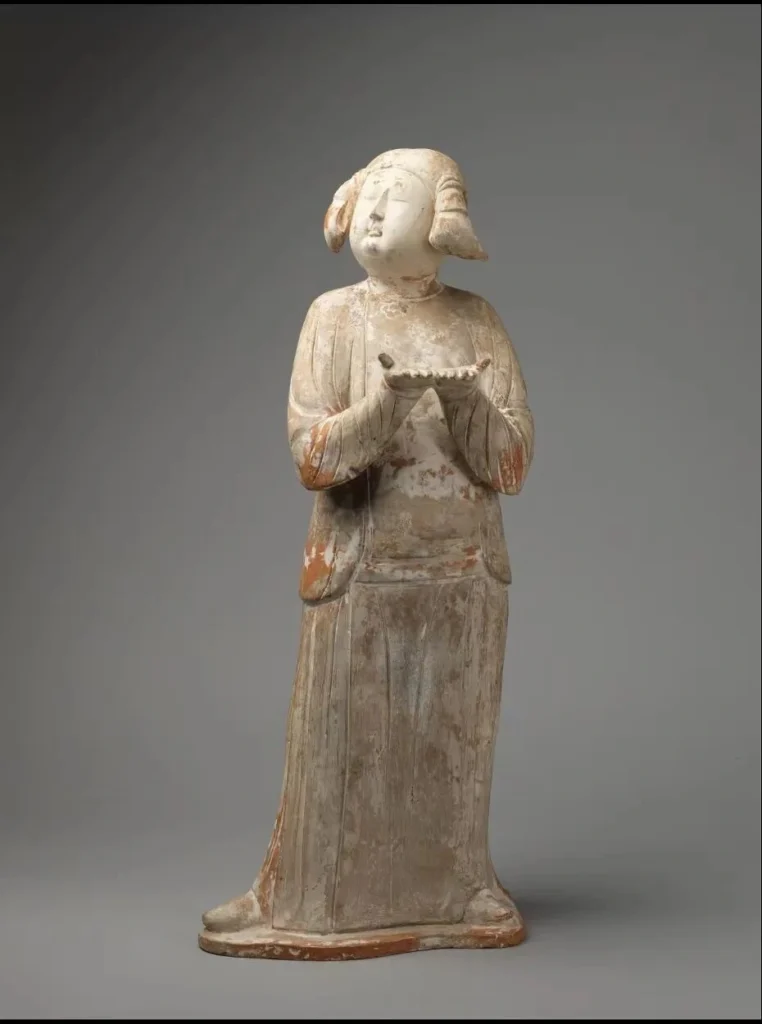
X. A gilded statue of Amitabha Buddha created by Dong Qin in the fourth year of the Kaihuang era of the Sui Dynasty: One of the Three Treasures of the Xi’an Museum
This final piece is one of the most important artifacts in the Xi’an Museum’s collection. It is a gilded bronze Buddha statue from the Sui Dynasty, unearthed in 1974 in Bali Village, Yanta District, Xi’an. It stands 41 centimeters tall. Together with the Sancai “Flying Horse” and the jade cup with interlaced cloud patterns, it is counted among the three most treasured artifacts of the Xi’an Museum.
The statue ensemble consists of Amitabha Buddha, two bodhisattvas, and two guardian deities, totaling five figures. Amitabha Buddha sits in the lotus position on a Mount Sumeru pedestal at the center. His face is square and well-proportioned, and his expression is solemn. Behind him is a flame-shaped aureole. The two bodhisattvas stand on lotus pedestals on either side. On the outermost sides are two guardian deities, depicted in majestic poses.
An inscription is carved on the base. It states that the statue was cast in the fourth year of the Kaihuang era of the Sui Dynasty (584 AD) with funds provided by a man named Dong Qin. The text remains clearly legible, despite being over 1,400 years old.
The entire group of statues is gilded. The gold layer is exceptionally well-preserved. The proportions of the five figures are harmonious, and the drapery flows gracefully. This is a masterpiece of Sui Dynasty Buddhist sculpture.
This Buddha statue has been designated a National Treasure. Among the nearly 1,000 Buddhist statues in the Xi’an Museum, it is the most outstanding. If you could only see three items at the Xi’an Museum, this one must be among them.
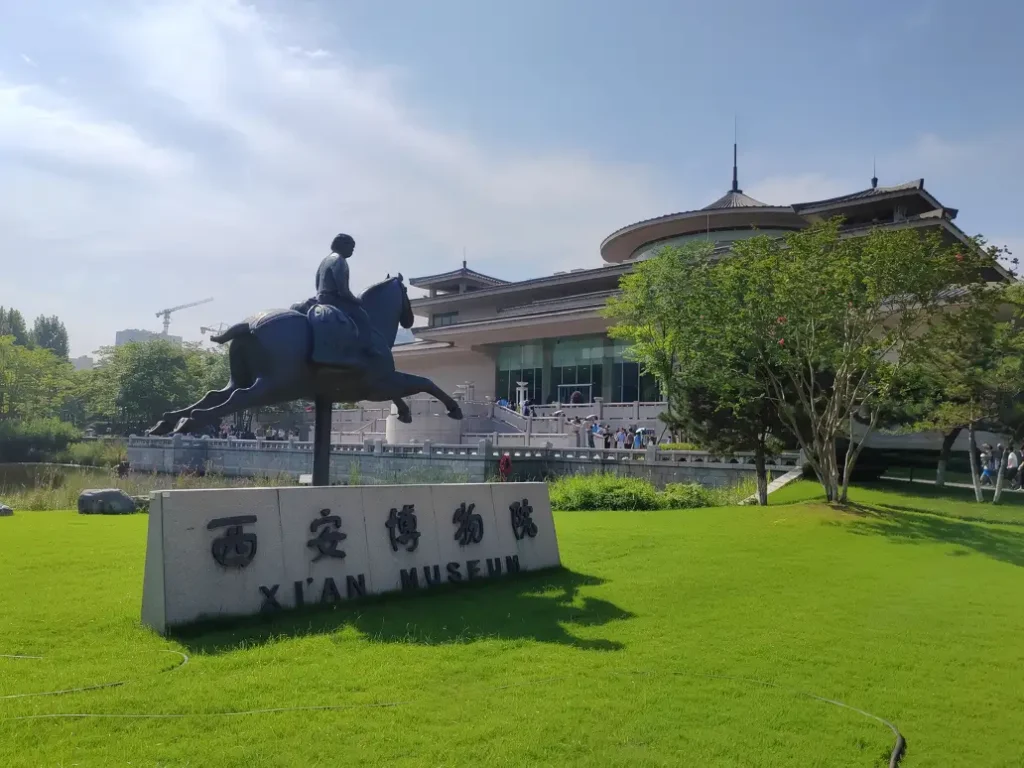
How to Get to the Xi’an Museum: Tickets, Hours, and Transportation
Admission to the Xi’an Museum is free. This is good news that many people don’t know about. However, free admission doesn’t mean you can just walk in—you need to make a reservation in advance.
You can book tickets through the Xi’an Museum WeChat official account. You can also book via the Meituan or Dianping apps. Reservations can be made up to 5 days in advance. The number of tickets available each day is limited. During holidays or summer vacation, it’s recommended to book early. You can also try booking on-site, but if that day’s tickets are sold out, you’ll have made the trip for nothing.
The Xi’an Museum’s opening hours are as follows: Regular hours are 8:30 AM to 6:00 PM daily. Last admission is at 5:00 PM. The museum is closed every Tuesday, except on public holidays. The peak season runs from May 1 to October 31 each year. During the peak season, the Tuesday closure is suspended. Opening hours are sometimes extended into the evening. For example, during summer vacation, the museum may stay open until 9:00 PM. It’s best to check the official WeChat account for the latest opening announcements before visiting.
The address of the Xi’an Museum is 72 Youyi West Road, Beilin District, Xi’an.
The most convenient way to get there is by subway. Take Subway Line 2 to Nanshaomen Station. Exit at Exit F and walk west for about 500 meters. The walk takes approximately 10 minutes. Metro Line 5 also stops at Nanshaomen Station. You can also reach the museum by bus; several bus routes, including Lines 21, 29, 40, and 46, pass nearby.
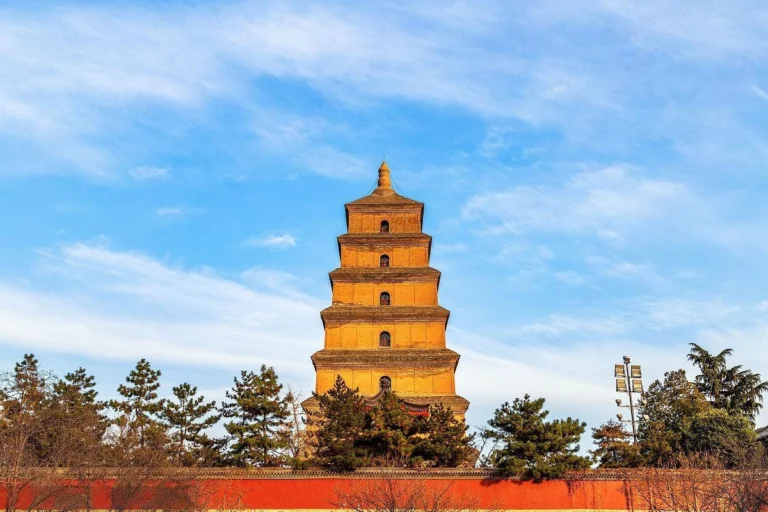
We recommend visiting the Xi’an Museum and the Small Wild Goose Pagoda together. They are located within the same complex. The Small Wild Goose Pagoda is also a UNESCO World Heritage Site. Together, these two attractions take about half a day to explore.
Once inside the Xi’an Museum, you can follow this guide to view the 10 featured exhibits. They are located on the basement level through the second floor. The basement level houses the Ancient Artifacts Gallery. The first floor features the Buddhist Sculptures Gallery. The second floor includes the Jade Artifacts Gallery and the Calligraphy and Painting Gallery. The museum offers free Wi-Fi. There are also benches in the galleries for resting. If you take your time, you can see the highlights in two to three hours.
Summary
The Xi’an Museum isn’t just a place to snap a photo and move on. It’s worth spending a morning or an afternoon exploring at your leisure. From Western Zhou Dynasty ritual vessels to Sui Dynasty Buddhist statues, and from Qin Dynasty jade cups to Tang Dynasty three-color glazed pottery, the museum houses the most exquisite remnants of ancient Chang’an.If you want to learn about Xi’an china history, the Xi’an Museum is definitely a must-see on your itinerary.

Thank you, and please come back often.