
What to Do in Xi’an: 15 Best Attractions & Activities (2026 Guide)
If you’re planning an unforgettable trip, you’re probably wondering: What to Do in Xi’an. Known as the ancient capital of thirteen dynasties, this historic city is brimming with stories. It’s home not only to the Terracotta Army but also to ancient city walls and food streets. Whether you’re a history buff or a foodie, Xi’an won’t disappoint. This updated 2026 guide compiles 15 must-see attractions and activities to help you make the most of your time in Xi’an.

I. 15 Must-See Attractions: From Historical Wonders to the City That Never Sleeps
To figure out what to do in Xi’an, you should start by getting to know these 15 must-see attractions. They are spread across three areas—inside the city walls, Qujiang New District, and Lintong District—making them easy to visit in one go.
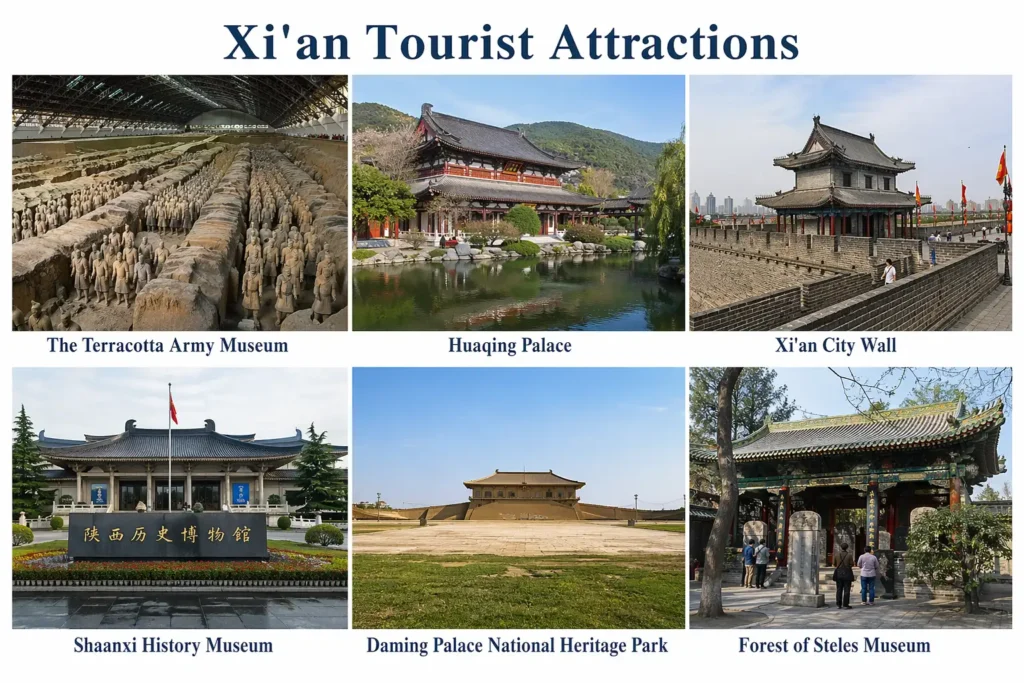
World-class historical attractions:
- The Terracotta Army of Emperor Qin Shi Huang: Hailed as the “Eighth Wonder of the World,” the army of terracotta warriors, each with a unique face, is truly awe-inspiring.
- Huaqing Palace: The setting for the love story between Emperor Xuanzong of Tang and Yang Guifei, nestled against mountains and beside water, offering stunning scenery.
- Xi’an City Wall: China’s largest and best-preserved ancient city wall, stretching approximately 13.7 kilometers in length.
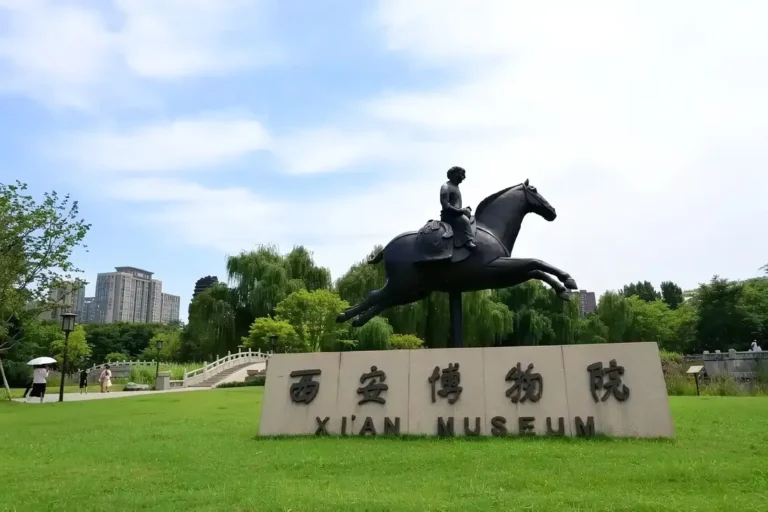
- Shaanxi History Museum: With a collection of over 370,000 artifacts, it is known as the “Pearl of the Ancient Capital” and the “Treasury of China.”
- Daming Palace National Heritage Park: The site of the Tang Dynasty imperial palace, it is vast in scale and offers a great opportunity to understand Tang Dynasty architectural layout.
- Beilin Museum: Home to a vast collection of steles and calligraphy masterpieces from throughout history, it is a must-visit destination for calligraphy enthusiasts.

Tang Dynasty Cultural Experience:
- Tang Dynasty Night City: The most popular nightlife district, featuring Tang-style architecture adorned with lanterns and brightly lit at night.
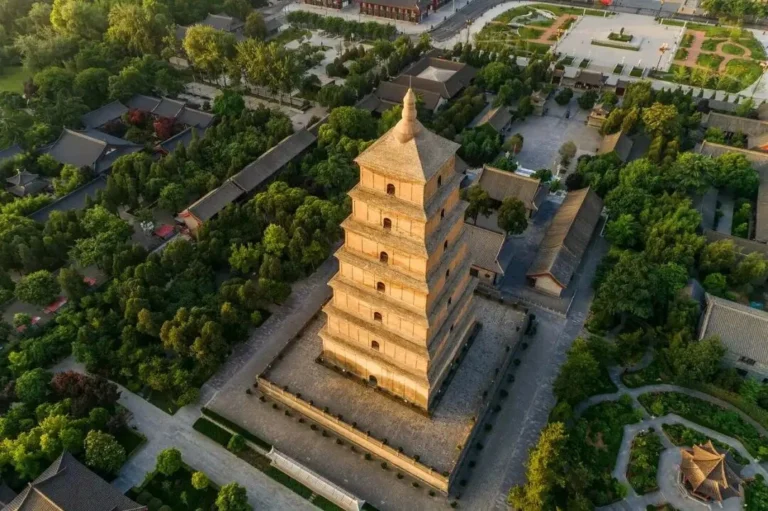
- Big Wild Goose Pagoda: A landmark of Xi’an; climbing the pagoda offers a panoramic view of Qujiang, and the musical fountain at the North Square is truly spectacular.
- Tang Dynasty Peony Garden: A replica of a Tang Dynasty imperial garden, where pavilions and towers are reflected in the water; explore the garden by day and enjoy performances by night.
- Chang’an Twelve Hours Theme District: An immersive Tang Dynasty-style experience where you can rent Hanfu for photos and instantly travel back to the heyday of the Tang Dynasty.
- Small Wild Goose Pagoda: One of Xi’an’s oldest surviving Buddhist temples, featuring a serene atmosphere perfect for quiet reflection and prayer.

City Landmarks and Cuisine:
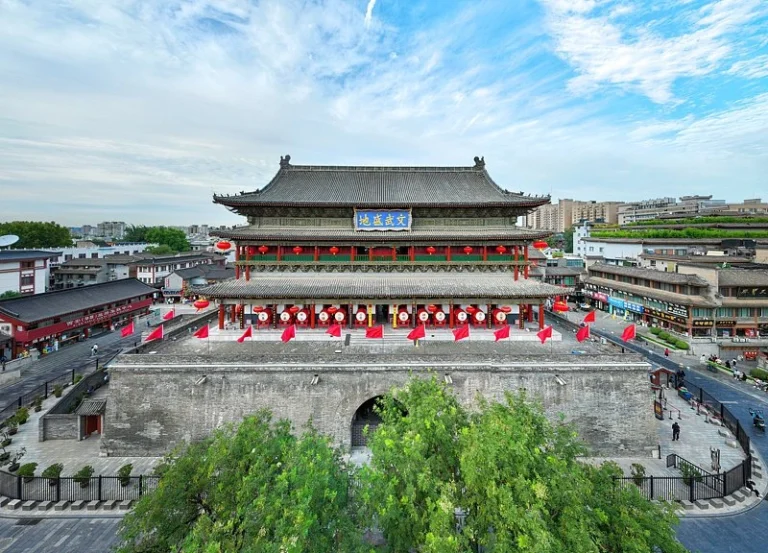
- Bell Tower & Drum Tower: Located in the heart of Xi’an, these structures feature red walls and upturned eaves, and are particularly spectacular when illuminated at night.
- Hui Muslim Street: Xi’an’s most famous food street, where you can enjoy roujiamo, yangrou paomo, liangpi, and zenggao.
- Yongxingfang: A hub for snacks from all over Shaanxi, with a clean and tidy atmosphere—perfect for taking photos and checking in.
- Sajinqiao: A hidden gem among locals, this food street lets you avoid the crowds of the main streets and is bursting with a lively, down-to-earth atmosphere.

II. Frequently Asked Questions
Before deciding what to do in Xi’an, many people have some questions. Here are a few of the most common ones, and I’ll answer them one by one.
Question 1: How many days should I spend in Xi’an?
Three days will cover the highlights, while five days allow for a more in-depth exploration. A three-day trip is ideal for those with limited time who want to visit the main attractions; a four- to five-day trip gives you more time to explore the Tang Dynasty Peony Garden and the Daming Palace Ruins Park at a more leisurely pace.
Question 2: Is traveling to Xi’an expensive?
It offers excellent value for money. For a typical 3–4-day trip, the average cost per person is around 1,000–1,500 yuan, covering accommodation, admission fees, transportation, and meals, with few hidden costs.
Question 3: What is the best season to visit Xi’an?
Spring and autumn are the most comfortable seasons, specifically April–May and September–October. The weather is cool during these months, making them ideal for outdoor activities and long walks.
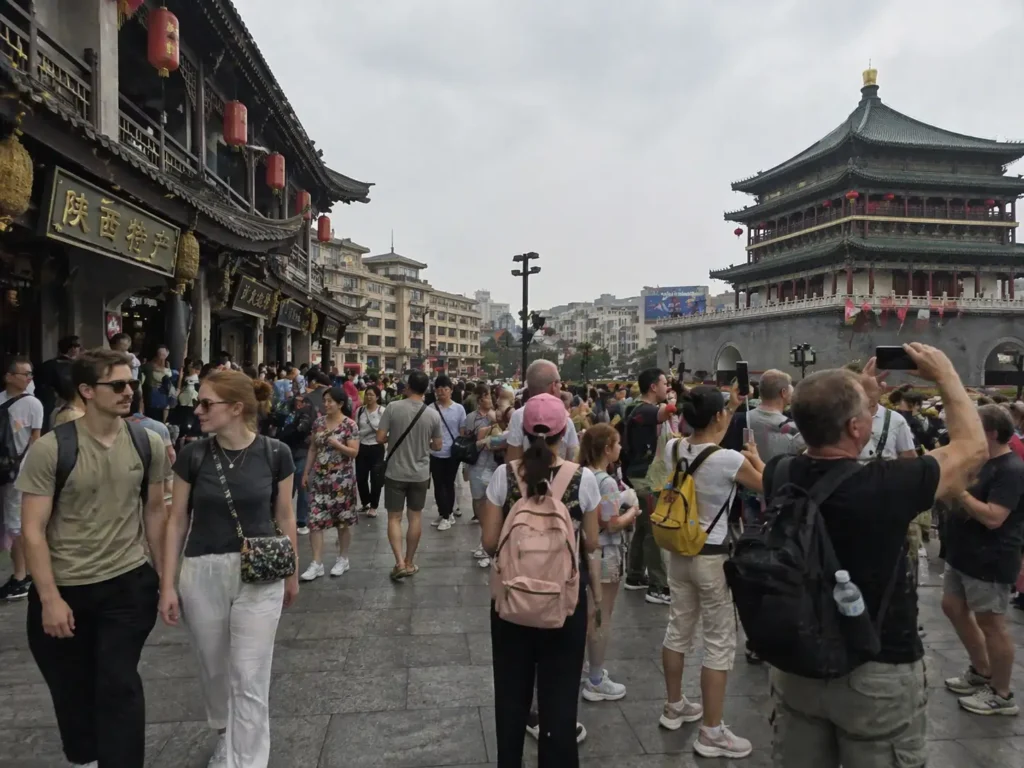
III. Why Xi’an Is the Top Destination to Visit in 2026
Once you figure out what to do in Xi’an, you’ll realize just how much this city is worth visiting. Xi’an has many unique advantages.
Advantage 1: Attractions are concentrated, and transportation is convenient. The Xi’an Metro covers most of the core tourist areas, making it easy to reach the Bell Tower, Drum Tower, Big Wild Goose Pagoda, and the City Wall by subway. The city’s metro network is very convenient, so you don’t need to drive or worry about finding your way.
Advantage 2: A Perfect Blend of History and Modernity. You can cycle along the city walls during the day and look down on the ancient city that’s thousands of years old; at night, head to the Tang Dynasty Everbright City to see the brightly lit Tang-style architecture and spectacular performances. The experience of blending the ancient and the modern is truly unique.
Advantage 3: A Food Lover’s Paradise. Xi’an offers a wide variety of delicious foods, from Hui Muslim Street to Sajinqiao, and from roujiamo to yangrou paomo—each dish is full of local character. If you’re looking for authentic local cuisine, head straight to Sajinqiao or Dapi Yuan—these are the spots locals frequent.
Advantage 4: A wealth of activities. You can rent Hanfu to take photos at the Tang Dynasty Ever-Bright City, watch the live-action performance of *The Song of Everlasting Sorrow*, or participate in an XR immersive experience that transports you back to the golden age of the Tang Dynasty in an instant. Whatever your interests, Xi’an has something to offer.
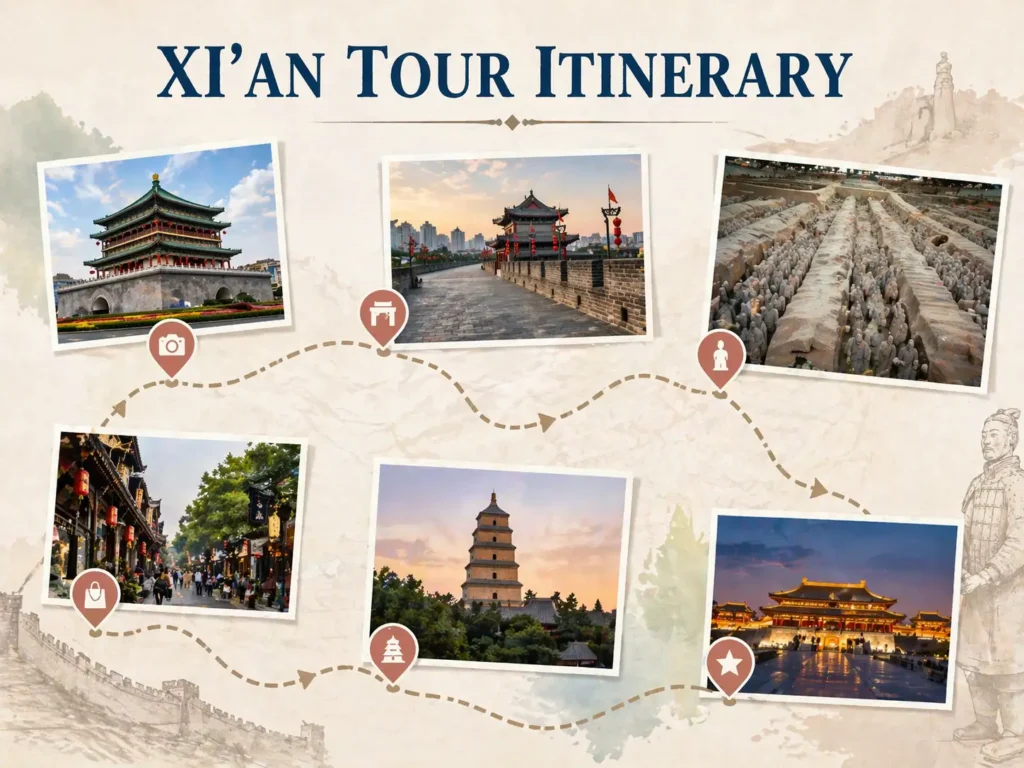
IV. 3-Day Itinerary Highlights: No Detours, No Backtracking
If you’re short on time, follow this 3-day itinerary to see all the highlights of Xi’an. This itinerary has been optimized based on on-site reconnaissance, ensuring a seamless route with no wasted time.
Day 1: Historic City Center Tour
In the morning, climb the Xi’an City Wall from Yongning Gate and rent a bicycle for a roughly 2-hour ride to take in the panoramic view of the old city. For lunch, head to Hui Muslim Street or Shajin Bridge to try roujiamo and yangrou paomo. In the afternoon, visit the Bell and Drum Towers and take photos at the square. In the evening, go to Yongxingfang to sample snacks from all over Shaanxi in one place and experience the intangible cultural heritage of “shattered bowl wine.”
Day 2: Qin and Tang Dynasty Highlights
Arrive at the Terracotta Army Museum before 8:30 AM to avoid the morning rush. Visit Pits 1, 2, and 3, as well as the artifact exhibition hall. We recommend hiring an official guide to help you better understand this historical period. In the afternoon, head to Huaqing Palace to stroll through the imperial gardens and admire the reflections of pavilions and towers on the lake. If you have enough time, catch a performance of *The Song of Everlasting Sorrow*—the lighting and stage design are truly spectacular.
Day 3: Cultural Feast Tour
In the morning, visit the Shaanxi History Museum, which houses Xi’an’s millennia-old cultural heritage. The collection ranges from Shang and Zhou dynasty bronze ware to Tang dynasty gold and silver artifacts, each piece of great value. Note: Be sure to book in advance, as free tickets are in high demand. In the afternoon, visit the Big Wild Goose Pagoda to climb to the top for a panoramic view, and watch the musical fountain show at the North Square in the evening. At night, head straight to the Tang Dynasty Ever-Bright City to watch the “Unbreakable Doll” performances and stroll through the dazzlingly lit Tang Dynasty-themed streets—it’s like stepping back in time to Chang’an in an instant.
V. Recommended Itineraries and Highlights
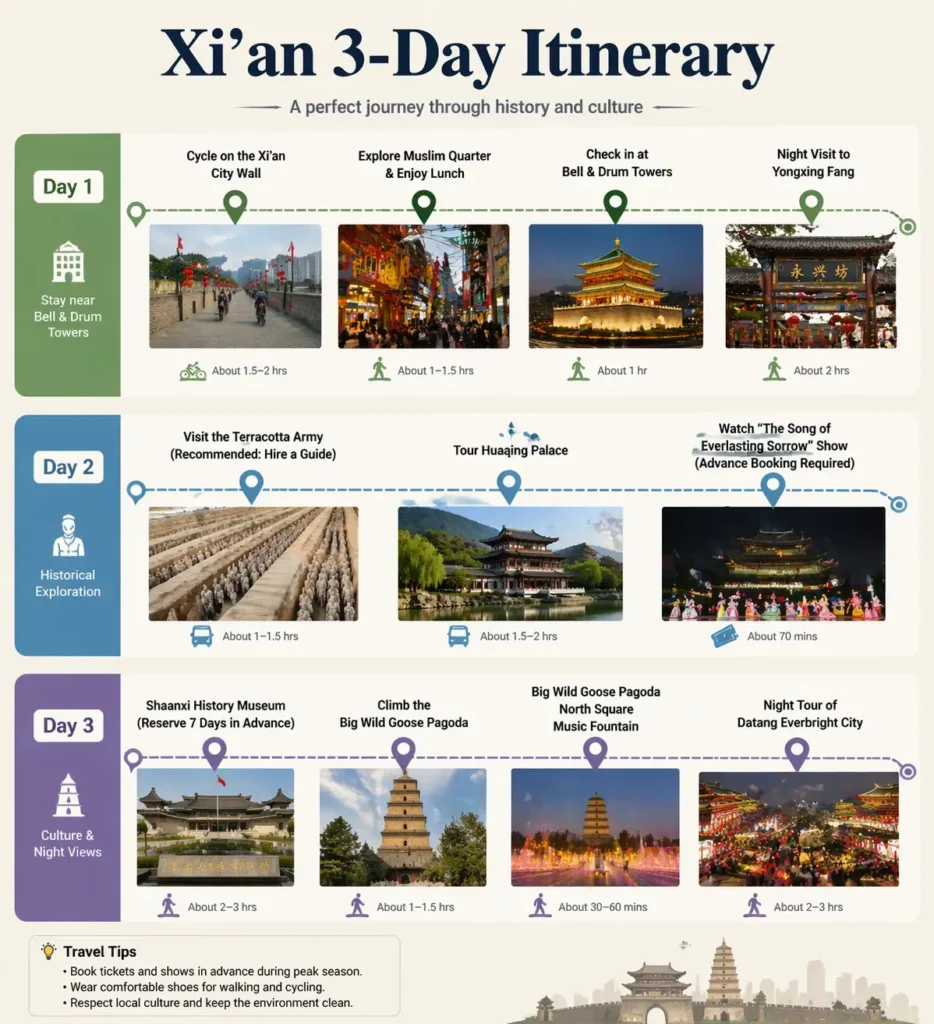
To make your trip as hassle-free as possible, here’s a detailed 3-day, 2-night itinerary you can follow step-by-step.
- Day 1: Check into a hotel near the Bell and Drum Towers → Climb the Xi’an City Wall for a bike ride → Explore Hui Muslim Street for lunch → Visit the Bell and Drum Towers → Take a night stroll through Yongxingfang
- Day 2: Visit the Terracotta Army (guided tour recommended) → Tour Huaqing Palace → Watch the “Song of Everlasting Sorrow” performance in the evening (tickets must be purchased in advance)
- Day 3: Shaanxi History Museum (book 7 days in advance) → Climb the Big Wild Goose Pagoda → Watch the musical fountain at the North Square of the Big Wild Goose Pagoda → Night tour of Tang Dynasty Everbright City
The features and advantages of this itinerary are clear:
Feature 1: No detours. The three-day itinerary is organized along the Ancient Charm Route, the Eastern Cultural Route, and the Qujiang Tang Style Route. The travel distances between attractions are well-planned, so you won’t waste time backtracking.
Feature 2: Well-balanced pace. Each day features 3–4 major attractions, striking a balance between avoiding a rushed “check-the-box” experience and preventing boredom. You’ll have ample time to explore each site at your own pace.
Feature 3: Combines history and cuisine. The itinerary includes historical and cultural sites like the Terracotta Army and the City Wall, as well as food districts such as Hui Muslim Street and Yongxingfang, allowing you to sample Xi’an’s culinary delights while sightseeing.
Feature 4: Perfect for first-time visitors to Xi’an. This itinerary covers all of Xi’an’s must-see highlights, so there’s no need for complicated research—just follow along and enjoy a hassle-free trip.
We hope this guide answers all your questions about visiting Xi’an. Pack your bags, grab this guide, and set out to explore Xi’an china history.