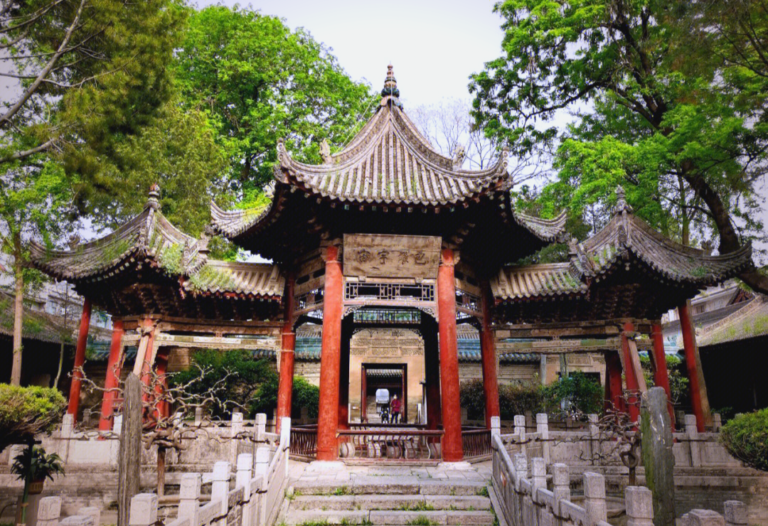
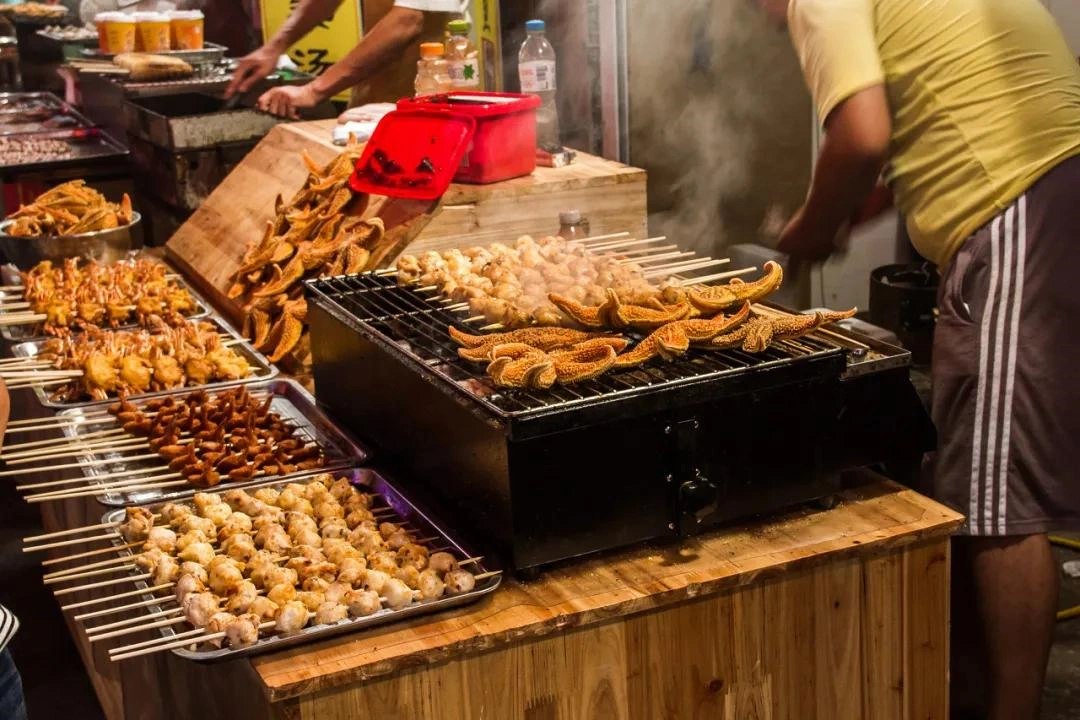
Beyond the Muslim Quarter: Xi’an Street Food Locals Love
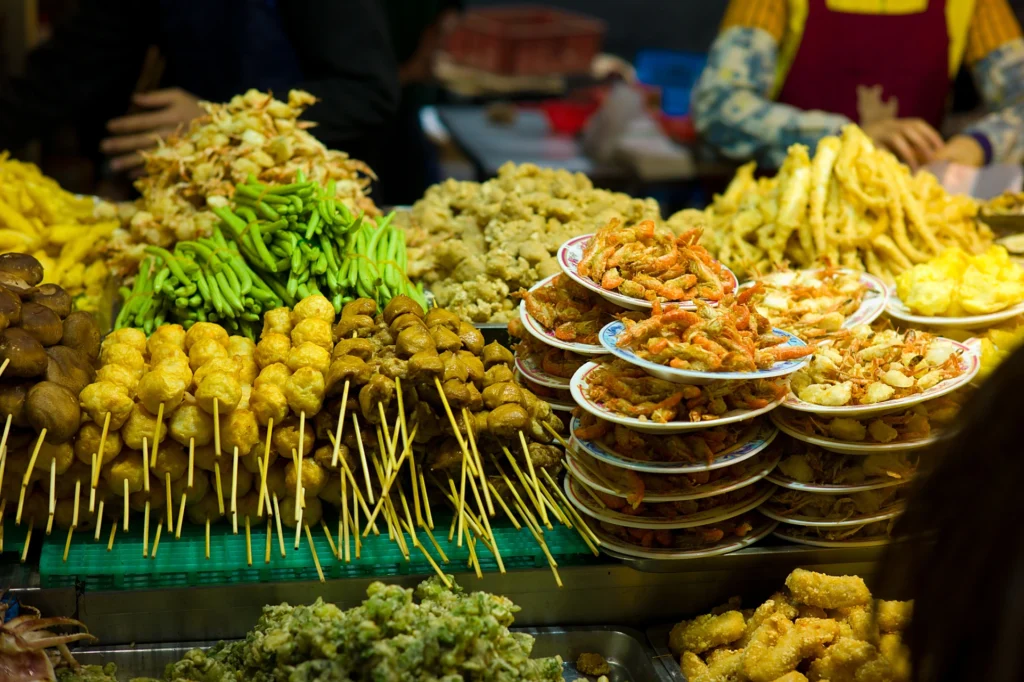
When it comes to Xi’an street food, most people think only of Hui Muslim Street and those three signature dishes—roujiamo, kudai noodles(Xi’an famous noodles), and yangrou paomo. They’re not wrong, but they’re only half right.
Authentic Xi’an street food isn’t just a single street—it’s a web woven from the daily lives of locals: longtime neighbors lining up at 6 a.m. to buy steamed rice cakes, and night markets bustling with people munching on skewered meat well past midnight. This guide will first give you the lowdown on the three staples everyone writes about, then take you deeper—into the alleys where locals actually eat, the regional diversity that out-of-towners rarely get to taste, a clear explanation of halal and vegetarian options (which is often misrepresented on the English-language internet), plus a practical guide complete with addresses, prices, and phrases you can use right away.
I. The Three Signature Dishes, Plus the “Sanqin Set Meal” That Defines Xi’an
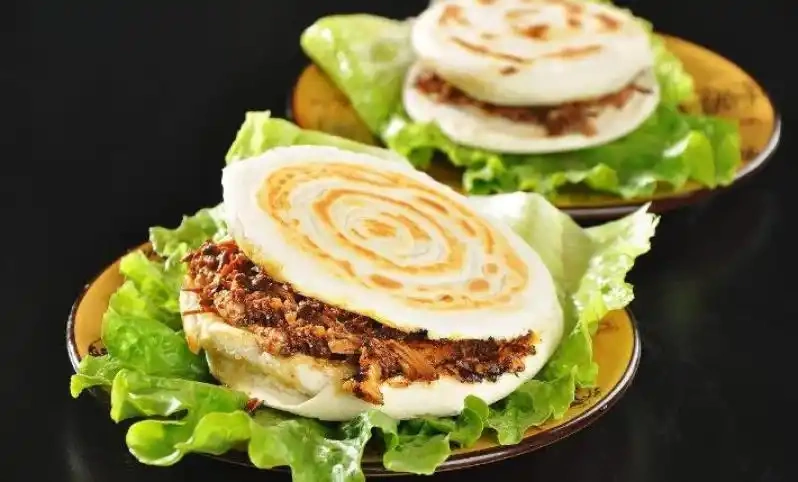
Roujiamo: This is the dish that every blog post refers to as a “Chinese hamburger,” but few people explain it clearly. There are actually two schools of thought on this—understanding this will make you seem like a local
- La Zhu Rou Jia Mo: The Bai Ji bread features a crispy crust characterized by its “iron-ring shape, tiger-back profile, and chrysanthemum-like center,” filled with La Zhu pork—meat braised for at least 12 hours in a rich broth infused with over 20 spices. The hot bread is filled with hot meat.
- Tongguan Roujiamo: Made with a flaky, layered pastry that crumbles with every bite, it is filled with cold meat. It was listed as part of Shaanxi’s Intangible Cultural Heritage in 2011 and received Geographical Indication status in 2023.
There’s a clever twist in the name that comes from ancient Chinese: strictly speaking, it should be “meat sandwiched inside a bun,” but in ancient times, saying “bun sandwiching meat” sounded like “no meat inside,” which was considered inauspicious, so they reversed the order to “meat-stuffed bun.”
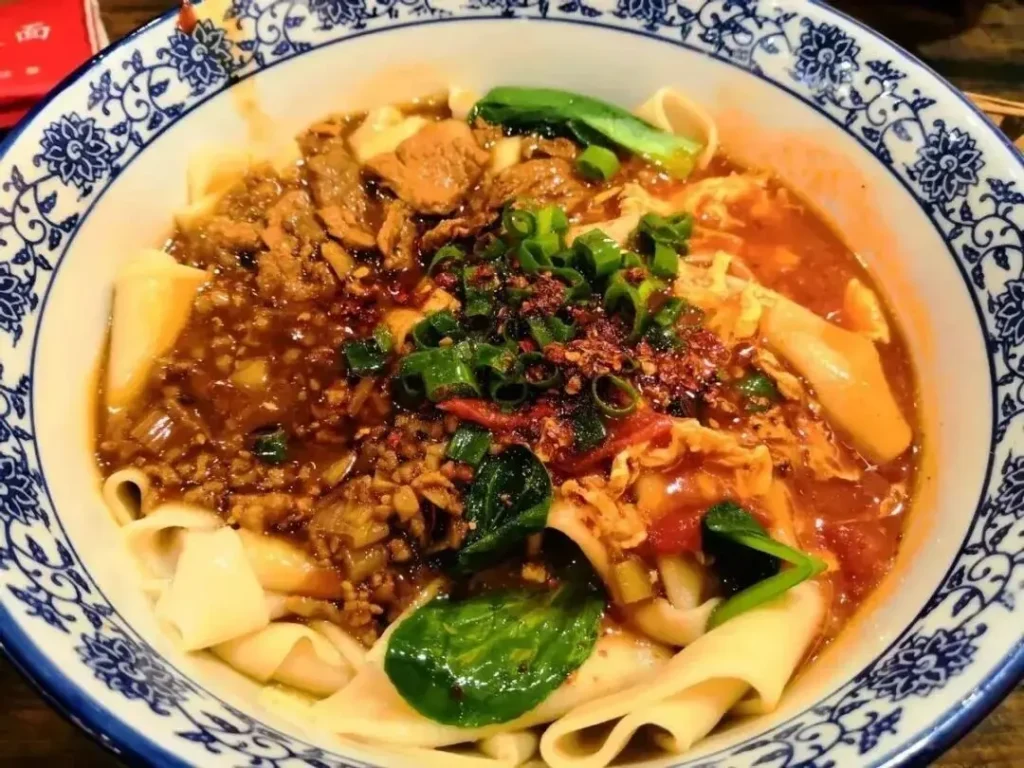
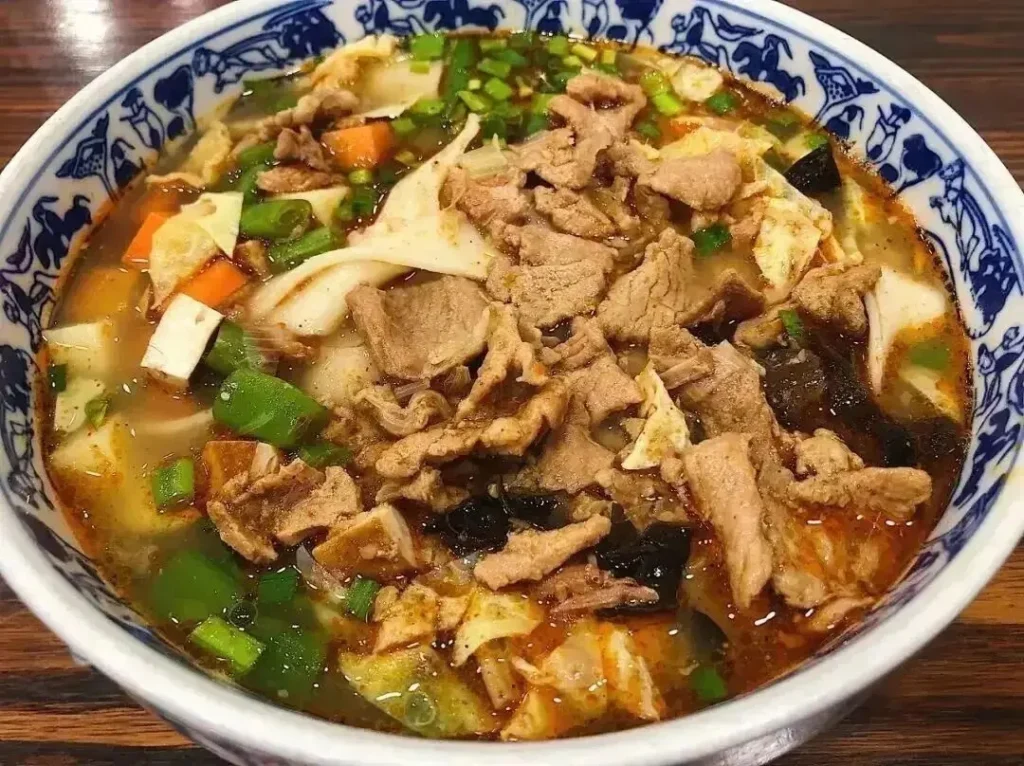
Biangbiang Noodles: Noodles as wide as a belt, named after the “biang” sound made when the dough is slapped onto the surface. Order the “Three-in-One” or “Four-in-One” (a mix of chili, tomato and egg, and minced meat toppings), and eat them with a clove of raw garlic—that’s the local way.
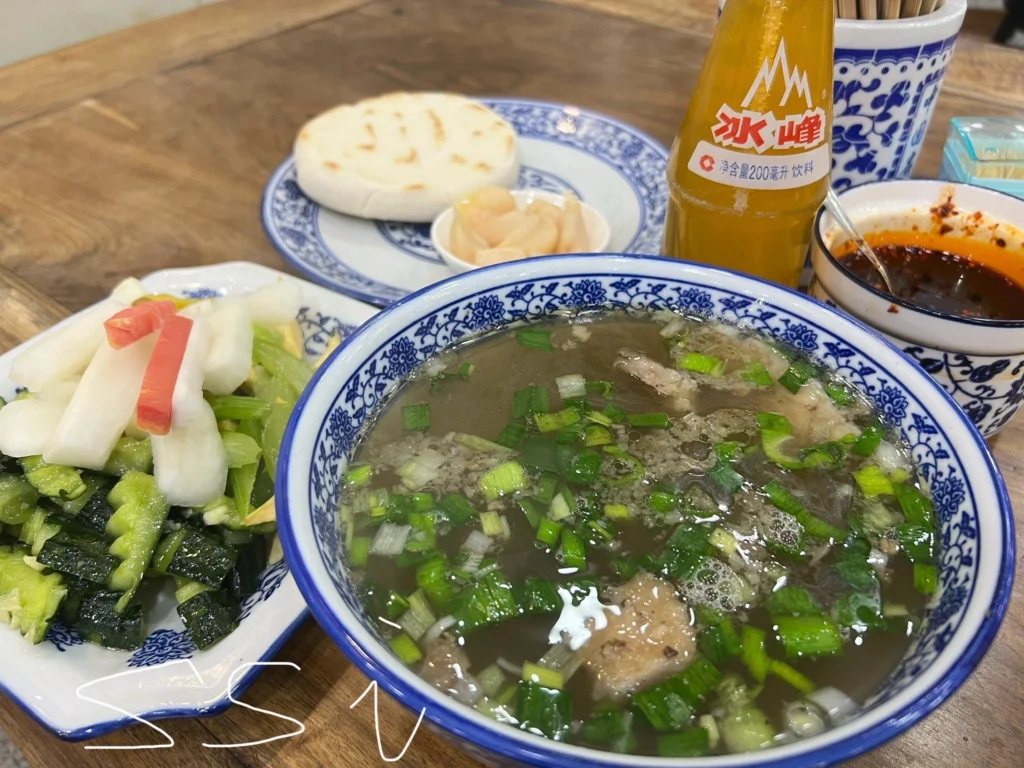
Mutton Paomo: Mutton soup served with crumbled flatbread. The ritual is key—you must tear the flatbread into pieces the size of a fingernail (the smaller, the more flavorful), then hand them to the chef to cook in the soup. At time-honored establishments like Tong Shengxiang (founded in 1920), this is a leisurely communal ritual.
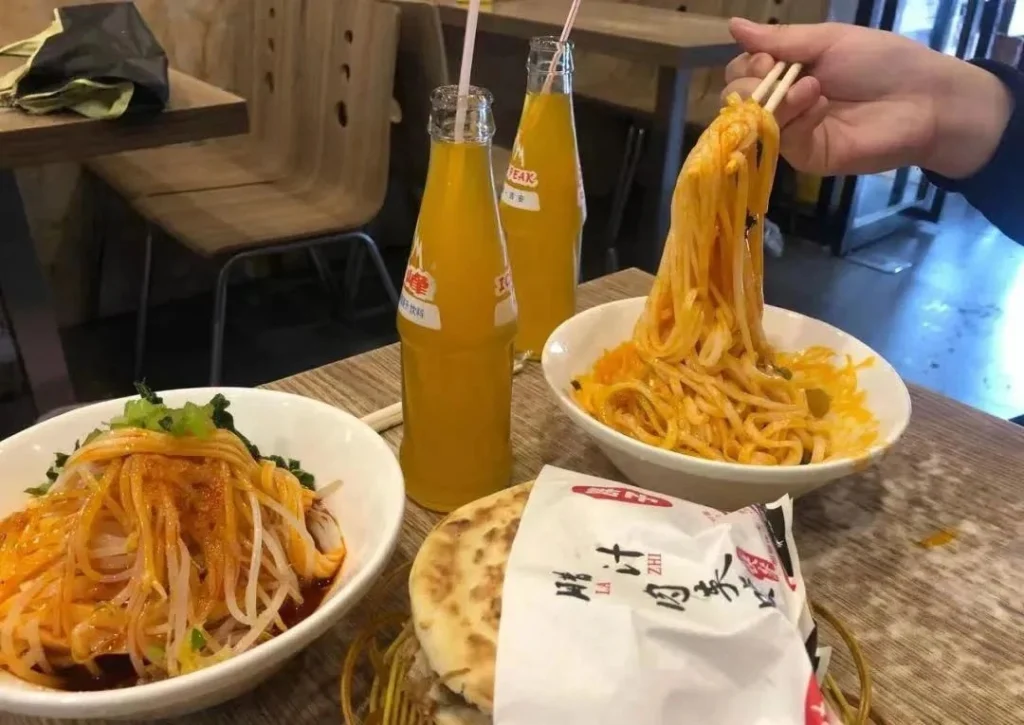
Sanqin Set Meal: Lazhi Roujiamo + Liangpi + Bingfeng (local orange-flavored soda). Priced at 20 to 28 yuan per person, this is a typical lunch for Xi’an locals—it’s both a meal and a cultural symbol. Tip: There are several types of liangpi—Qinzhen Mipi, Qinzhen Mianpi (fragrant), Dun Mianpi (with a stronger sour and spicy flavor), and Sesame Paste Liangpi (spicy-free option)—and the spice level can be adjusted to your preference.
II. Map of Local Food Streets—Where Xi’an Locals Really Eat
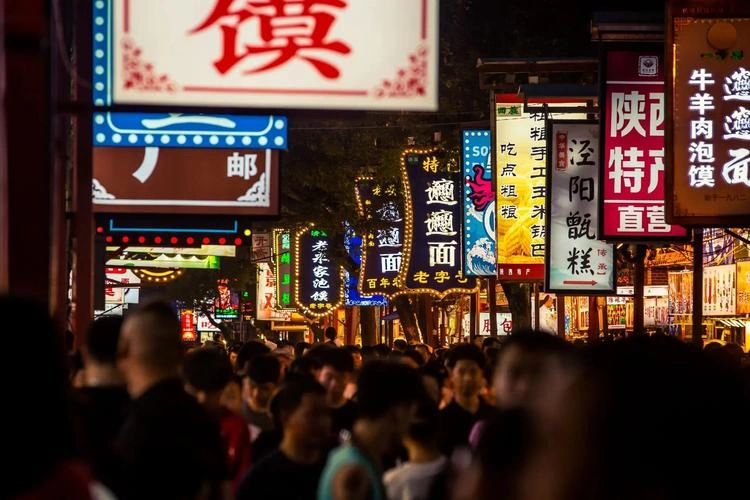
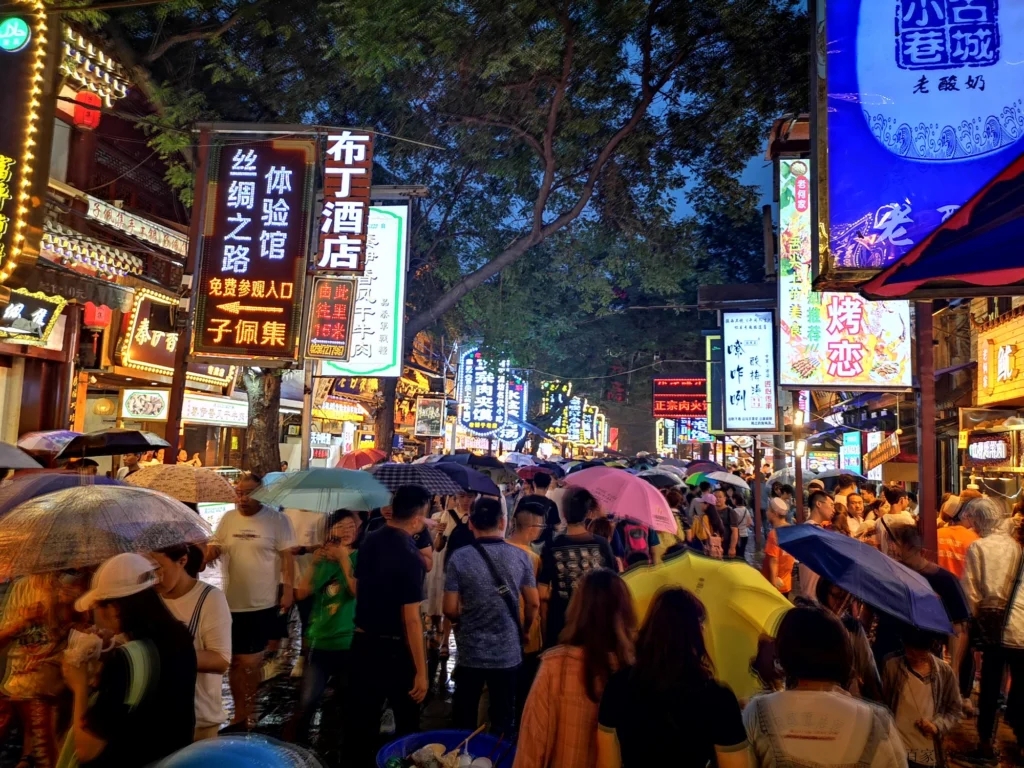
To truly understand Xi’an street food, you first need to see where the locals actually go to eat. On your first night, don’t just hang around the main street of Hui Muslim Street—head to the places where the locals are lining up.
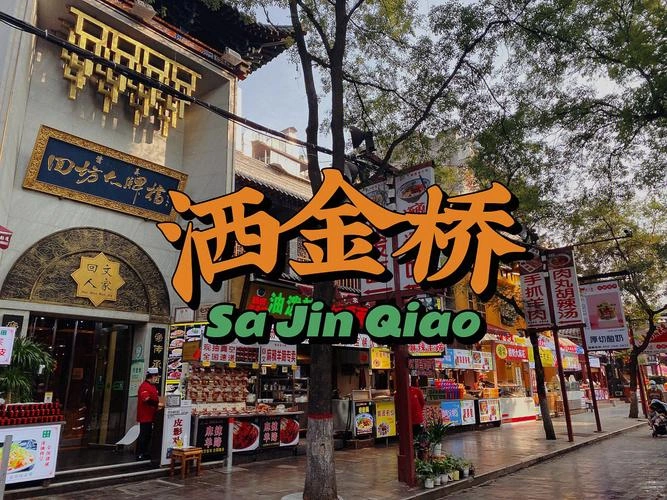
Sajinqiao: Sajinqiao Station on Metro Line 1. An old street lined with Hui Muslim homes—much more authentic than the one crowded with tourists. Must-try: “Fat Man’s Zenggao” (glutinous rice cake filled with red dates and sweet bean paste, 5–7 yuan; sold from 5 a.m. until sold out, around 11 a.m.) and Yang Tianyu’s cured beef buns (No. 132, Sa Jin Qiao). Grilled meat skewers are also available at night. Prime times: 6–10 a.m. and 7 p.m.–midnight.
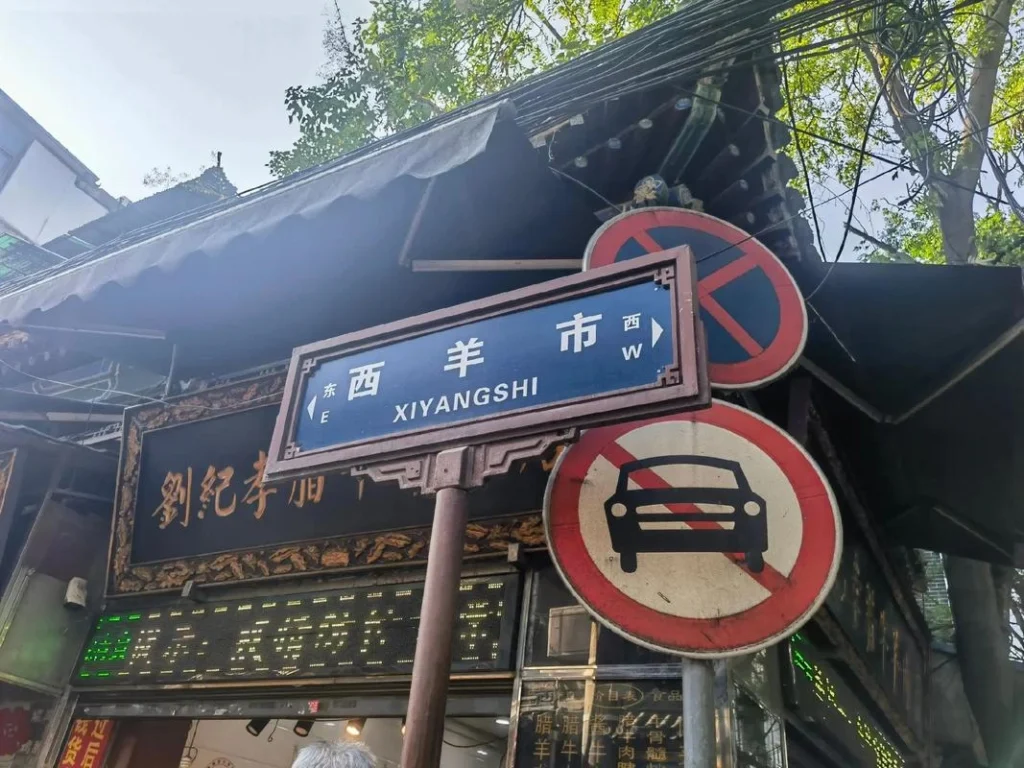
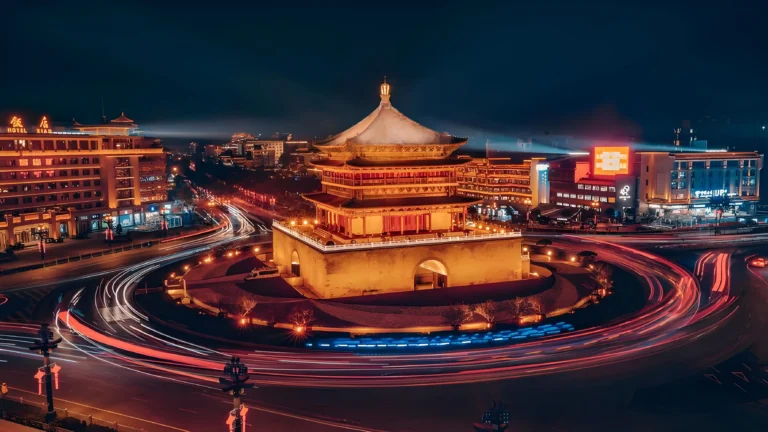
Dapi Yuan / Xiyangshi: Deep within Xi’an Muslim Street, near Bell Tower Station on Metro Line 2. Dingjia’s Crispy Pork, Sheng Zhiwang’s Sesame Paste Nianpi, and Yizhenlou’s Paomo are all here. Few people take photos here—it’s all about the flavor.
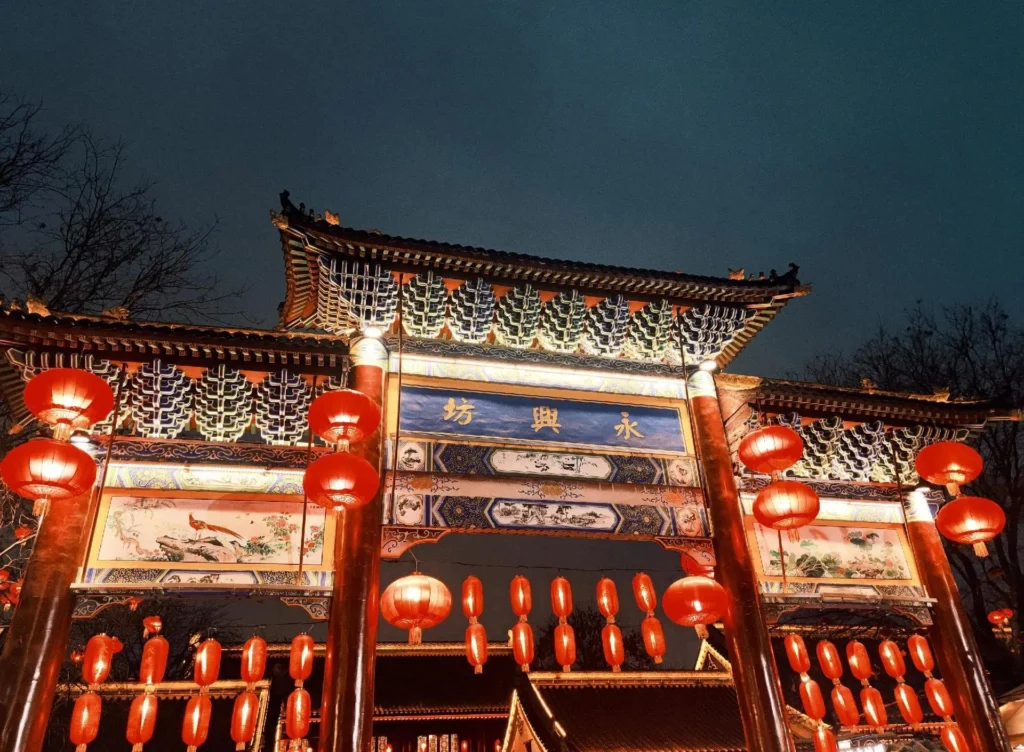
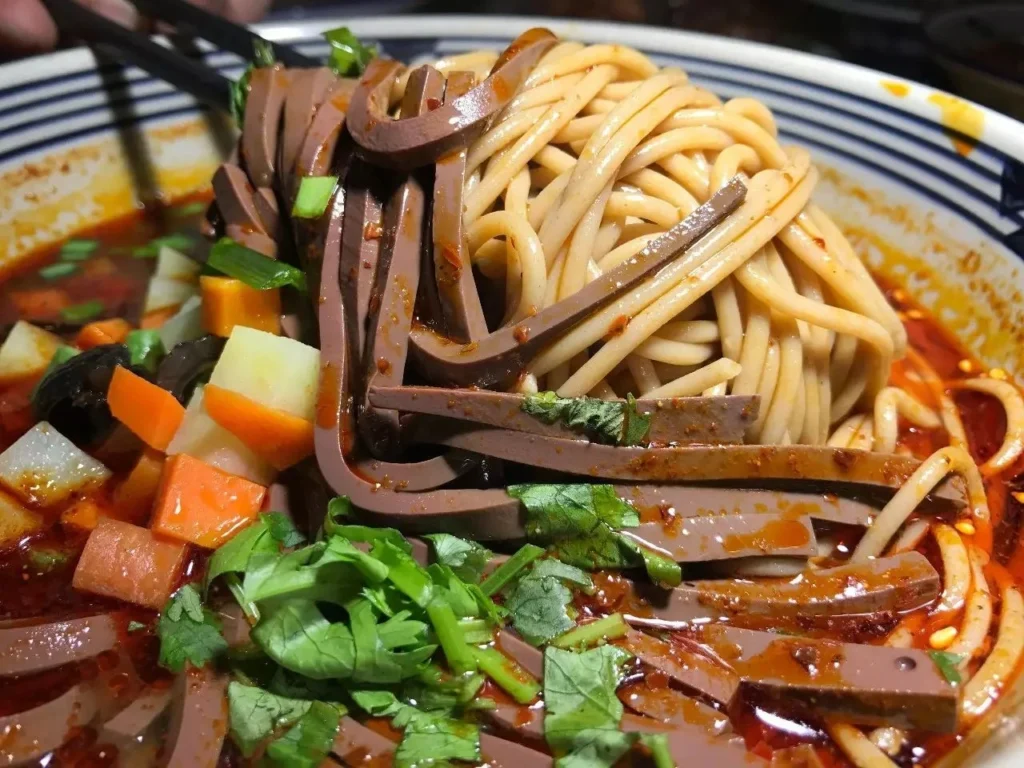
Yongxingfang: Zhongshanmen Station on Metro Line 3. A place dedicated to bringing together snacks from all over Shaanxi—which actually makes it very convenient—you can try Zichang Jianbing (buckwheat crepes with vegetables), Hanzhong Re Mipi, lamb blood in rice noodle soup, and Suide Huangmomo all in one go. “Shattering the bowl” is just for tourists; what you really should check out is this regional food map.
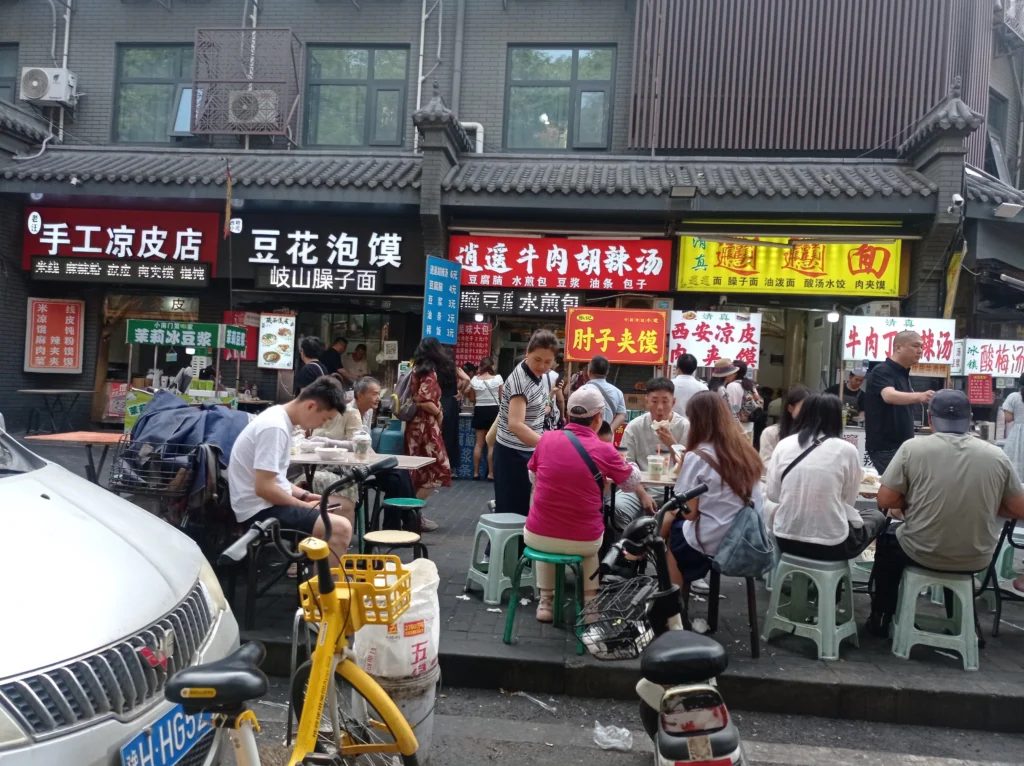
Xiaonanmen Morning Market (Wumu Gate): Yongningmen Station on Metro Line 2. Open only from 6:00–9:00 a.m.. Try the oil tea twisted doughnuts, honey-glazed cold zongzi, steamed buns stuffed with cured beef, and sour cabbage fish soup. Come early—and come hungry.
Subway Night Market Route — A Feast Even on a Student Budget:
- Ganjiazhai: Subway Line 6, over 200 stalls.
- Longshouyuan Hongjie: Subway Line 2, smoked meat flatbreads and grilled wheat gluten.
- Jianda South Gate: Inexpensive, around 20 per person.
- Weiqu Old Street: Weiqu South Station on Metro Line 2.
Avoid the Pitfalls: The main street of Hui Muslim Street is both expensive and repetitive. Head two alleys in, and prices drop immediately—the lines are suddenly filled with locals.
III. Shaanxi’s Regional Diversity and Hidden Culinary Gems
Another highlight of Xi’an street food lies in Shaanxi’s own geographical diversity. While Xi’an is the provincial capital, Shaanxi is actually made up of “three Chinas”: Northern Shaanxi (the Loess Plateau) in the north, Guanzhong (the plain) in the center, and Southern Shaanxi (near the Yangtze River basin) in the south. You can tell just by looking at the food.
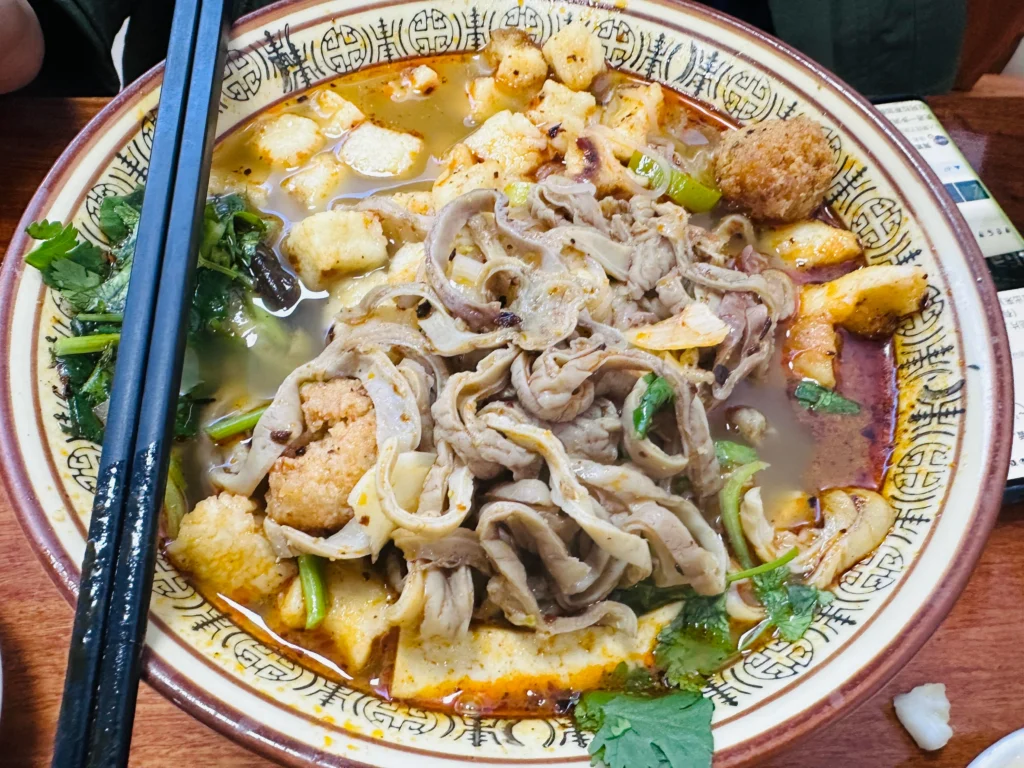
- Shuipen Lamb: Clear lamb broth served with crescent-shaped flatbreads; lighter and more broth-heavy than paomo, it’s a summer morning favorite in the Weinan area.
- Hulutou: A pork intestine paomo dish dating back to the Tang Dynasty; the most famous version is Chun Shengfa at No. 20 Nanyuanmen (40 per person), known for its bold flavor—once you get hooked, you’ll be hooked for life.
- A Regional Snapshot in Yongxing Lane: Zichang Pancakes (northern Shaanxi buckwheat), Ankang Steamed Noodles (southern Shaanxi, with sesame paste), Zashui Potato Rice Cakes, and Lantian Hele.
The Truth About Spiciness: Xi’an’s cuisine is “fragrant and spicy,” not the Sichuan-style “numbing and spicy.” Cumin takes center stage, with chili oil, garlic, and vinegar playing supporting roles. Even those who aren’t big on spice can still enjoy a great meal here.
IV. A Guide to Halal, Vegetarian, and Spiciness Levels
This section of the English blog has been repeatedly written incorrectly—please read carefully:
- Halal: The Hui Quarter (Hui Min Street, Sa Jin Qiao, Da Pi Yuan) is entirely halal, with no pork or alcohol. But don’t confuse “La Zhu Rou Jia Mo” (Han Chinese, contains pork) with “La Niu Rou Jia Mo” (Hui Muslim, halal)—the buns look the same, but the meat is different.
Vegetarian Food—It’s Safe to Eat, but Be Careful
- Debunking a Myth: Liangpi is not inherently vegan. The seasoning broth often contains meat broth. You can reduce the risk by purchasing it from a halal counter; to be absolutely sure, remember to ask.
- Relatively safe options: Zenggao (vegan, no meat), sesame paste-topped liangpi (confirm no meat broth), vegetarian jia mo, persimmon cakes, eight-treasure porridge, tofu pudding, soy milk, and millet porridge.
- Strict vegans: You can try the vegetarian meals at Daxingshan Temple.
Three Phrases for Ordering Spicy Food:
- No chili peppers: bù yào là jiāo (no chili peppers)
- Mildly spicy: wēi là (mildly spicy)
- Regular spiciness: zhèngcháng là dù (regular spiciness)
V. Practical Guide
To make the most of Xi’an street food, you’ll need a practical guide. Best seasons: Spring (March–May) and fall (September–November) are the most comfortable; summer night markets are the liveliest; winter is cold but less crowded and offers better prices.
Restaurants with addresses and prices (verified):
- Zhang’s on Ziwu Road: 227 Cuihua Road; roujiamo costs about 17 yuan; freshly made flatbread.
- Qin Yu: 19 Dongmutou Market; about 13 yuan.
- Yang Tianyu: 132 Sajinqiao (cured beef roujiamo).
- Fatty’s Steamed Rice Cake: Sajinqiao Morning Market, 5–7 yuan.
- Chunfasheng Hulutou: No. 20, Nanyuanmen, about 40 yuan.
- Tongshengxiang: Founded in 1920, serving classic paomo.
Ordering and Payment: Just point and say, “This one, please” (zhè ge, yī gè). Alipay and WeChat Pay are the main payment methods, but older street vendors usually keep some cash on hand. Break the paomo into pieces about the size of a fingernail for the best flavor.
One-Day Itinerary: Morning at Saijinqiao (zenggao + meatball hu la tang) → Lunch: Sanqin Set Meal or Kudaimian → Evening: Paomo or explore a subway night market line.
VI. FAQ
VII. Conclusion
Xi’an is a “culinary museum” that’s still cooking. Those three signature dishes will never let you down—but the soul of this city lies hidden in its alleys: the six-yuan zenggao at 7:00 a.m., the crumbly Tongguan buns in residential neighborhoods, and lamb dipped in clear broth with crescent-shaped buns. Bring some cash, visit during off-peak hours, and don’t be shy about pointing to the stall that catches your eye. The best bite in Xi’an is almost always found in the line that a local has already started.