I Found the 1,300-Year-Old Xi’an Great Mosque in Muslim Quarter
- A Mosque That "Doesn't Look Like a Mosque"
- How did the year 1300 come about?
- Before you leave, be sure to save this practical information.
- The Four Courtyards I Walked Through
- Can non-Muslims go inside? Let’s be honest
- Is the Xi'an Great Mosque really worth visiting?
- Once you step outside, the real treat awaits in the Muslim Quarter
- FAQ
- In Closing
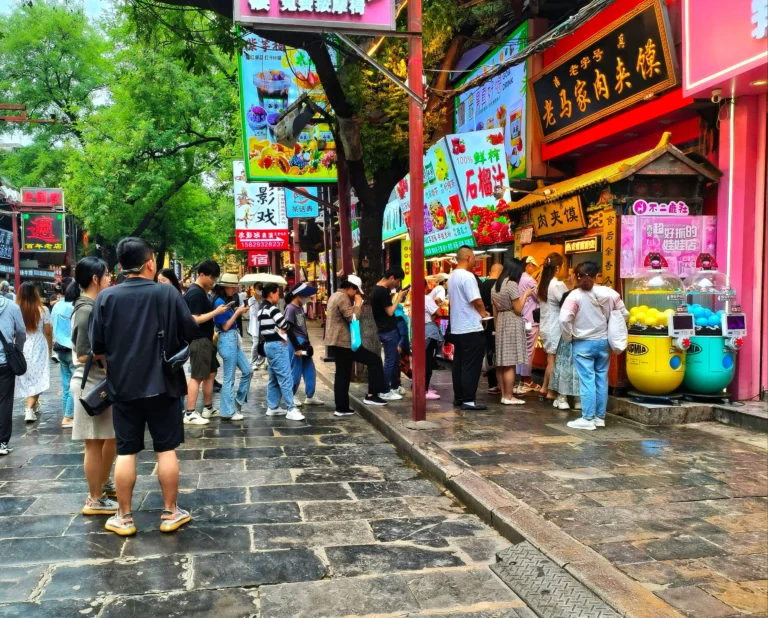
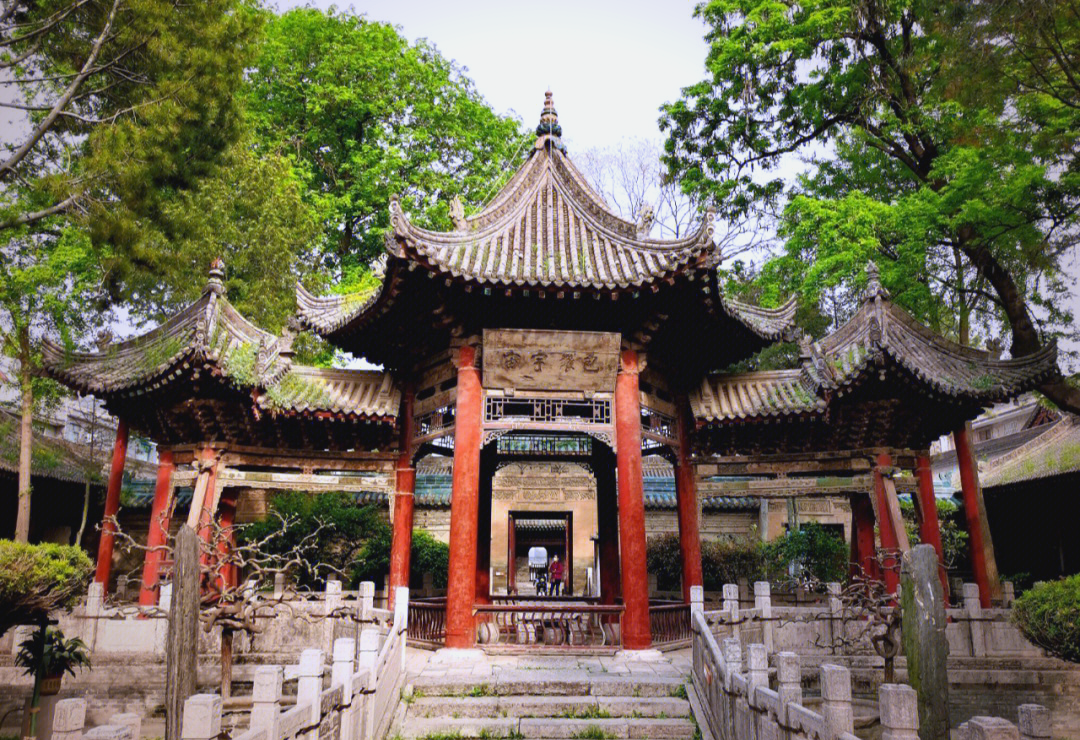
If you’ve ever been to Xi’an, you’ve surely been swept up by the aroma of cumin, the scent of mutton soup, and the constant chorus of street vendors’ cries on Hui Min Jie (the Xi’an Muslim Street). But you probably don’t know that deep within the smoke-filled alleys of Beiyuanmen, if you turn left into a narrow lane called Hujue Alley, the clamor suddenly falls silent as if someone had abruptly pressed the mute button—and before your eyes appears a courtyard with soaring eaves, ornate bracket sets, blue-gray bricks, and gray tiles. The first time I stood there, I stood frozen for several seconds: Is this really the Xi’an Great Mosque?
A Mosque That “Doesn’t Look Like a Mosque”
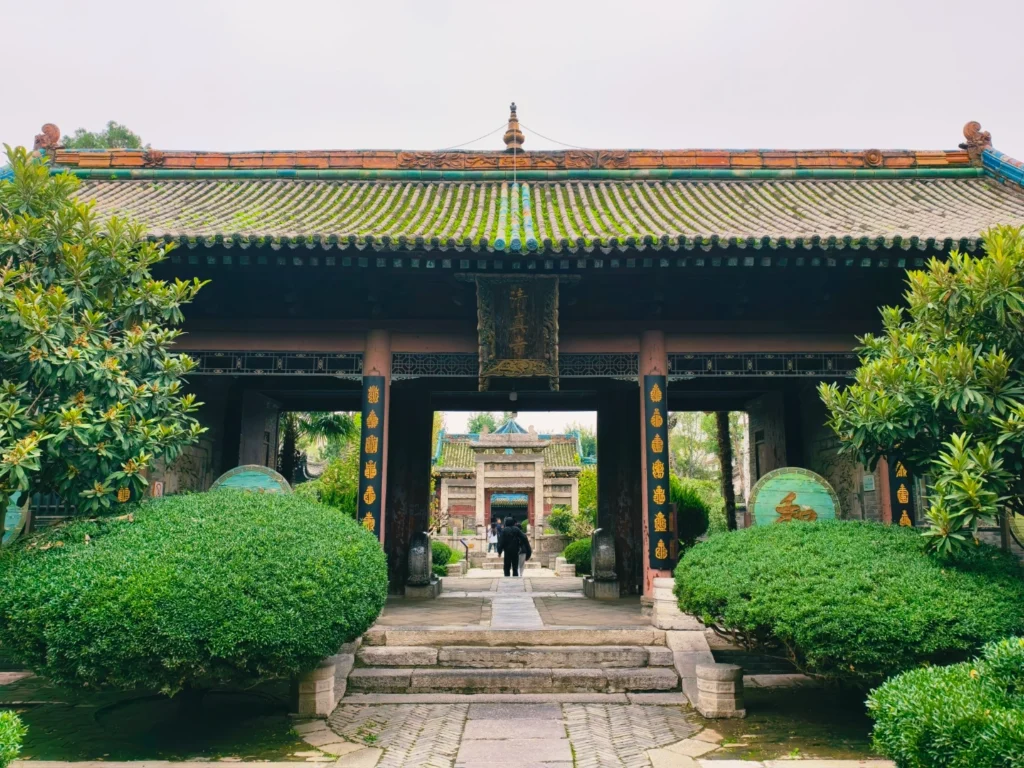
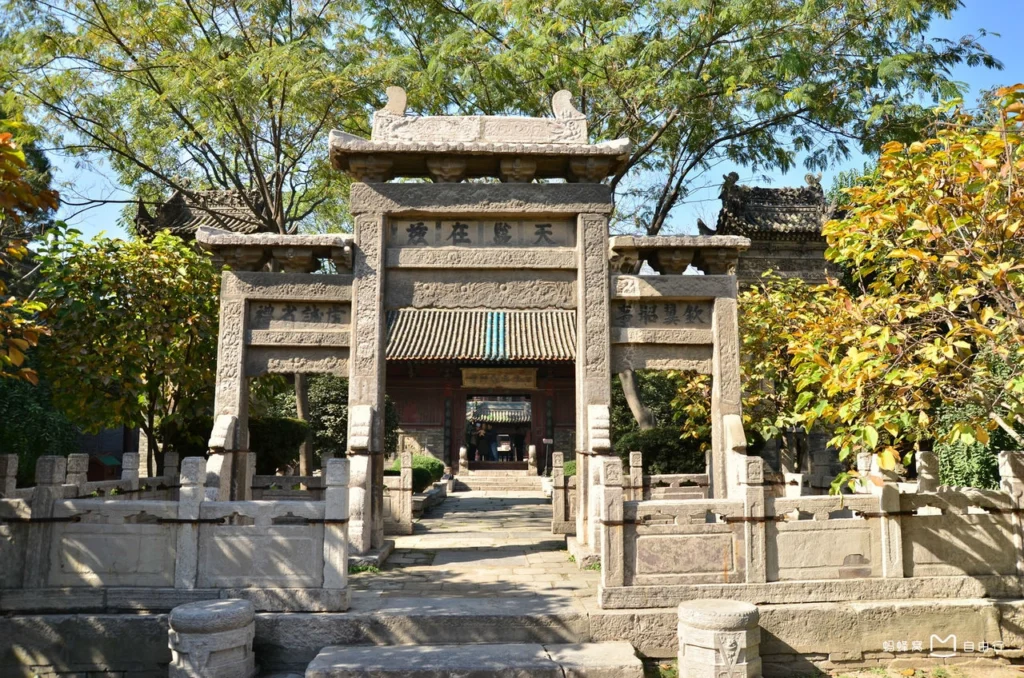
The reason it’s said to be different is that the Xi’an Great Mosque lacks the iconic domes and minarets typical of Middle Eastern mosques. The entire complex follows the style of a traditional Chinese courtyard: a series of arched gateways, pavilions, and stone steles lining the central axis, with green glazed tile roofs and wood-carved doors and windows—almost identical to the Confucian temples you’d see in Pingyao or Qufu. But if you look closer, you’ll see that the beams and columns are carved not with the characters for “fortune” and “longevity,” but with Arabic verses from the Quran; on the inscriptions along the courtyard walls, Chinese, Arabic, and Persian calligraphy coexist. This practice of incorporating Islamic worship functions into the shell of classical Chinese architecture is academically referred to as “Chinese-Islamic architecture,” and the Xi’an Great Mosque stands as the most concentrated and complete living example of this style.
How did the year 1300 come about?
The Xi’an Great Mosque is even older than I had imagined. Its construction began in 742 AD, the first year of the Tianbao era under Emperor Xuanzong of the Tang Dynasty, which means it’s nearly 1,300 years old. At that time, Chang’an was the largest city in the world. Arab and Persian merchants traveling along the Silk Road settled there, intermarried with the Han Chinese, and their descendants became today’s Hui people. Most of the existing structures were part of a large-scale reconstruction carried out during the Hongwu era of the Ming Dynasty (around 1384), and the main gate and archway were added during the Qing Dynasty. Today, the Xi’an Great Mosque remains an active place of worship, primarily serving Xi’an’s Hui Muslim community. Incidentally, there is still academic debate over whether it is a “four-courtyard” or “five-courtyard” complex—after counting them on site, I’m more inclined to say it’s four, but don’t be surprised if you encounter different accounts; both claims are backed by reliable sources.
Before you leave, be sure to save this practical information.
Regarding a visit to the Xi’an Great Mosque, I’ve compiled the key information I gathered during my site visit into a table. Just save a screenshot of it before you leave:
| Project | Information |
| Ticket Price | High season (March–November): 25 yuan; low season (December–February): 15 yuan; free admission for Muslims and children under 1.2 meters; half-price admission for students with valid ID |
| Opening Hours | Doors open around 8:00 a.m.; admission closes between 5:30 p.m. and 7:00 p.m. (Times may vary by source; please check on-site announcements before visiting.) |
| How To Get There | Take Exit B at Bell Tower Station on Metro Line 2, walk west to Gulou, then turn into Huajue Alley and walk for about 5 minutes; or take Exit A1 at Guangji Street Station on Line 6—it’s about a 10-minute walk. |
| Recommended Duration | It takes about an hour, but if you’re in a hurry, you can cover the main points in 30 minutes. |
| Dress Code | Cover your shoulders and knees; do not wear shorts, sleeveless tops, or short skirts. Remove your hat and shoes before entering the prayer area; while headscarves are not mandatory for women, they are recommended. |
| Non-Muslims | You can walk through the courtyards, gardens, and most of the buildings; the main prayer hall is closed to the public, so you can only look inside from the entrance. |
If you’d also like to learn about other historic mosques in Xi’an besides the ticket price, as well as how to plan a half-day tour of the Old City beyond just how to get there, you’ll find that information in the FAQ and “Nearby” sections below.
The Four Courtyards I Walked Through
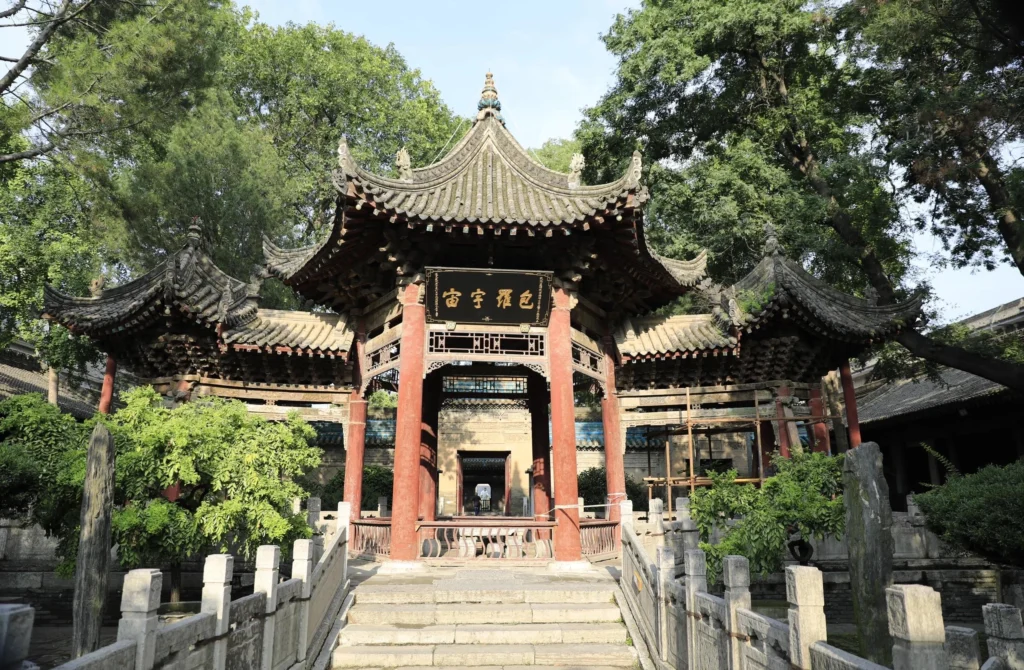
I slowly made my way inward along the central axis. The wooden archway in the first courtyard, about 9 meters high and covered with glazed tiles, is an antique from the Qing Dynasty; on either side of the stone archway in the second courtyard stand calligraphy steles by Mi Fu and Dong Qichang—one from the Song Dynasty and the other from the Ming Dynasty—whose powerful brushwork still commands the space even after several centuries. The most intriguing structure in the third courtyard is the Shengxin Tower: originally intended as a minaret, it was built as a three-story, octagonal Chinese-style wooden tower; scholars speculate that this was the site from which the call to prayer was issued. The fourth courtyard features the Phoenix Pavilion, a hexagonal structure with upturned eaves that seem poised to take flight. Further inside lies the Grand Prayer Hall—with green glazed tiles and a colorfully painted coffered ceiling—capable of accommodating a thousand people, though non-Muslims are not permitted to enter. I stood outside the hall for a while; the sound of recited verses drifted out from within, and the ancient cypress trees in the courtyard stood in quiet stillness—it felt like two entirely different worlds compared to the alley outside. This restraint and composure of Chinese-Islamic architecture is something I have never seen in any mosque in the Middle East.
Can non-Muslims go inside? Let’s be honest
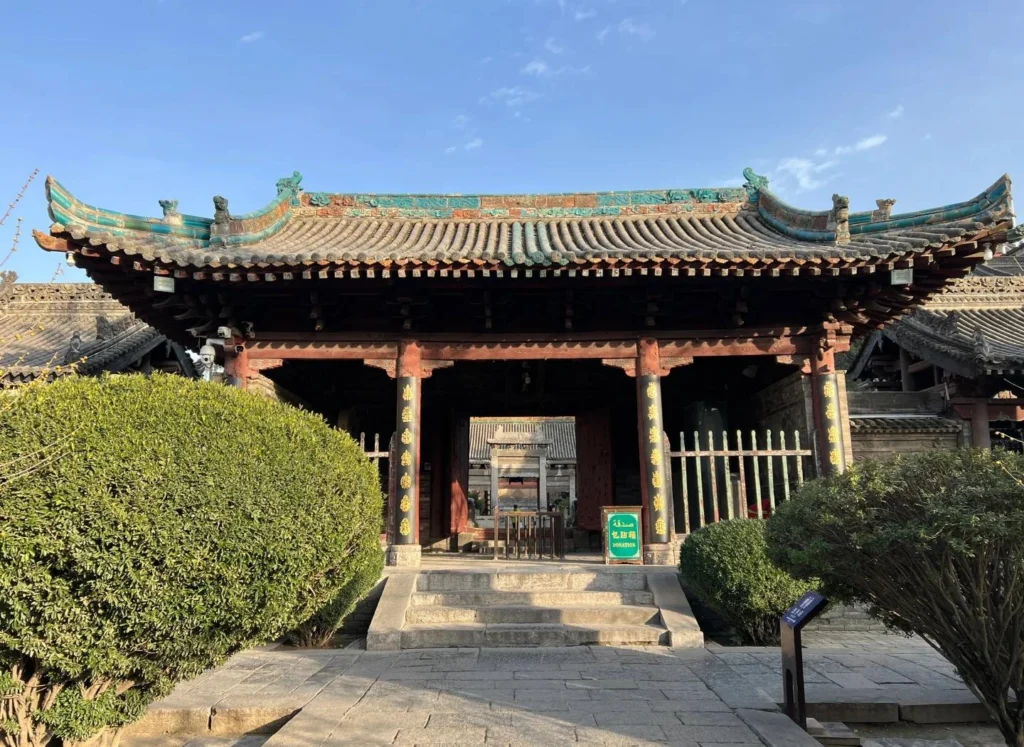
Here’s an honest heads-up: Many people who search for “Xi’an Great Mosque” are most concerned about whether non-Muslims can enter. The answer is that you can enter the courtyard, the garden, and most of the buildings, but the prayer hall is not open to non-Muslims. Don’t try to force your way in, and don’t take photos of worshippers during prayer times—using a flash or taking close-up shots is considered offensive. Respect this living space of faith, and your experience will be all the richer for it. There are five daily prayers, and Friday noon prayers (Jumu’ah) are particularly crowded; if you want to take photos in peace, it’s best to avoid that time.
Is the Xi’an Great Mosque really worth visiting?
So, is the Xi’an Great Mosque really worth visiting? My answer is: absolutely worth it, especially if you’re tired of run-of-the-mill tourist attractions. It doesn’t rely on grand narratives to impress; instead, it tells the story of “how different civilizations can sit down and get along” through every brick and tile. Plus, it’s right in the heart of Hui Muslim Street, just a few steps from the Bell and Drum Towers—you can easily pop in on your way, making it a low-cost, high-reward experience. This alone pushes the Xi’an Great Mosque’s “worth visiting” rating right to the top.
Once you step outside, the real treat awaits in the Muslim Quarter
After leaving the Xi’an Great Mosque, don’t rush off—the real treat awaits in the Muslim Quarter. I followed the order recommended by locals: first, a roujiamo (about 12 yuan—braised beef in a crispy bun); then a bowl of liangpi; next, the star of the show, yangrou paomo (15–20 yuan—breaking the bread yourself adds to the ritual); and finally, a few skewers of cumin-grilled lamb and a piece of persimmon cake to finish. With over 300 halal stalls lining the entire Muslim Quarter and green halal symbols everywhere, it’s especially welcoming for those who follow a halal diet. Set aside 2–3 hours to combine a visit to the Grand Mosque with a food tour—it’s a much better deal than visiting the sights separately.
FAQ
In Closing
As I left, I glanced back one last time at that gray-brick gatehouse. Over the past 1,300 years, the Silk Road has come and gone, and dynasties have risen and fallen, yet the Xi’an Great Mosque has remained steadfast deep within the alleyways. In the most Chinese way possible, it has preserved the most Islamic form of worship, establishing itself as a living exemplar of Chinese-Islamic architecture. If you ever visit Xi’an, please take a detour through the bustling Hui Muslim Quarter and see it for yourself.