The Ultimate Xi’an Street Food Menu: 15 Must-Try Dishes
- Get to Know Xi'an Through One Menu: 15 Must-Try Signature Dishes
- Locals’ Hidden Gems: More Than Just Hui Muslim Street
- A Price List + The Best Time to Go
- How to Order Halal and Vegetarian Food
- Eat Like a Local: Three Tips to Avoid Pitfalls
- Cultural Highlights: The Character “Biang,” the Sanqin Set Meal, and Silk Road Spices
- FAQ
Beyond the Terracotta Army and the ancient city walls, Xi’an’s true soul lies in the smoke and aroma of cumin wafting from the alleys. If you open a search engine and type in “Xi’an street food menu,” what pops up are mostly the same old tourist photos from the main street of Xi’an Muslim Street. But having immersed myself in Xi’an over the years, I’ve become increasingly convinced that a true “Xi’an street food menu” shouldn’t be limited to just one street—it should stretch from the Xiaonanmen Morning Market at 6 a.m. all the way to the Jianguo Road Night Market late into the night, with stops along the way for the spicy soup at Sajin Bridge and the paomo at Dapi Yard. When discussing Xi’an’s street food culture, we must first acknowledge that it has never been exclusively for tourists; rather, it has been part of locals’ daily lives for a thousand years. In this post, I’ll give you a comprehensive, practical menu complete with prices and serving times—turning the phrase “Xi’an street food menu” into a tangible meal on your palate, and, while I’m at it, answering the most frequently searched question: where exactly should you start when trying Xi’an’s must-try dishes?
Get to Know Xi’an Through One Menu: 15 Must-Try Signature Dishes
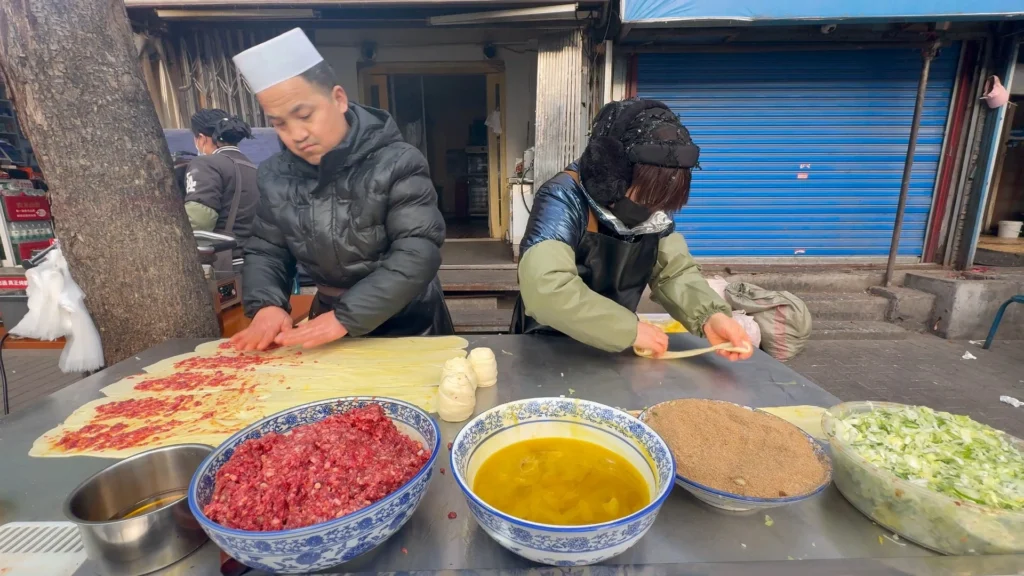
The Xi’an street food menu below is what I’ve curated based on the criterion of “places even locals keep coming back to.” Many people search for “Xi’an must-try dishes,” and this is exactly the kind of list they’re looking for. First, here’s the complete list; later, I’ll break it down by neighborhood, discuss prices, and share tips on what to avoid.
| English | Chinese | Price | Where to Eat |
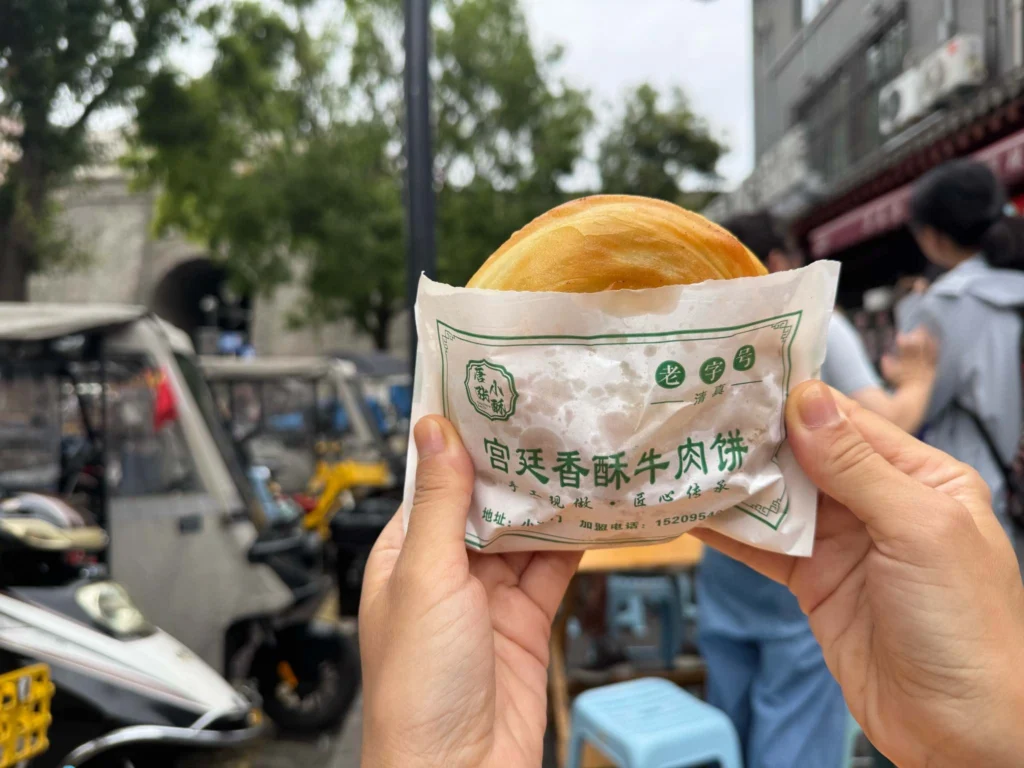
| Roujiamo | 肉夹馍 | ¥8–18 | Each neighborhood |
| Yangrou Paomo | 羊肉泡馍 | ¥30–55 | Hui Muslim Street Dapi Yard |
| Biang Biang Noodles | 裤带面 | ¥15–30 | Hui Muslim Street |
| Liangpi | 凉皮 | ¥8–15 | The Entire Castle |
| Lamb Skewers | 烤羊肉串 | ¥3–6/串 | Night Market |
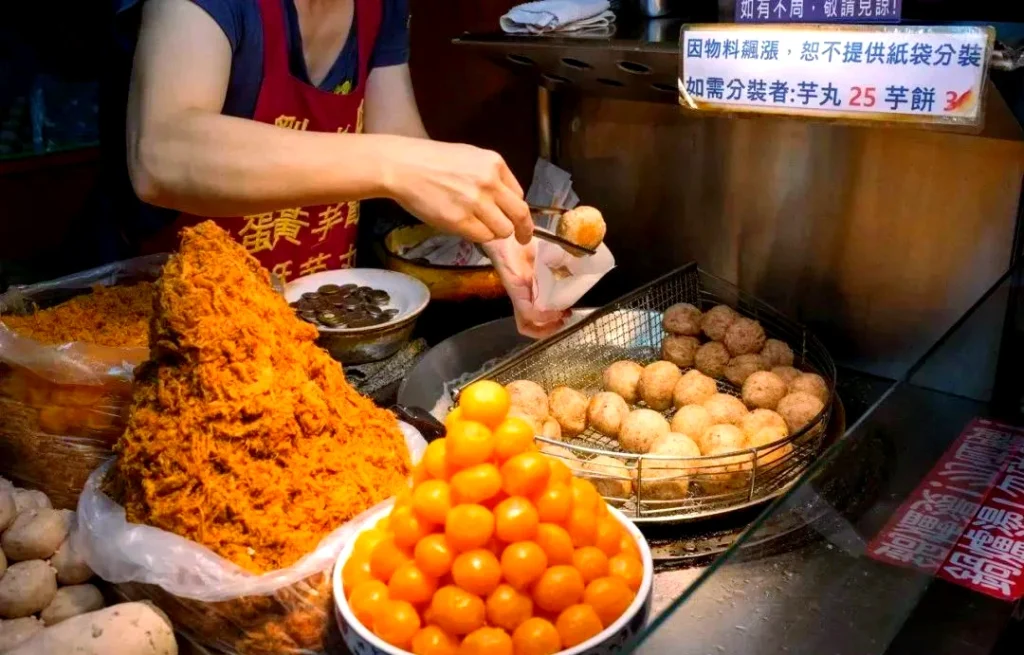
| Persimmon Cakes | 柿子饼 | ¥5–12 | Hui Muslim Street |
| Guantang Baozi | 灌汤包 | ¥15–25 | Jia San of Gulou |
| Zenggao | 甑糕 | ¥5–10 | Morning Market |
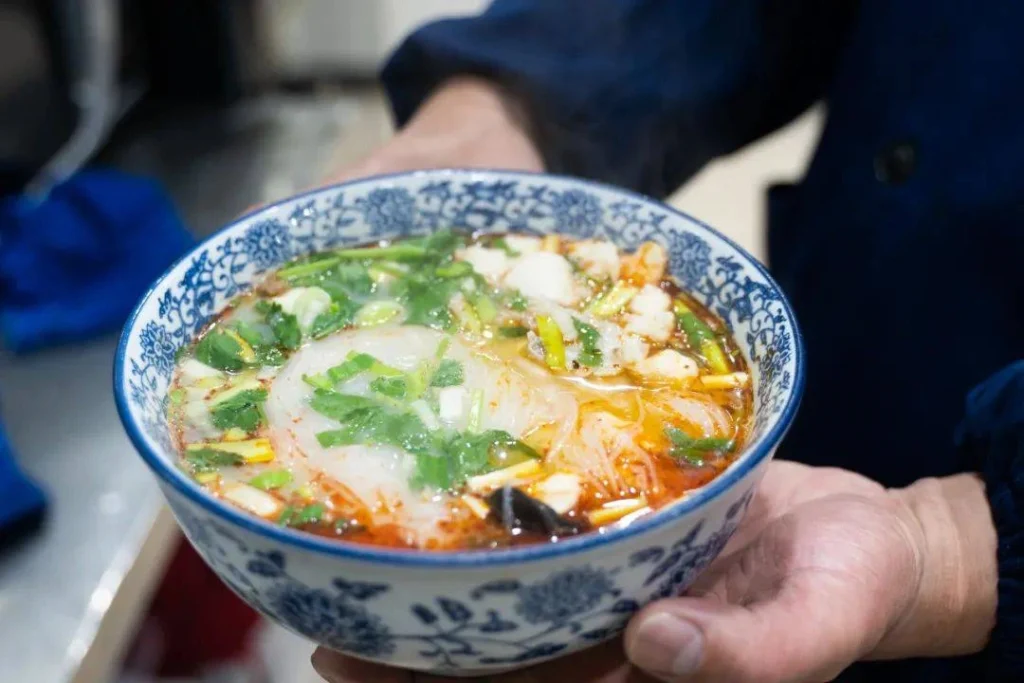
| Hulatang | 肉丸胡辣汤 | ¥8–12 | Sajin Bridge |
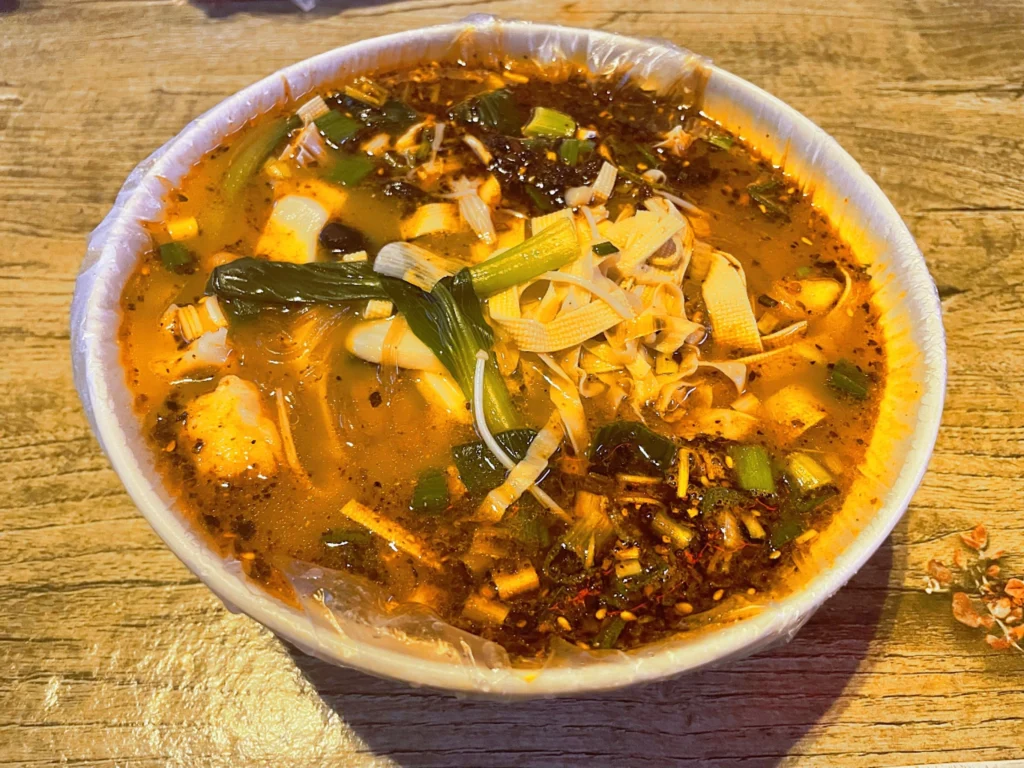
| Suantang Jiaozi | 酸汤水饺 | ¥10–18 | Sajin Bridge |
| Lay Niu Rou Jia Mo | 腊牛肉夹馍 | ¥10–15 | Xiaonanmen Morning Market |
| Fen Tang Yang Xue | 粉汤羊血 | ¥12–20 | Jian Guo Road |
| Sanqin Combo | 三秦套餐 | ¥20–30 | The Entire Castle |
| You Cha Ma Hua | 油茶麻花 | ¥6–10 | Xiaonanmen Morning Market |
| Feng Mi Liang Zong | 蜂蜜凉粽 | ¥6–10 | Morning Market |
These 15 dishes form the core of the Xi’an street food menu you’ve been looking for—and they’re also my personal ranking of Xi’an’s most famous foods. If you want to know which of Xi’an’s must-try dishes are worth making a special trip for, keep reading the neighborhood guide—most English-language travel guides simplify the list to “go to Hui Muslim Street,” but they actually leave out the majority of the options. A good menu isn’t just a list of names; it tells you where to eat, how much it costs, and what time to go.
Locals’ Hidden Gems: More Than Just Hui Muslim Street
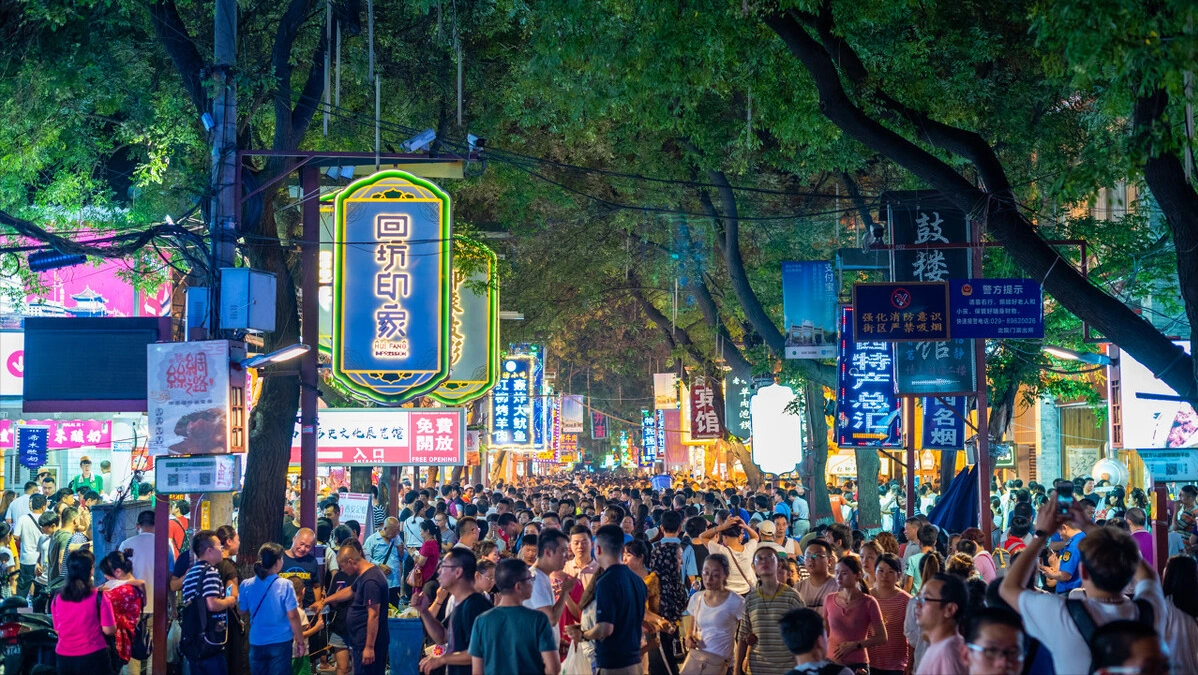
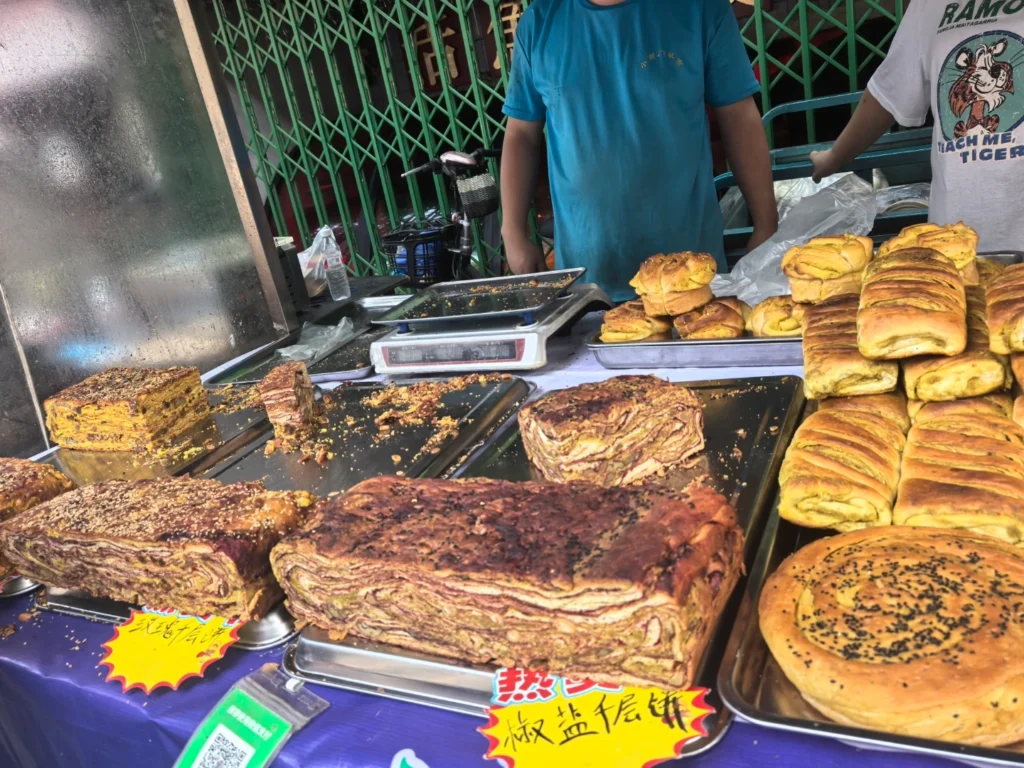
Most English-language travel guides simplify the Xi’an Muslim Quarter food guide to “visit Hui Muslim Street.” But locals have four other maps up their sleeves—these are the hidden gems of Xi’an’s local food specialties. If you want to know where to eat like a local in Xi’an, the secret is simple: skip the main street and explore the alleys. This neighborhood-focused guide to Xi’an street food starts with Sajin Bridge.
- Sajin Bridge: A breakfast mecca for locals, where about 80 percent of the vendors wear white caps and have carried on the family tradition for three generations. The thick, warming meatball soup with chili is perfect for the early morning; the steamed buns stuffed with cured beef are savory, juicy, and full of flavor; and the sour and spicy dumplings are tangy and appetizing. You can leave here feeling so full you’ll need to lean on the wall—all for just 20 yuan per person. There are no neon signs here, but it represents one of the most authentic chapters in Xi’an’s local culinary heritage.
- Dapiyuan: Located between Beiyuanmen and Xiyangshi, most stalls are open from 10:00 a.m. to 10:00 p.m. You’ll find everything from paomo to grilled meat and liangpi here, and you can enjoy several signature dishes for less than 50 or 100 yuan per person. If you want to experience the vibrant, everyday atmosphere that you won’t find in any Xi’an Muslim Quarter food guide, this is the place to go.
- Xiaonanmen Morning Market: Located at the foot of the city wall, open from 6:00 a.m. to 9:00 a.m. The oil-tea twisted doughnuts are crispy and fragrant, the honey-flavored chilled rice dumplings are sweet and refreshing, the bread rolls stuffed with cured beef are hearty, and the pan-fried buns have crispy bottoms and are juicy inside. A skewer of grilled meat costs one yuan—a price that hasn’t gone up in ten years. It’s the cheapest and most authentic section of the entire Xi’an street food scene.
- Jianguo Road Night Market: An old-school late-night eatery in Xi’an, busiest from 7:00 PM to 9:00 PM. The quintessential dish of Xi’an night markets—lamb skewers cost about five yuan each, and the lamb blood soup is perfect for “paomo” (soaking bread in the soup), best enjoyed in one go with an Ice Peak soda.
By following this guide, you’ll be able to sample all of Xi’an’s local culinary specialties; if you want to keep eating until late at night, check out this extended list of “Where to Eat Like a Local in Xi’an.”
A Price List + The Best Time to Go
Let’s start with the money. Here’s a complete breakdown of Xi’an street food prices and serving times: Most street snacks cost between 8 and 25 yuan; a budget traveler’s daily food budget is 40 to 60 yuan, while 100 to 200 yuan a day will let you dine at restaurants at your leisure. For details on Xi’an street food prices, check out this table.
| Category | Price Range | Per Person / Day |
| Staple Foods (Steamed Buns / Noodles / Soaked Steamed Buns) | ¥8–55 | ¥40–60 |
| Grilled Skewers / Snacks | ¥3–20 | ¥20–100 |
| Desserts (Persimmon Cakes / Steamed Rice Cakes / Chilled Zongzi) | ¥5–12 | ¥10–20 |
| Beverages (such as Bingfeng) | ¥3–6 | ¥6–12 |
Now, let’s talk about the best times to visit. The best times for Hui Muslim Street are from 8:00 to 10:00 a.m. for a quiet stroll through the alleys, and from 6:30 to 8:00 p.m. to enjoy the lantern-lit night scenery; on weekends, try to avoid going after 5:00 p.m. The night market generally opens at 6:00 p.m. and runs until the early hours of the morning, with the busiest period from 9:00 to 11:00 p.m.—this is when Xi’an’s night market food scene is at its liveliest. As for the Small South Gate, the best time to visit is from 6:00 to 9:00 a.m. As for the best time to visit the Xi’an Muslim Quarter, my answer is on weekday mornings—fewer crowds, all the stalls are open, and you can chat with the vendors. Keep Xi’an street food prices and operating hours in mind, and you won’t be put off by the markups on the main street.
For first-time visitors to Xi’an, there are really only three things that matter: how much it will cost, what time to head out, and whether they can safely eat vegetarian or halal food. As for Xi’an street food prices, you can eat quite well on 40 to 60 yuan a day; as for timing, the best time to visit the Xi’an Muslim Quarter is on weekday mornings, while the prime time for Xi’an night market food is after 9:00 p.m. As for whether Xi’an street food is halal and the vegetarian options available, these points have already been covered in the previous section—so feel free to order with confidence. If you’d rather not plan it yourself, signing up for a Xi’an food tour is the most hassle-free option; if you want to check off items on a list, just take a look at the article on Xi’an’s famous foods. Ultimately, when it comes to where to eat like a local in Xi’an, it all comes down to whether you’re willing to walk a little further and wait in line a bit longer.
How to Order Halal and Vegetarian Food
People often ask, “Is Xi’an street food halal?” The answer is: The entire Hui Muslim Quarter and surrounding Hui communities are halal. Almost every establishment displays the green halal logo, with no pork and virtually no alcohol, making it extremely Muslim-friendly. Understanding the halal context of Xi’an street food menus is key to ordering with confidence. A reliable guide to the Xi’an Muslim Quarter will always outline halal etiquette at the beginning.
As for vegetarian street food options in Xi’an, try liangpi, vegetarian dumplings (filled with cabbage, shiitake mushrooms, and tofu), spicy fried tofu, osmanthus cake, persimmon cakes, eight-treasure porridge, and zenggao. When ordering, saying “bu chi rou” (I don’t eat meat) is more accurate than saying “vegetarian,” as the latter is often misunderstood locally to mean Buddhist vegetarian cuisine that includes seafood. When entering the Grand Mosque, remember to cover your shoulders and knees, and avoid ordering pork or alcohol in the area. If you want to learn about the ten signature dishes of the Muslim Quarter, this article goes into more detail: “Is Xi’an Street Food Halal?” For strictly vegan travelers, liangpi and zenggao are virtually risk-free choices among Xi’an’s vegetarian street food options.
Eat Like a Local: Three Tips to Avoid Pitfalls
- Tip 1: Explore the alleys. The same roujiamo sold on the main street is often twice as expensive as the one at Sa Jin Qiao, so head into the alleys for your Xi’an street food.
- Tip 2: Look for the lines. Lines of locals = good food; lines of tour groups = photo ops.
- Tip 3: Bring small change. Many old-school stalls only accept cash, and fruit is priced by “liang,” so it’s easy to get ripped off.
Follow these three tips, and your Xi’an street food adventure will be a surefire success. Remember, expensive doesn’t necessarily mean better—the people in line are the best review system.
Cultural Highlights: The Character “Biang,” the Sanqin Set Meal, and Silk Road Spices
A little cultural knowledge makes the food taste even better. The character “biang” in “biang biang noodles” has over fifty strokes and can’t be typed on a computer keyboard—it must be written by hand. Only a Xi’an street food menu with a story behind it is truly authentic. The Sanqin Set—comprising roujiamo, liangpi, and Bingfeng (a local orange-flavored soda from 1956)—is Xi’an locals’ go-to refreshment. The cumin on the grilled meat was brought to the region via the Silk Road from the Western Regions. These little-known facts make Xi’an’s street food culture not just delicious, but steeped in a thousand years of history. If you want someone to guide you through the best spots, signing up for a Xi’an food tour is the easiest option; for more must-try dishes, check out this list of Xi’an must-try dishes, and if you’re interested in joining a group tour, see Xi’an food tours.
FAQ
A true Xi’an street food menu is never limited to just one street or one photo. It stretches from the morning light at Shajin Bridge to the late night on Jianguo Road, infused with cumin, chili, and the lingering flavors of the thousand-year-old Silk Road. Save this menu, and the next time you visit Xi’an, you’ll be able to eat like a local—knowing what to order, saving money, and enjoying delicious food. Add these famous Xi’an dishes to your itinerary. The story of Xi’an’s street food culture is far from over—if you want to continue exploring it by following in the footsteps of the locals, check out the articles below.