Is the Drum Tower of Xi’an Worth Visiting? Here’s Why
- Is the Drum Tower of Xi'an worth a visit? Someone who's been there shares the best ways to make the most of your visit.
- First, the conclusion: Is the Drum Tower in Xi’an really worth a visit?
- The Drum Tower Is Not a Tower, but the “Timepiece” of Ancient Chang’an
- The 24 drums in the tower hold an agricultural calendar
- A 34-meter-tall wooden structure—why doesn’t it have a single iron nail?
- "文武盛地"and"声闻于天": A Century of Trials for a Single Plaque
- Ticket Prices, Opening Hours, Combo Tickets: Everything You Need to Know
- How to Make the Most of the Drum Performance?
- How to get there: The subway is the most economical option, and getting there from the airport is hassle-free.
- Drum Tower vs. Bell Tower: Which One to Visit First?
- Best to Visit in the Evening: Night Views and a Step into the Muslim Quarter
- FAQ
- Final Thoughts
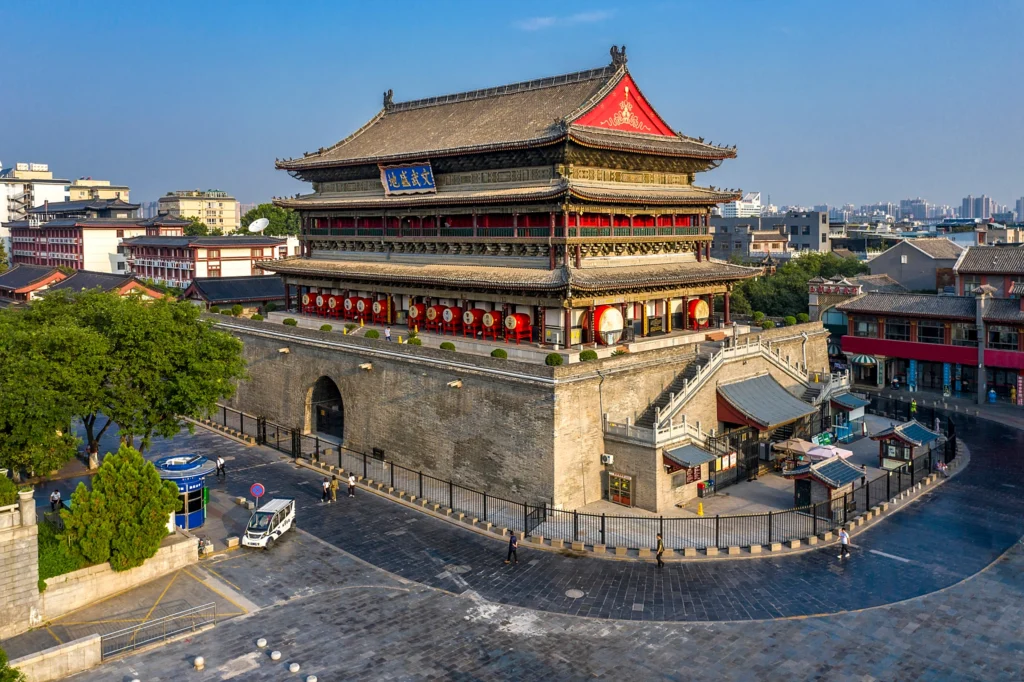
Is the Drum Tower of Xi’an worth a visit? Someone who’s been there shares the best ways to make the most of your visit.
If you only have half a day to spare while visiting Xi’an, I would add the Xi’an Drum Tower to your itinerary without hesitation. It’s not just another “must-visit” landmark—it’s a place where you can truly hear the heartbeat of Chang’an from 600 years ago. I’ve been there four or five times now, and climbing the tower at dusk to watch the drum performance, then heading down to Hui Muslim Street for some grilled meat, has become a staple way to kick off my tours of Xi’an with friends. In this post, I’ll share my firsthand experience, covering ticket prices, opening hours, the drum performance, how to get there, and those insider tips you won’t find anywhere else—all in one place.
First, the conclusion: Is the Drum Tower in Xi’an really worth a visit?
Yes, it is. But its value lies not in “how tall the tower is,” but in the fact that it has enshrined “time” in the very heart of the city through wood and the sound of drums. For 30 yuan to climb the tower once, you get a night view, a drum performance, and a living museum of timekeeping—all at once. If you just want to take photos from a distance, the square is free and sufficient; if you want to truly understand it, buying a ticket to go inside is the better deal. Compared to the Bell Tower, the Drum Tower wins out in terms of “listening” and “eating”—I’ll explain in more detail below.
The Drum Tower Is Not a Tower, but the “Timepiece” of Ancient Chang’an
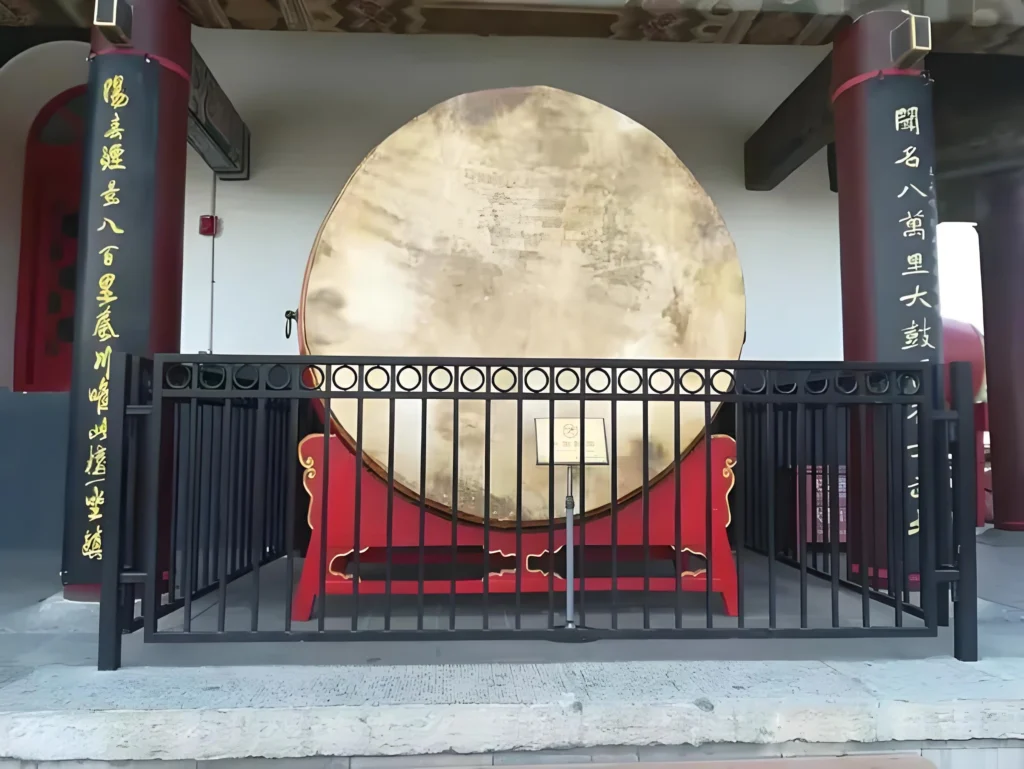
The Drum Tower of Xi’an was built in the 13th year of the Hongwu era of the Ming Dynasty (1380), four years before the Bell Tower. During the Ming Dynasty, the city of Xi’an had a circumference of approximately 11.9 kilometers; to ensure the sound of the drum could be heard throughout the city, it was necessary to construct a tall tower and hang a large drum. In ancient times, the tradition of “morning bell, evening drum” was strictly observed: the Bell Tower rang the bell at dawn to open the city gates, the Drum Tower beat the drum at dusk to close them, and drums were also beaten at night to mark the hours—the “third drum” signified the third watch, with a total of five beats per night. During the Ming Dynasty, Xi’an’s city area was only 8.7 square kilometers, and the Drum Tower was situated in the central-southwestern part of the city precisely so that the sound of the drum could reach every household. Since 2007, the “morning bell, evening drum” tradition—which had been lost for a century—has been revived through historical reenactments. Every day at 9:00, 12:00, and 15:00, the Bell Tower rings 24 times; at 18:00, the Drum Tower first strikes the “Solar Term Drum,” followed by 24 beats of the “Heavenly Drum.” This “morning bell, evening drum” system served as the “city clock” for people in ancient times, when watches did not exist. To gain a deeper understanding of the city’s history and culture, check out our guide on “What to Do in Xi’an.”
The 24 drums in the tower hold an agricultural calendar
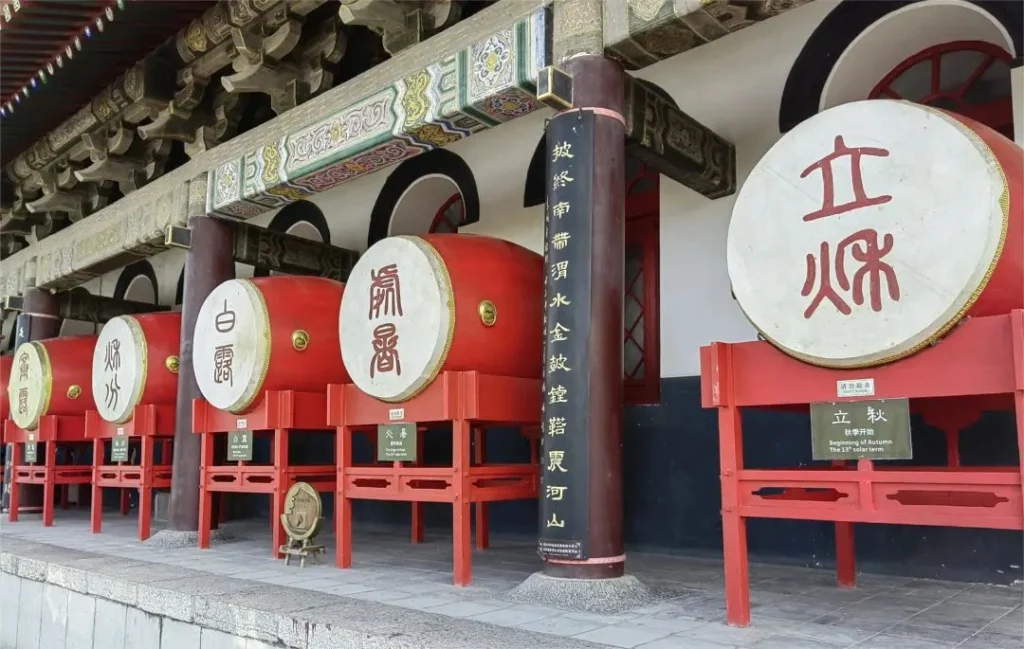
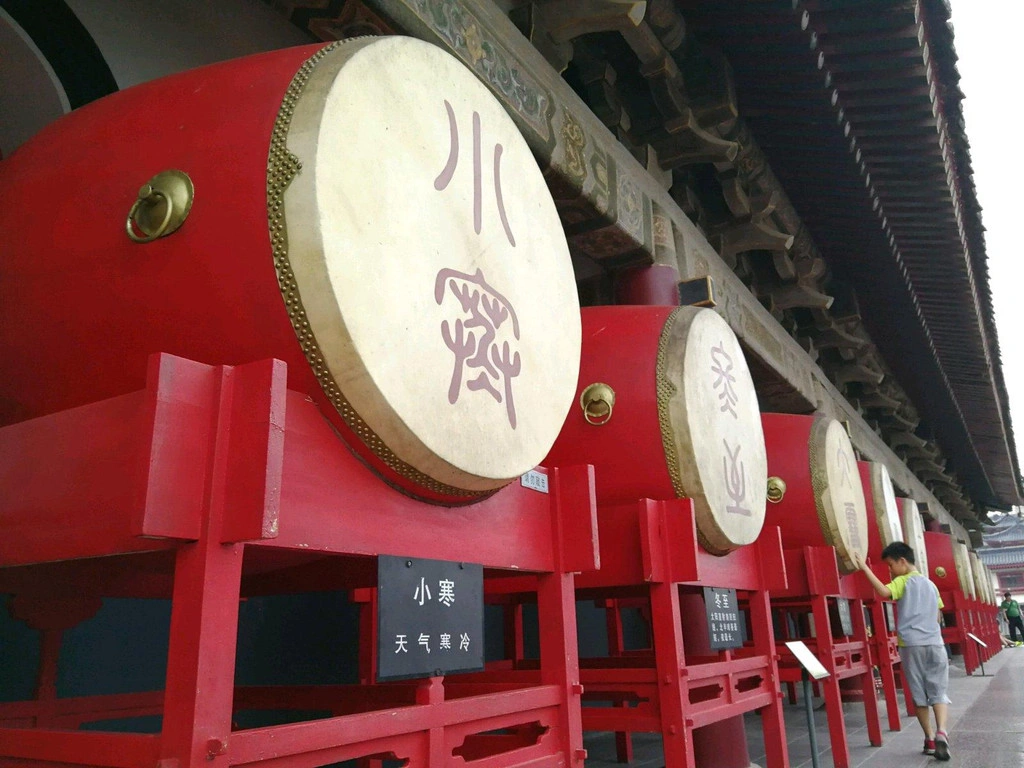
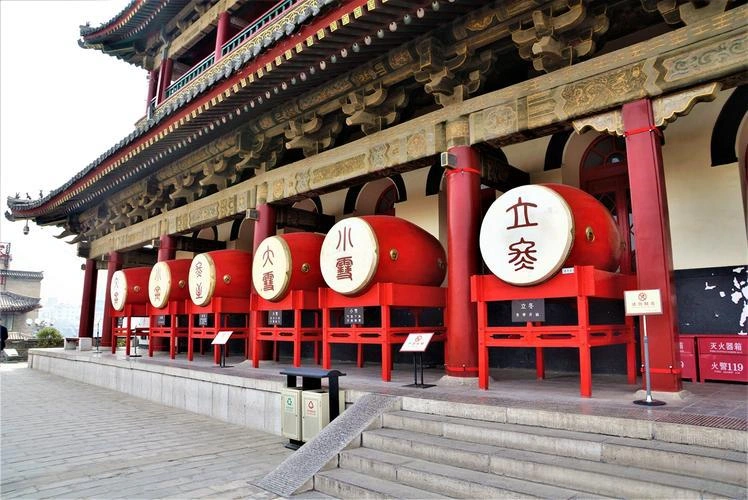
Many people think the drums in the Drum Tower are merely decorative, but in fact, large drums representing the “Twenty-Four Solar Terms” are arranged on both the north and south sides. The ancients relied on the solar terms to schedule planting and harvesting; the number of drums corresponds to the solar terms, effectively bringing the entire agricultural calendar into the tower. Each drum is engraved with auspicious Chinese characters. It wasn’t until I counted to the twenty-fourth drum that I truly understood: the Drum Tower doesn’t just mark the time; it signals the rhythm of life—when to plant and when to harvest. This is also the aspect of the Xi’an Drum Tower that is most underappreciated in English travelogues. Those 24 Solar Terms drums are not mere decorations, but a living phenological clock; only by understanding them can one grasp why the Drum Tower was built so tall; and the agricultural wisdom behind the 24 Solar Terms drums continues to flow through the fields of Guanzhong to this day.
A 34-meter-tall wooden structure—why doesn’t it have a single iron nail?
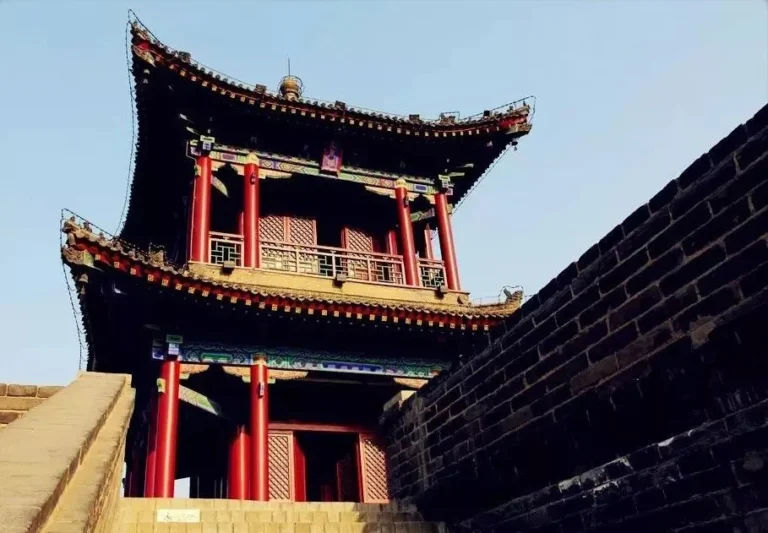
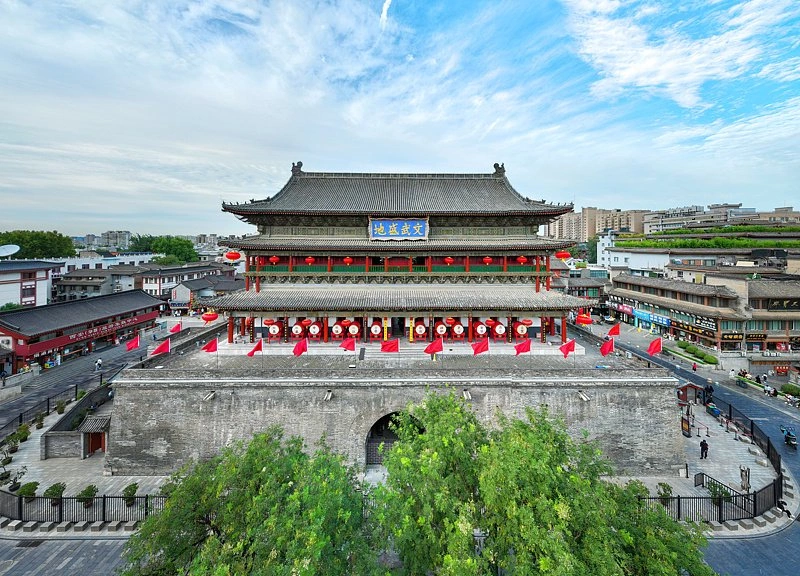
The entire Xi’an Drum Tower stands 34 meters tall, with a base measuring 52.6 meters long and 38 meters wide. It features a wooden framework with double eaves and three tiers of water-drip beams. What surprised me most is that the entire structure contains not a single iron nail; the eaves and platforms are held together solely by the interlocking dovetail joints of the bracket sets. The roof is adorned with Hexi and Xuanzi-style painted designs, featuring gold-leaf dragons—a level of craftsmanship that, at the time, surpassed even that of the imperial capital, Nanjing. Just look up at the dougong, and you’ll understand what it means to “use wood as the skeleton and tenons as the tendons.” The dougong layers extend outward, steadily supporting the heavy eaves while evenly distributing the weight to the columns—this is the secret behind its six centuries of standing firm. It is precisely this construction craftsmanship that has given the Xi’an Drum Tower the strength to withstand six centuries of wind and rain.
“文武盛地”and”声闻于天”: A Century of Trials for a Single Plaque
Hanging from the third eave of the Drum Tower, one on the south and one on the north, are two massive plaques: “文武盛地” on the south and “声闻于天” on the north. Each measures 8 meters long and 3.6 meters wide, with gold characters on a blue background, and weighs approximately two to three metric tons. “文武盛地” is often mentioned alongside Shanhaiguan’s “The First Pass Under Heaven” as “China’s Two Plaques.” Regarding the authorship of “文武盛地,” historical records offer three accounts: one states it was inscribed by Provincial Governor Zhao Kehuai in the 18th year of the Wanli reign (1590); another claims it was written by Zhang Kai, the Shaanxi Provincial Governor during the fifth year of the Qianlong reign, imitating the Qianlong Emperor’s calligraphy; and a third suggests it was spontaneously penned by Liang Yuan, a scholar from Hancheng, while passing through; The northern plaque, “声闻于天,” is traditionally said to have been written by Li Yunkuan, a renowned Confucian scholar from Xianning County during the Qianlong era. Although its authenticity is difficult to verify, this adds an air of legend to the story. However, the original was destroyed during the “Cultural Revolution,” leaving a void in the hearts of Xi’an residents for a long time. Beginning in 1982, cultural heritage preservation authorities researched historical records and interviewed elderly residents, then recreated the plaque using traditional craftsmanship; it was not until April 2005 that it was hung back in its original place. What you see today are two plaques that have weathered a century of tribulations and were resolutely brought back to life by a city.
Ticket Prices, Opening Hours, Combo Tickets: Everything You Need to Know
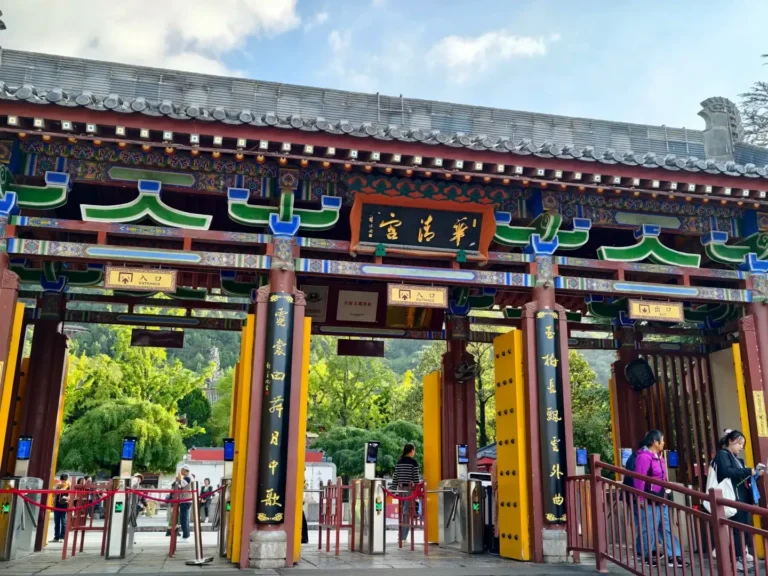
Back to the practical details. A single ticket for the Xi’an Drum Tower costs 30 yuan (15 yuan for students); a combo ticket with the Bell Tower costs 50 yuan (30 yuan for students), which saves you 10 yuan compared to buying them separately. I always buy the combo ticket. Opening hours are divided into two seasons: April 1–October 10, 8:30 a.m.–9:30 p.m. (last admission at 9:00 p.m.); November 10–March 31 of the following year, 8:30 a.m.–6:00 p.m. (last admission at 5:30 p.m.). Regarding opening hours, don’t wait too late in the winter—last admission is at 5:30 PM. Admission is free for seniors aged 65 and older, children under 6 or under 1.2 meters tall, active-duty military personnel, and people with disabilities upon presentation of valid ID. Remember: Tickets are checked against your name, so be sure to bring your ID.
How to Make the Most of the Drum Performance?
There are several drum performances held daily inside the building, each lasting about 15–20 minutes. The lineup includes “War Drums,” “Celebration,” “Yellow River Boatmen,” and “Dragon Soars, Tiger Leaps,” all of which are included in the admission ticket. The performance times vary across different booking channels, so please refer to the announcements at the entrance on the day of your visit—I recommend taking a photo of the schedule as soon as you enter the building. To secure a good spot, arrive at the second-floor platform ten minutes early. This is a highlight I never miss whenever I visit the Xi’an Drum Tower, and it’s the main reason why I prefer it over the Bell Tower. If you’d like to visit the city walls while you’re there, you can plan your walking route along the Xi’an City Wall at the same time.
How to get there: The subway is the most economical option, and getting there from the airport is hassle-free.
Within the city, take Subway Line 2 to “Bell Tower Station”; walk west through the underground passage for about 200 meters to reach the destination. You can also take buses 7, 15, 32, 205, 221, 252, 612, and others. How to Get There: The most reliable option from the airport is to take Line 14 to Xi’an North Station, then transfer to Line 2 to Bell Tower Station—about 78 minutes for 8 yuan. How to Get There: If you find transferring a hassle, take the “Bell Tower Line” airport shuttle to the Bell Tower Hotel—about 96 minutes for 25 yuan; a taxi ride takes 45–60 minutes and costs 100–150 yuan. No matter which option you choose, the Drum Tower is a great first stop in Xi’an.
Drum Tower vs. Bell Tower: Which One to Visit First?
People often ask me how to choose between the Drum Tower and the Bell Tower in Xi’an. In my experience, the Bell Tower is all about “seeing”—climbing to the top offers a 360° panoramic view of the Old City’s grid-like layout; the Drum Tower is all about “hearing”—it features drum performances, an exhibition of seasonal drums, and is directly connected to the food street. If you’re short on time and can only visit one, I’d choose the Drum Tower; if you have enough time, buy a combo ticket to visit both—start with the Drum Tower to watch the performance, then walk through the underground passage to the Bell Tower to wait for the lights to come on. To reiterate: the Drum Tower wins because its context is more vibrant.
Best to Visit in the Evening: Night Views and a Step into the Muslim Quarter
The Xi’an Drum Tower is at its best at dusk. The lights come on around 6:00 p.m., and the red walls and golden roof stay illuminated until around 10:00 p.m.—making it the most photogenic night view of the day. Even better: when you exit through the north gate of the Drum Tower, you’ll find yourself right in the Muslim Quarter (Hui Min Jie). Explore the Bell Tower during the day, watch the drum performance at dusk, and venture into the alleys after dark to enjoy grilled meat and paomo—I’ve recommended this “half-day itinerary” to countless friends. I usually head up to the tower a little after 4:00 PM, watch a drum performance first, then wait until the lights come on—one shot of twilight, one of the night view—all in one visit. Here are the best spots for night views: the free observation deck on the 5th–6th floors of Kaiyuan Mall for a head-on shot of the Bell Tower, and the elevated walkway at the southwest corner of the Drum Tower to frame both towers in the same shot. If you want to continue your nighttime exploration, the Tang Dynasty City That Never Sleeps is the perfect choice; and for halal snacks in the Muslim Quarter, this food guide covers everything you need to know.
FAQ
Final Thoughts
The Drum Tower of Xi’an is more than just an old building in the heart of Xi’an. With its 34-meter-tall wooden structure, 24 drums marking the solar terms, and two plaques that have been restored after surviving disaster, it vividly illustrates “how Chang’an lived day by day.” So the next time someone asks if the Xi’an Drum Tower is worth a visit, I’ll say: Put the Xi’an Drum Tower at the top of your itinerary—climb the tower, listen to a drum performance, and take a detour into the Xi‘an muslim street. You’ll discover that the drumbeat from 600 years ago still echoes through the city today.