
The Perfect 1-Day History & Food Route on Xian Muslim Street (2026)
- I. The History of xian muslim street: From Silk Road Caravans to Today’s Hui Quarter
- II. 5 Must-Try Dishes on Xian Muslim Street
- Yangrou Paomo: A time-honored soup-soaked bread dish where you tear the bread yourself
- Braised Meat Roujiamo: Xian Muslim Street’s Version of the “Chinese Hamburger”
- Tamarix Skewers: Charcoal-Grilled Skewers with Silk Road Flair
- Jia San Soup Dumplings: Xian Muslim Street’s “Number One Steamer”
- Zeng Gao: A Sweet Treat Sold for Thousands of Years
- III. Recommended One-Day Itinerary for Xian Muslim Street (2026 Edition)
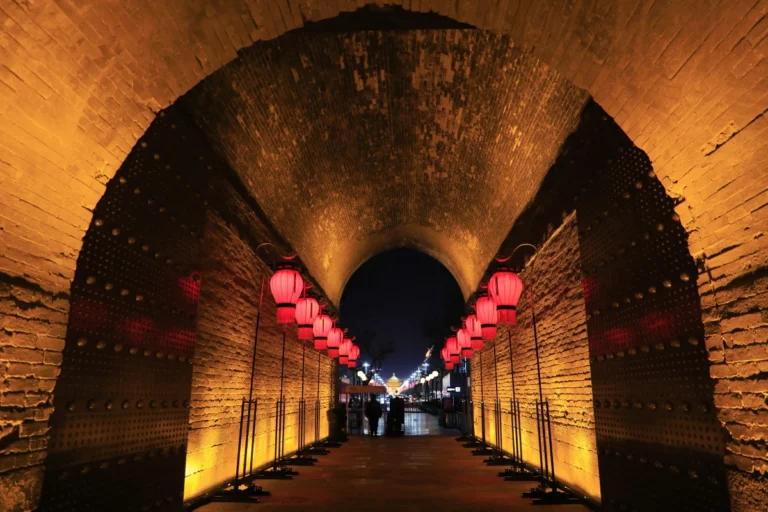
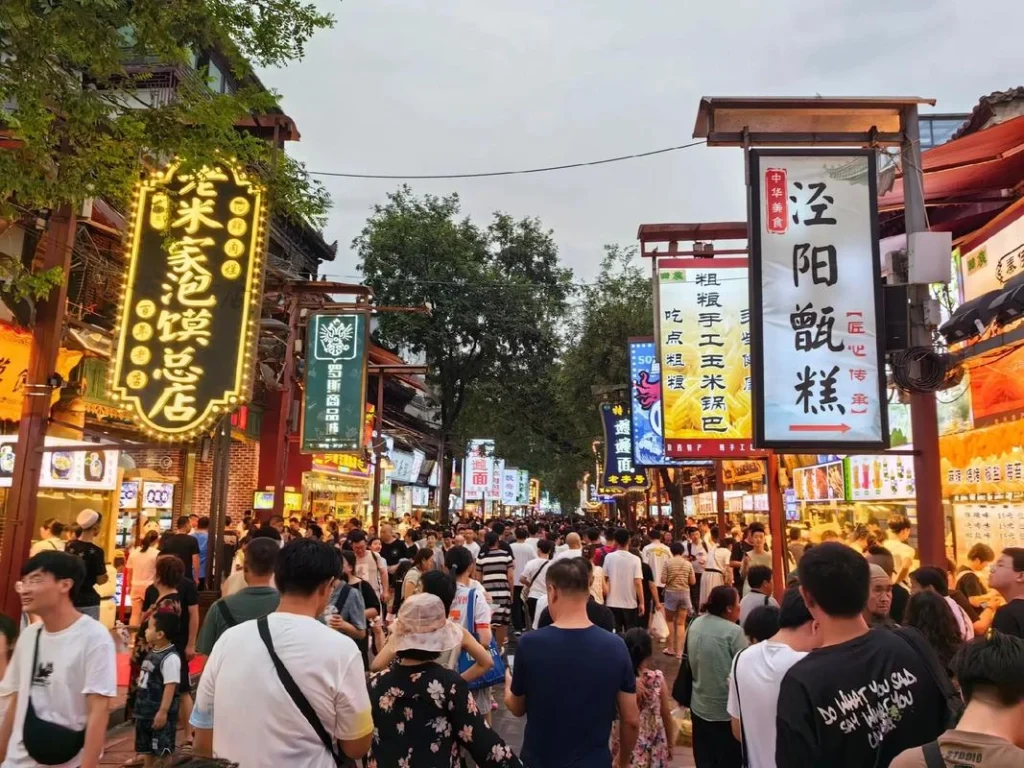
Standing beneath the north gate of Xi’an Drum Tower, you can smell the aroma of cumin and grilled meat wafting through the air. Right in front of you lies the entrance to Xi’an Muslim Street. Also known as xian muslim street, it is a must-visit culinary destination for foreign tourists in China. In 2026, Hui Muslim Street remains as bustling as ever. Here, you’ll find a historic mosque dating back a thousand years and street snacks passed down through generations. This guide will take you on a one-day journey through the most essential historical route along Hui Muslim Street, where you’ll sample the five must-try dishes. Ready? Let’s go.
I. The History of xian muslim street: From Silk Road Caravans to Today’s Hui Quarter
Xian Muslim Street, a legacy of the Silk Road from the Tang Dynasty
The history of xian muslim street dates back to the Tang Dynasty. From 618 to 907 AD, Chang’an was the largest city in the world. Muslim merchants from Persia and Central Asia traveled to Chang’an on camels along the Silk Road to conduct business. They brought spices and jewelry, as well as the Islamic faith. These merchants settled in the northwest corner of Chang’an. There, they built the city’s first mosque. Their descendants are today’s Hui people. Can you picture Hui Muslim Street back then? Merchants conversing in Persian, lamb roasting by the roadside, and the scent of spices wafting through the air. More than 1,300 years have passed, yet that lively atmosphere remains unchanged.
Hua Jue Alley Grand Mosque: A Millennium-Old Treasure Hidden in an Alley
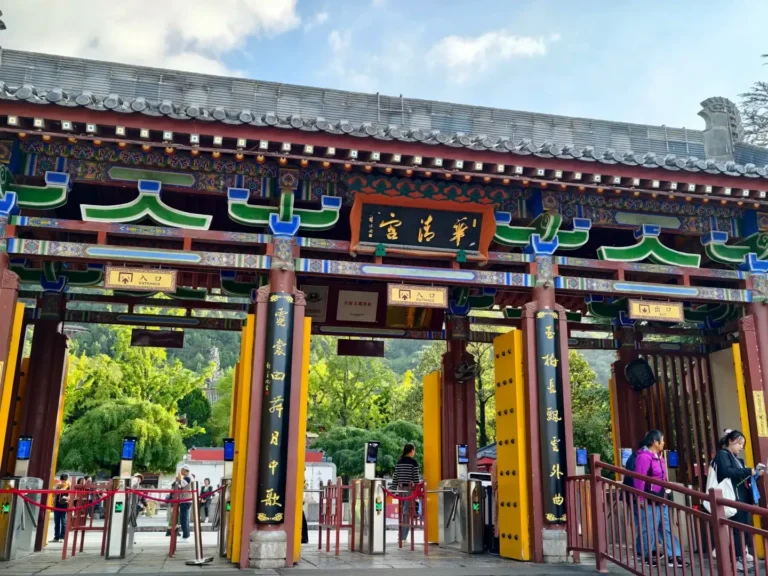
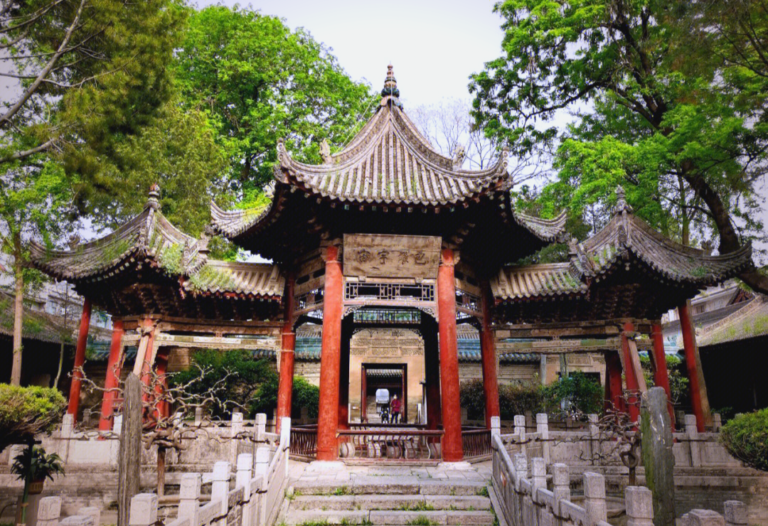
Deep within Huajue Alley on Muslim Street in Xi’an lies one of China’s oldest mosques. The Huajue Alley Grand Mosque was built in 742 AD, the first year of the Tianbao era of the Tang Dynasty. It has a history spanning over 1,270 years. At first glance, this building might make you think you’ve stepped into a Chinese garden. It features four courtyards, pavilions, towers, and terraces, as well as rockeries and ponds. But you’ll soon notice that the roofs are adorned not with Buddhist statues, but with Arabic calligraphy. The main hall faces west toward Mecca. This is what makes Muslim Street so unique—Islamic faith clothed in the garb of Chinese architecture.
The Ming and Qing Dynasties: The Formation of the Hui Quarter Layout
By the Ming and Qing dynasties, the layout of Hui Muslim Street had largely taken shape. Streets such as Beiyuanmen, Xiyangshi, Dapi Yuan, and Huajue Alley already existed 600 years ago. The entire area is known as the “Hui Quarter.” The quarter is home to more than a dozen mosques, with Hui people living in the neighborhoods surrounding them. With prayers five times a day, the call to prayer can be heard throughout the community. Walking along the bluestone paths of Hui Muslim Street, you can step on paving stones from the Ming Dynasty. You can touch door panels from the Qing Dynasty. The recipes for the snacks you eat may date back to the Yuan Dynasty.
II. 5 Must-Try Dishes on Xian Muslim Street
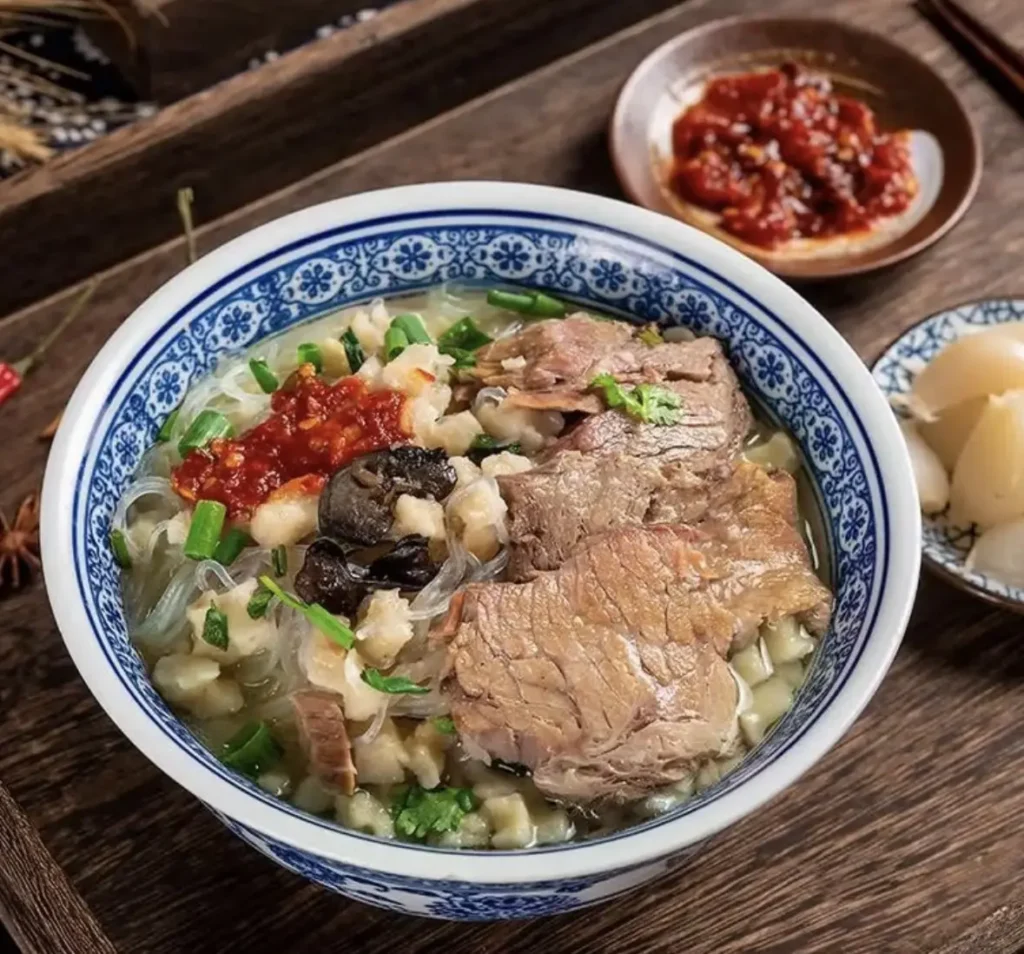
Yangrou Paomo: A time-honored soup-soaked bread dish where you tear the bread yourself
Yangrou Paomo is the most iconic dish on xian muslim street. It’s not just a bowl of soup—it’s a ritual. When you walk in, the owner will give you a large bowl and two hard flatbreads. You have to tear the bread into small pieces yourself—about the size of a fingernail. The finer you tear it, the more flavor the soup will absorb. Once you’re done, the owner takes the bowl back to the kitchen. The chef repeatedly pours scalding hot mutton broth over the pieces. Finally, slices of mutton, glass noodles, wood ear mushrooms, and garlic chives are added. A large, steaming bowl is then served, accompanied by a side of pickled garlic and chili sauce. The broth is rich and the meat tender. The pieces of flatbread soak up the broth. This is the most heartwarming dish on Hui Muslim Street in winter.
- Recommended Restaurants: Lao Mi Jia’s Spicy Meatball Soup (Xiyangshi Branch), Lao Sun Jia’s Paomo
- Price Range: Standard: 35–45 yuan; Premium: 50–65 yuan
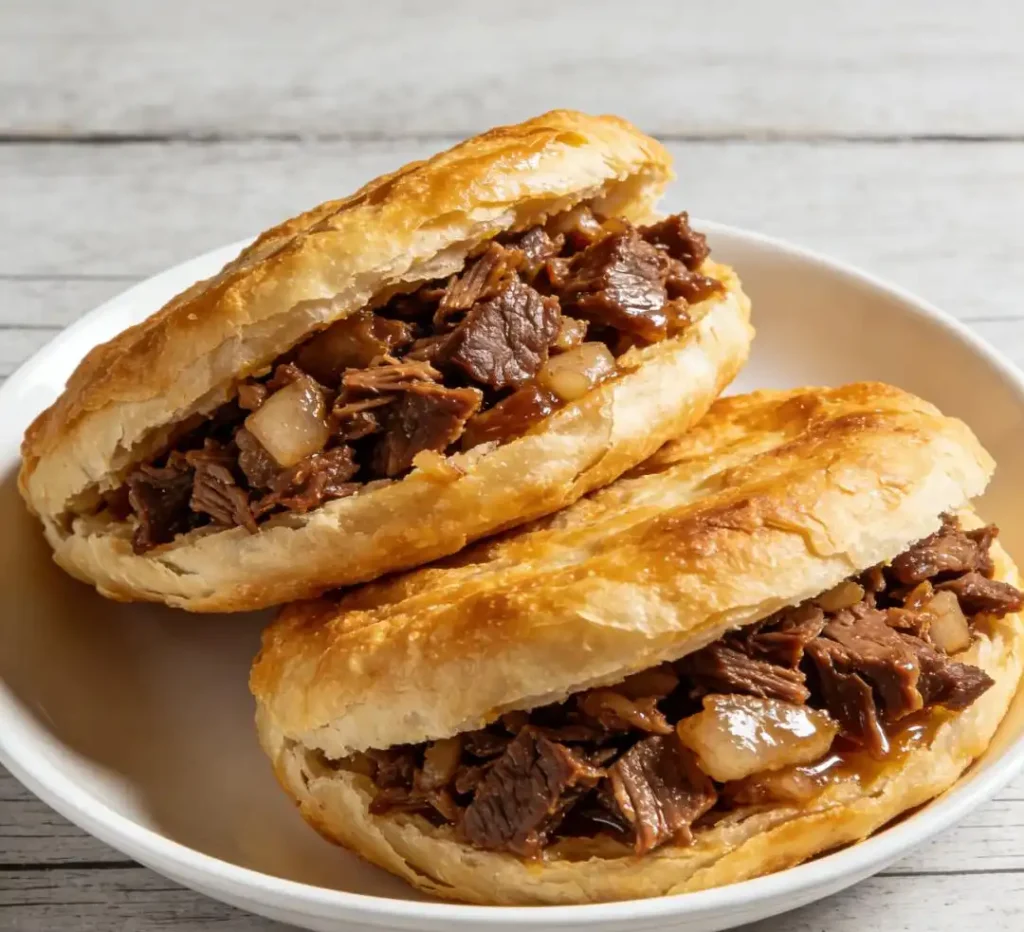
Braised Meat Roujiamo: Xian Muslim Street’s Version of the “Chinese Hamburger”
Roujiamo has its own unique version on xian muslim street. While roujiamo elsewhere typically uses pork, the version here uses only beef or lamb. The beef is placed in a pot of seasoned braising liquid and simmered slowly for several hours until it falls apart at the touch. The chef scoops the meat out of the pot and chops it finely on a cutting board. Then, he takes a freshly baked baiji bun straight from the oven. The crust is crispy, and the inside is soft and fluffy. He stuffs the meat inside and pours a spoonful of braising sauce over it. Take a bite, and the juices will run down your fingers. This is the most iconic street food on xian muslim street.
- Recommended Shop: Lao Bai Jia Rou Jia Mo (near Gulou)
- Price Range: 15–20 yuan each
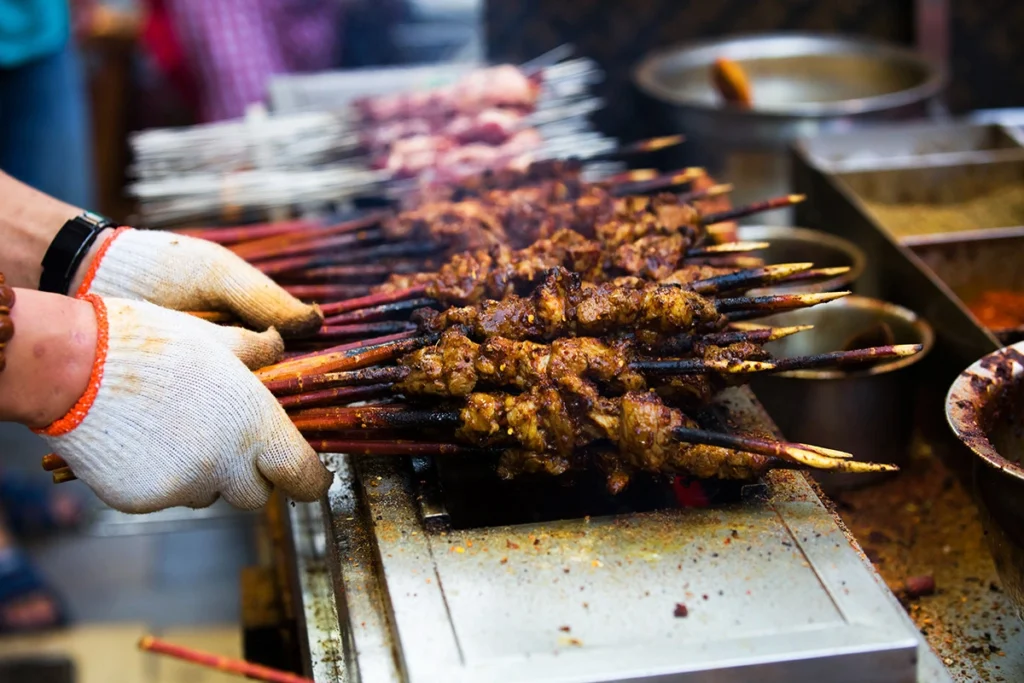
Tamarix Skewers: Charcoal-Grilled Skewers with Silk Road Flair
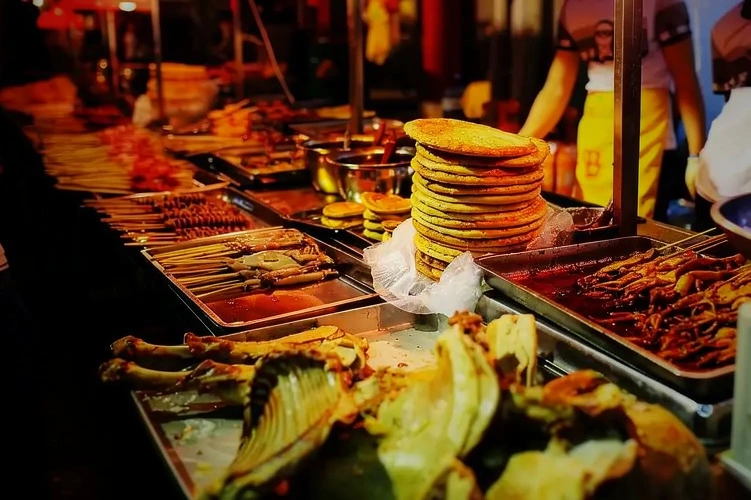
The barbecue stalls on xian muslim street are always billowing with smoke. You can smell the aroma of cumin and chili peppers from a distance. The most unique item here is the tamarix skewer. Instead of bamboo skewers, the meat is threaded onto tamarix branches. As the tamarix wood grills over the charcoal, it releases a subtle, fresh herbal fragrance. The lamb chunks are large, with four or five pieces on each skewer. The grill master sprinkles cumin and chili powder as he cooks. Flames leap up, and fat drips down. Eat it while it’s hot—the outside is slightly charred, while the inside is tender and juicy. This is an age-old method passed down from the Silk Road.
- Recommended spots: The grilled meat stalls on Xiyangshi and North Guangji Street (just go to whichever one has the longest line)
- Price range: 15–25 yuan per skewer
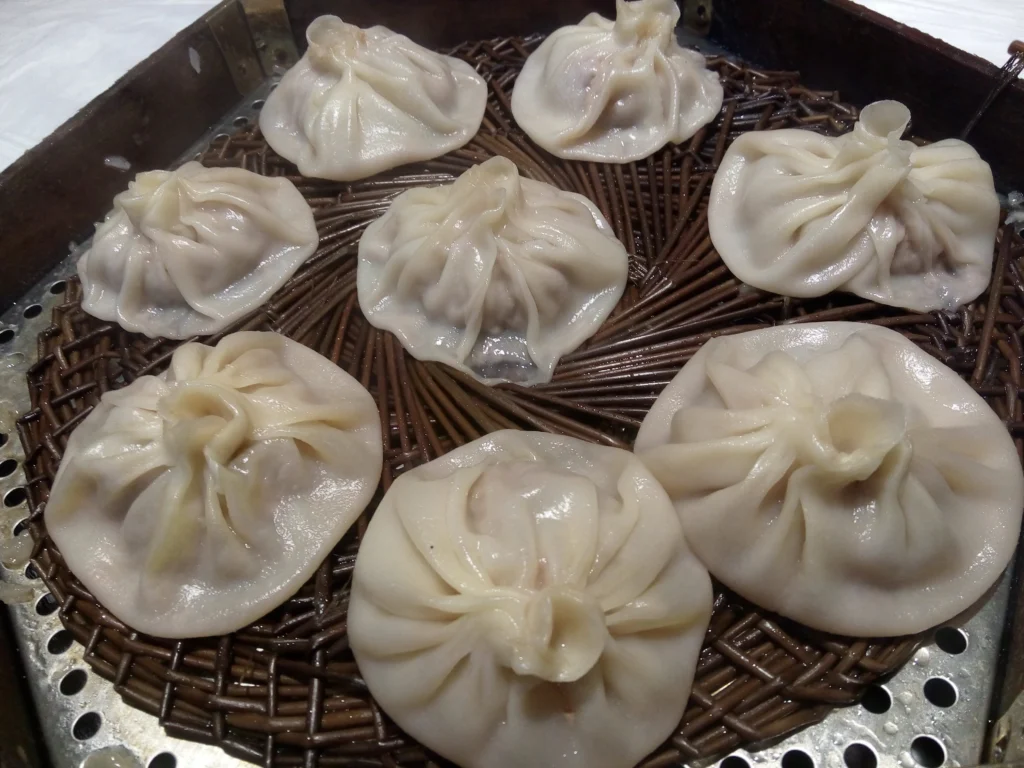
Jia San Soup Dumplings: Xian Muslim Street’s “Number One Steamer”
Soup dumplings hold a special place on Hui Muslim Street. The most famous shop is called Jia San Soup Dumplings. Some call it “the number one steamer in the ancient city.” The dumpling wrappers are rolled extremely thin—so thin you can see the filling through them. The beef filling encases a pool of hot broth. Once served, you must eat them with care. First, take a small bite to let the steam escape. Blow on it to cool it down. Then sip the broth inside. Finally, dip the bun in vinegar and eat it. With its thin skin, savory broth, and tender filling, this is one of the most popular meal options on Hui Muslim Street.
- Recommended Restaurant: Jia San Soup Dumplings (No. 93 Beiyuanmen)
- Price Range: 16–22 yuan per steamer (approx. 8–10 dumplings)
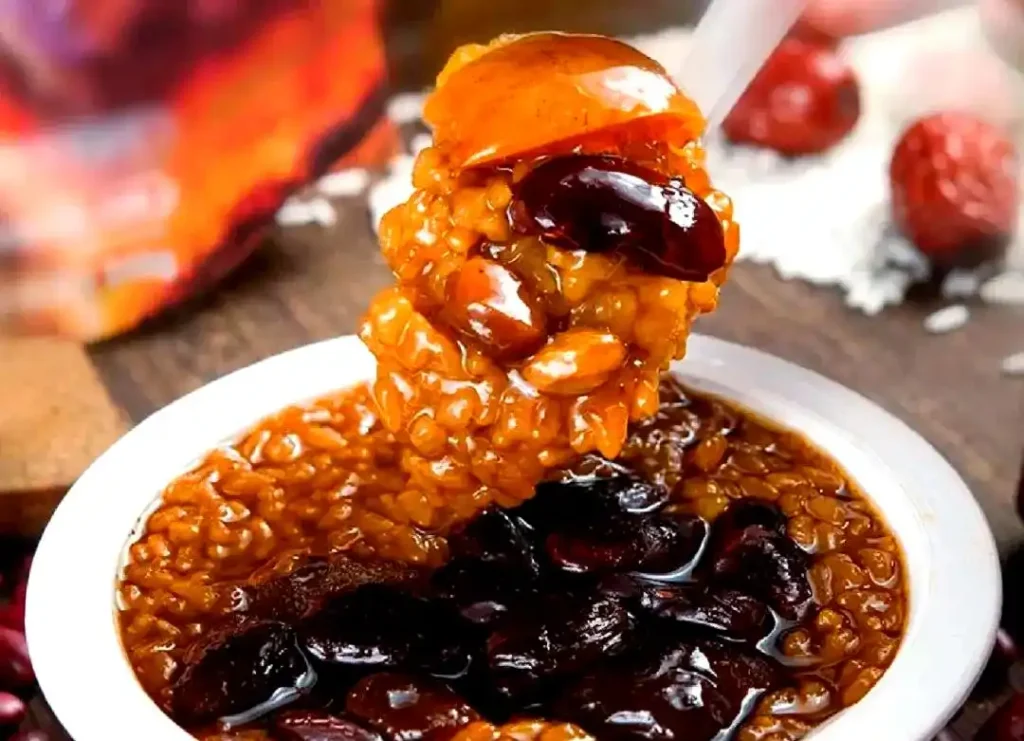
Zeng Gao: A Sweet Treat Sold for Thousands of Years
Zeng Gao is the oldest dessert on xian muslim street. Its history dates back to the Zhou Dynasty. A “zeng” is an ancient steamer made of clay. Glutinous rice, red dates, and kidney beans are layered inside the zeng and steamed over high heat for several hours. Once steamed, the red dates have turned into a deep red paste. The glutinous rice becomes sticky, soft, and stringy. The vendor scoops a portion into a box with a spatula. It’s piping hot and sweet without being cloying. This is the best breakfast on xian muslim street. Be sure to buy Zeng Gao early in the morning. By the afternoon, many stalls have already sold out.
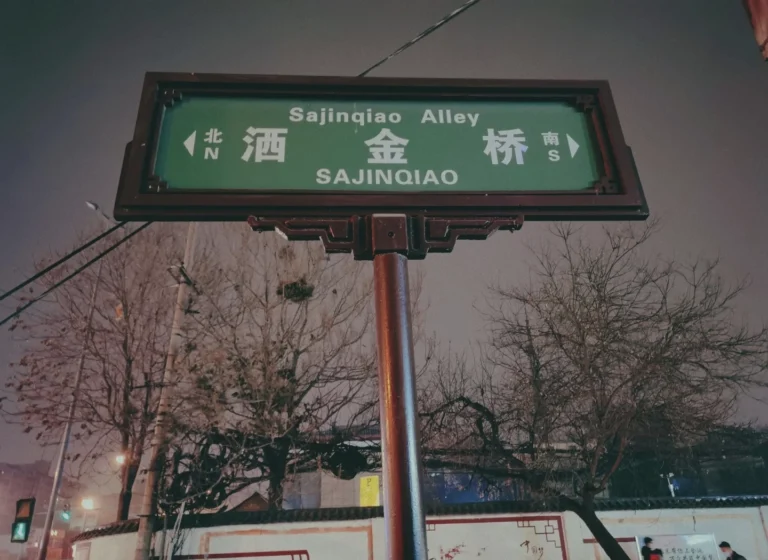
- Recommended Stalls: Zenggao stalls at Sajinqiao and Xiyangshi (best to arrive before 7 a.m.)
- Price Range: 5–10 yuan per serving
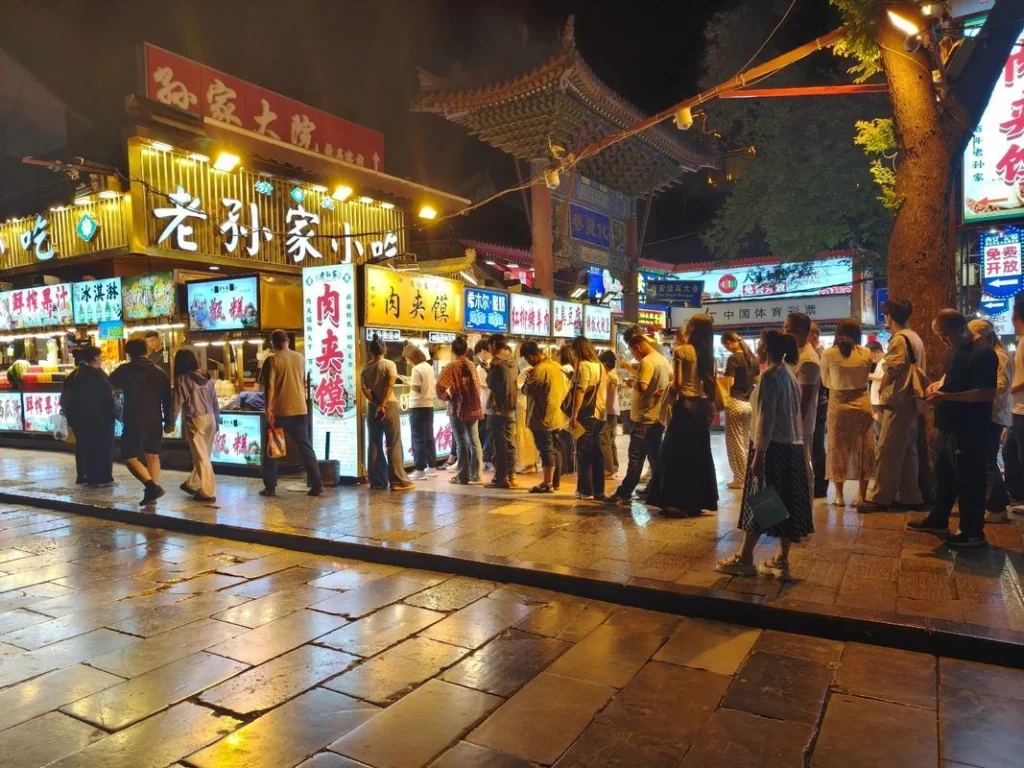
III. Recommended One-Day Itinerary for Xian Muslim Street (2026 Edition)
10:00 AM — Depart from Drum Tower
Take Metro Line 2 to Bell Tower Station. Exit through Exit A. You’ll see the Drum Tower right away. Walk toward the Drum Tower. Pass through the archway of the Drum Tower. Congratulations—you’ve arrived at the starting point of Hui Muslim Street. Don’t rush to buy food just yet. The prices on xian muslim street tend to be a bit high, and it’s too crowded with tourists.
10:30 AM — Visit the Grand Mosque on Huajue Alley
Turn into Huajue Alley at Beiyuanmen. The alley is very narrow, lined with small souvenir shops on both sides. After walking for about five minutes, you’ll see the entrance to the Grand Mosque. Buy a ticket to enter and spend 45 minutes exploring at your own pace. Each of the four courtyards has its own unique charm. In spring, the magnolias bloom, and in autumn, the ginkgo trees turn golden. This is the quietest spot on the entire Hui Muslim Quarter.
12:00 PM — Lunch at Xiyangshi
After eating our fill, we continue exploring. Continue west along Xiyangshi Street. Pass by Dapi Yuan. This street is lined with many old shops that have been around for decades. Find a barbecue stall and order two skewers of red willow lamb. Then grab a steamed rice cake for an afternoon treat. When you get tired from walking, find a teahouse to sit down and enjoy a cup of tea. This is the right way to experience xian muslim street.
5:00 PM — Head back to the Bell Tower for a perfect ending
Walk east from Dapi Yard. Return to the North Yard Gate. The evening light is at its best at this time. You can take plenty of beautiful photos. Buy some local specialties to take home. Dried beef, persimmon cakes, and salt-and-pepper walnuts are all great choices. Walk out through the archway of xian muslim street. Take one last look back. The lanterns on the Drum Tower are lit. You’ve been walking for five hours today. You’ve witnessed 1,300 years of history. You’ve tasted five types of cuisine passed down through generations. This is the perfect one-day itinerary for xian muslim street.
On xian muslim street, every cobblestone you walk on may have been trodden by caravans from the Tang Dynasty. Every bite you take may taste exactly the same as it did 600 years ago. In 2026, grab this guide and take a stroll down xian muslim street. Xi’an china history isn’t found in museums. It’s in the alleys beneath your feet. It’s in the bowl of mutton paomo you hold in your hands.