Things to Do in Xi’an: Complete Guide to Must-See Attractions (2026)
- Xi'an at a Glance — Tickets, Hours & Best Time
- Two Things You’ll Care About Most on Your First Visit to Xi’an
- Xi’an Must-See Attractions: A Detailed Guide
- The Terracotta Army—The Eighth Wonder of the World
- Xi'an City Wall—China's Best-Preserved Ancient City Wall
- The Big Wild Goose Pagoda—Xi'an's City Landmark
- The Bell and Drum Towers—The Heart of Xi'an
- Huaqing Palace—The Imperial Hot Spring Retreat of the Tang Dynasty
- Shaanxi History Museum—“Give me a day, and I’ll give you ten thousand years”
- Hui Muslim Street—Xi'an's Culinary Universe
- Tang Dynasty Peony Garden—Step into the Golden Age of the Tang Dynasty
- Mount Li—Natural Beauty in an Imperial Garden
- Mount Hua (Huashan) — The Day Trip Every Local Recommends
- Datang Everbright City (大唐不夜城) — The Night Street That Rivals the Sights
- Xi'an Food — Where Locals Actually Eat
- Practical Information
- What Most Guides Get Wrong About Xi'an
- Xi'an by Time of Day — Beat the Crowds
- Recommended Itineraries
- FAQ
If this is your first time in China, Xi’an is a non-negotiable stop. As the ancient capital of thirteen dynasties, the city carries more than 3,000 years of history — the Ming-era walls still ring the old town, the smell of cumin and chili oil drifts out of the Xi’an muslim street from dusk till midnight, and the Terracotta Army has been waiting underground for over two millennia. Most “things to do in Xi’an” lists stop at the same eight sights. This guide goes further: it adds the day-trip every local actually recommends (Mount Hua), the night street that rivals the sights (Datang Everbright City), a crowd-beating hourly plan, and the mistakes most travel blogs get wrong — so you spend less time in lines and more time in the moment.
Xi’an at a Glance — Tickets, Hours & Best Time
Save this table. It’s the fastest way to plan, and it covers the practical questions travelers ask most. Prices are in RMB (¥); 1 USD ≈ ¥7.2 (verify before you travel — rates and quotas change seasonally).
| TiAttraction | Ticket (RMB) | BTypical hours | Best time to go | Worth |
| Terracotta Army | ¥120 | 8:30–17:30 (Mar 16–Nov 14); closes 1 hr earlier off-season | At opening, 8:30 | Half a day |
| City Wall | ¥54 (+ bike ¥45/2hrs) | 8:00–22:00 (summer) | Late afternoon–sunset | 2–3 hrs (bike) |
| Big Wild Goose Pagoda | ¥40 temple + ¥30 climb | 8:00–19:00; fountain show nightly | After sunset (fountain) | 2 hrs |
| Bell & Drum Towers | ¥30 each / ¥50 combo | Until 22:00 | After dark (lit) | 1 hr |
| Huaqing Palace (+ Mount Li) | ¥120 (incl. Mount Li) | From 7:30 | Morning | Half a day |
| Shaanxi History Museum | Free (book ahead) / ¥30 Tang Treasures hall | 9:00–17:30, closed Mon | Right at 9:00 release | Half a day |
| Tang Paradise (大唐芙蓉园) | ¥120 (waived w/ show ticket) | 9:00–22:00 | Afternoon→night lights | 2–3 hrs |
| Mount Hua (day trip) | ¥160 + cableway ¥80–150 | 7:00–19:00 (varies) | Weekday, clear day | Full day |
| Datang Everbright City | Free | Pedestrian street, best after 19:00 | 20:00–22:00 | 2 hrs (night) |
Two Things You’ll Care About Most on Your First Visit to Xi’an
What if you don’t have enough time?
You can see the highlights of Xi’an in just one or two days. Spend one day exploring the city center, visiting the City Wall, the Bell and Drum Towers, the Big Wild Goose Pagoda, and Hui Muslim Street in sequence—the pace is brisk but never rushed. If you have two days, spend the second day at the Terracotta Army and Huaqing Palace, then return in the evening to see the night views at “Tang dynasty City That Never Sleeps“. Honestly, the attractions in downtown Xi’an aren’t far apart, so planning your “Things To Do In Xi’an” isn’t tiring at all.
Are tickets hard to get?
To be honest, some definitely are. The Shaanxi History Museum has a daily limit on free tickets, which sell out instantly; there are long lines at the Terracotta Army during peak season; and tickets for the “Song of Everlasting Sorrow” performance must be booked several days in advance. But as long as you know how and when to snag them, it’s actually not that bad—I’ll explain in detail below.
Xi’an Must-See Attractions: A Detailed Guide
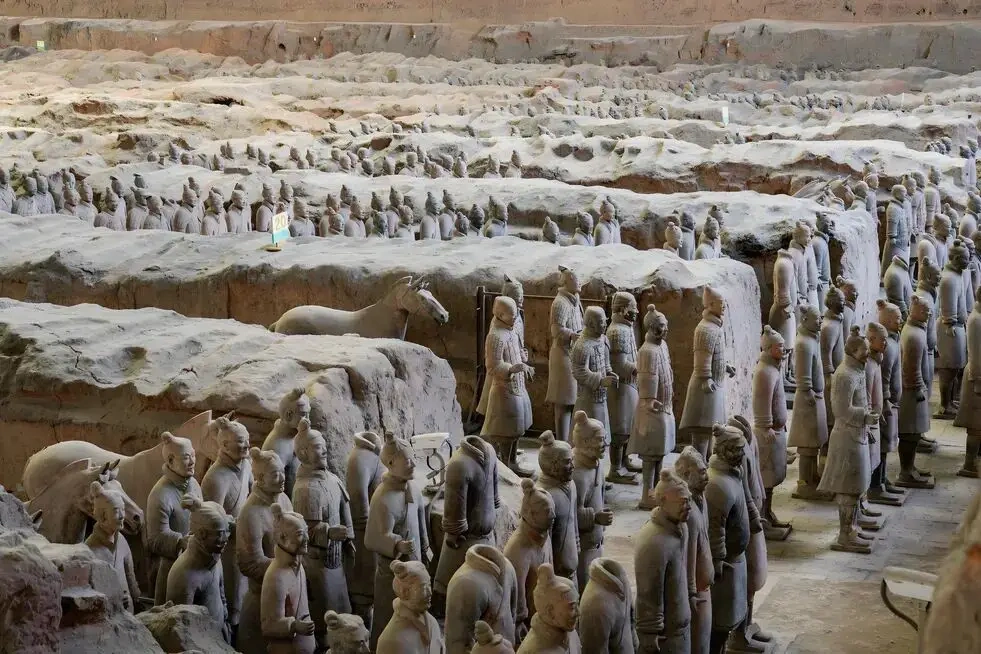
The Terracotta Army—The Eighth Wonder of the World
A visit to Xi’an isn’t complete without seeing the Terracotta Army. This underground army of Emperor Qin Shi Huang was accidentally discovered by local farmers while digging a well in 1974, and has astonished the world ever since. Three pits are filled with thousands of life-sized terracotta figures, including infantry, archers, cavalry, and chariots. The most awe-inspiring sight is Pit 1—where the densely packed terracotta warriors are arranged in formation. Standing at the railing and looking down, the sheer scale of the scene is truly breathtaking. As the top attraction in Xi’an, the Terracotta Army is well worth spending half a day exploring.
Admission to the Terracotta Army is 120 yuan. During the peak season (March 16 to November 14), it is open from 8:30 AM to 5:30 PM; during the off-season, it closes one hour earlier. We recommend setting aside at least 3 to 4 hours to visit Pits 1, 2, and 3, as well as the Bronze Chariot and Horse Exhibition Hall, in order. I highly recommend renting an audio guide or hiring a licensed tour guide. Simply looking at the terracotta warriors without understanding the stories behind them will make for a much less fulfilling experience.
Insider tip: Arrive at the 8:30 opening. Tour buses from the city typically roll in after 10:00, so the first 90 minutes are eerily empty. Skip the on-site “Circle Vision” film if you’re short on time — it eats 20 minutes you could spend at Pit 1.
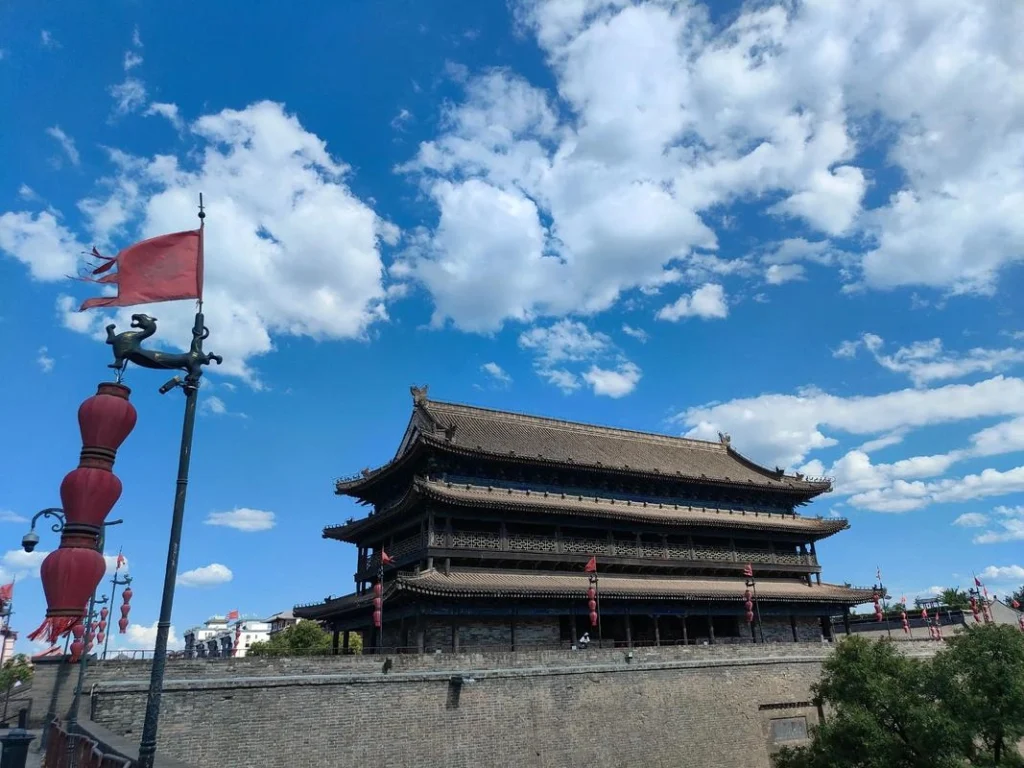
Xi’an City Wall—China’s Best-Preserved Ancient City Wall
The Xi’an City Wall is the best-preserved ancient city wall in all of China. Stretching approximately 14 kilometers, it forms a large rectangle that encloses the old city. Cycling along the wall is one of the most worthwhile experiences among the things to do in Xi’an—with traditional tiled-roof courtyards on one side and modern skyscrapers on the other, the interplay of past and present creates a particularly striking scene.
Admission is 54 yuan, and the South Gate (Yongning Gate) is the most popular entry point. The walls are open from 8:00 AM to 10:00 PM (during summer). We recommend visiting in the late afternoon, as the play of light and shadow at sunset makes for stunning photos. Bicycle rentals cost about 45 yuan for two hours, which is just enough time to circle the walls. If you’re not in a hurry, take your time, stop along the way to enjoy the scenery and snap some photos—it’s a very relaxing experience.
Insider tip: The full 14 km loop on a single-speed bike is more work than it looks in the midday sun. Do it from 17:00–19:00, or hire the electric cart if you’d rather sightsee than sweat.
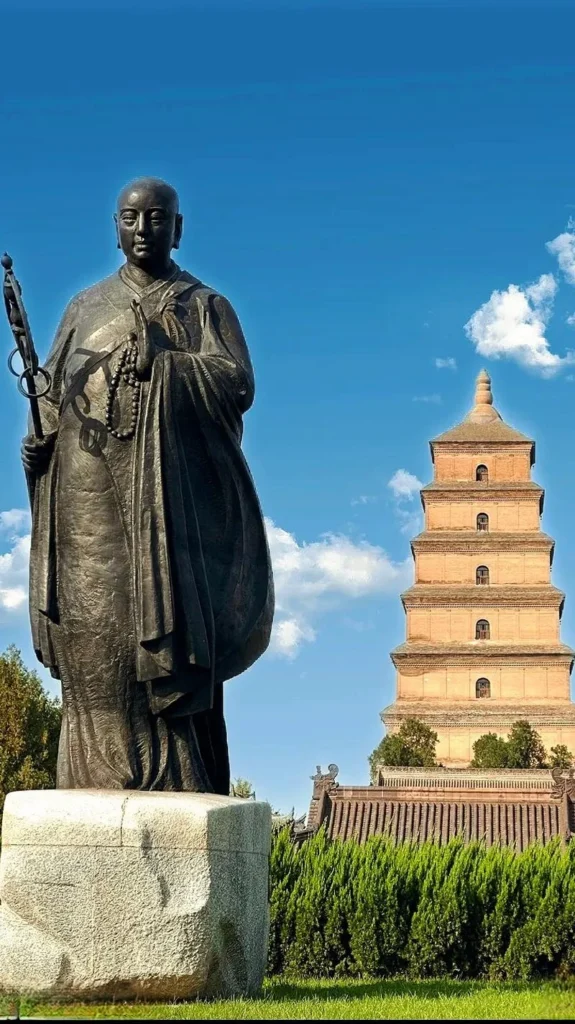
The Big Wild Goose Pagoda—Xi’an’s City Landmark
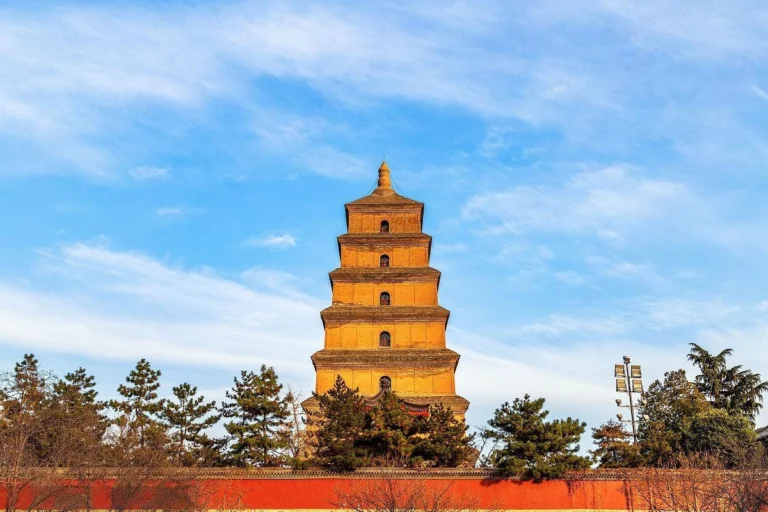
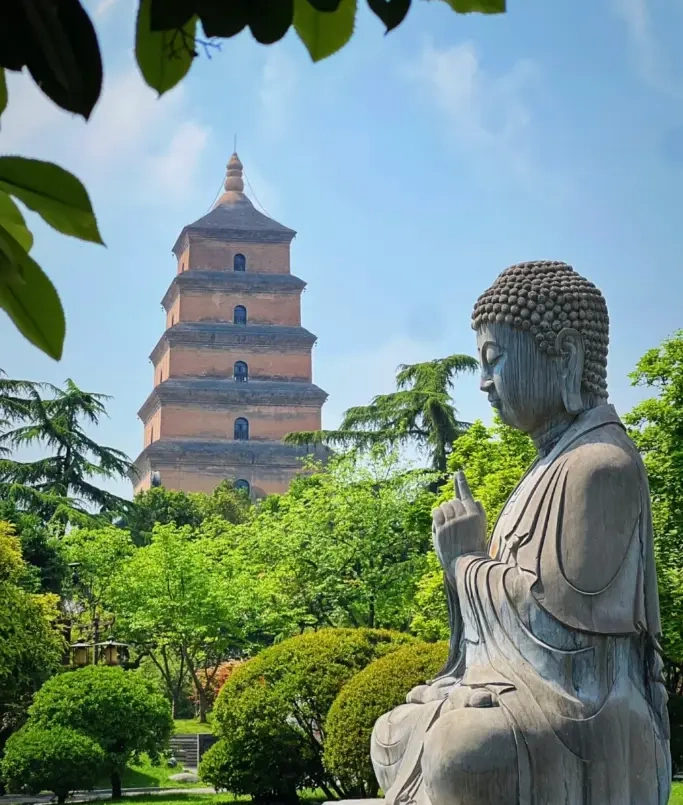
Construction of the Big Wild Goose Pagoda began in 652. It was built by the renowned Tang Dynasty monk Xuanzang to house the sutras and Buddhist statues he brought back from India. That’s right—he’s the real-life inspiration for the character Tang Sanzang in Journey to the West. The Big Wild Goose Pagoda is one of Xi’an’s most iconic landmarks. Standing seven stories tall at 64 meters, climbing to the top offers a panoramic view of the entire city and is definitely a must-see on any list of Xi’an’s top attractions.
Admission to the Great Ci’en Temple is 40 yuan, with an additional 30 yuan fee to climb the pagoda. The temple opens at 8:00 AM and closes at 7:00 PM. However, the most spectacular part of the Big Wild Goose Pagoda is actually outside the pagoda itself—the musical fountain on the North Square, the largest of its kind in Asia. There is a performance every evening, with water jets reaching up to 60 meters high. Accompanied by lights and music, and with the illuminated Big Wild Goose Pagoda as the backdrop, the scene is so beautiful it seems unreal. This fountain show is completely free and is a classic item on the list of things to do in Xi’an.
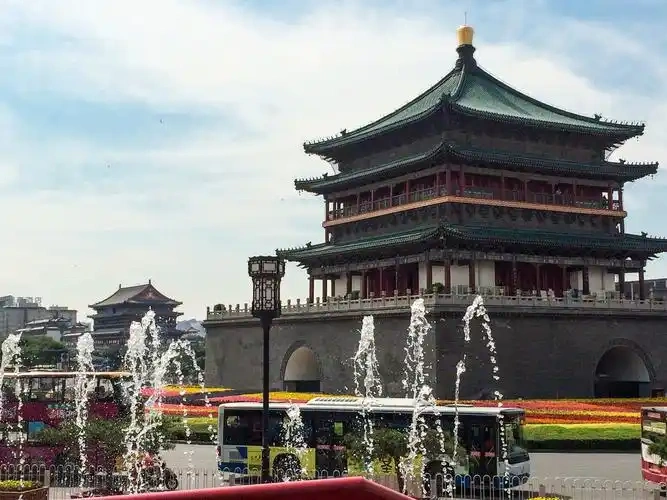
The Bell and Drum Towers—The Heart of Xi’an
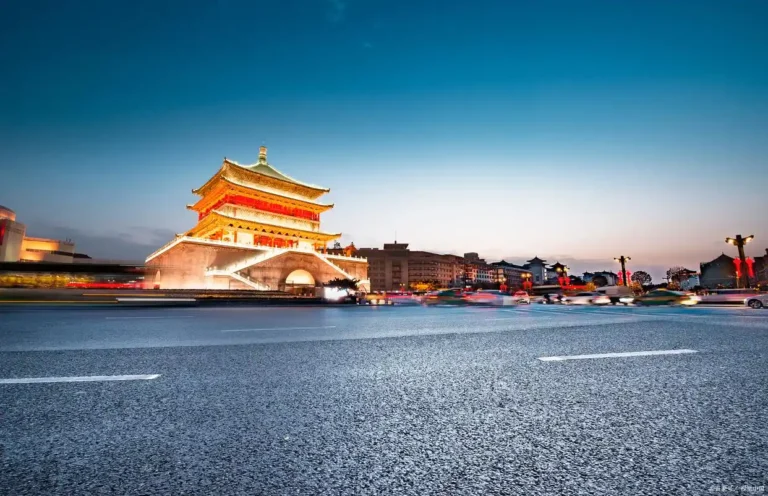
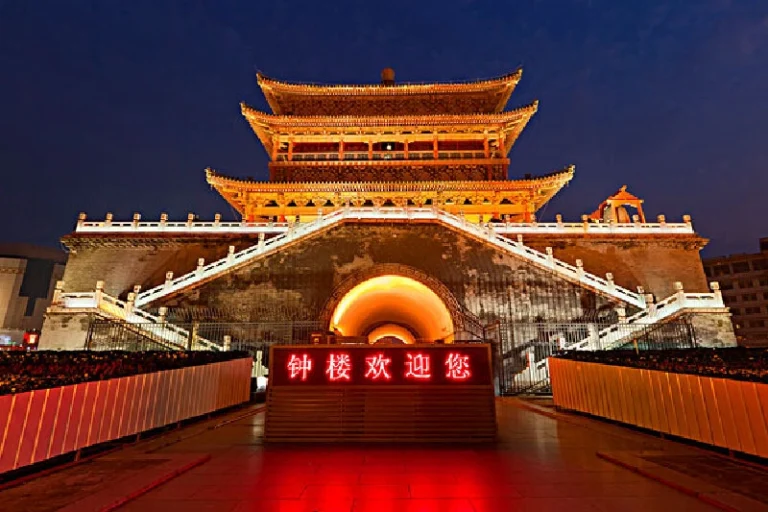
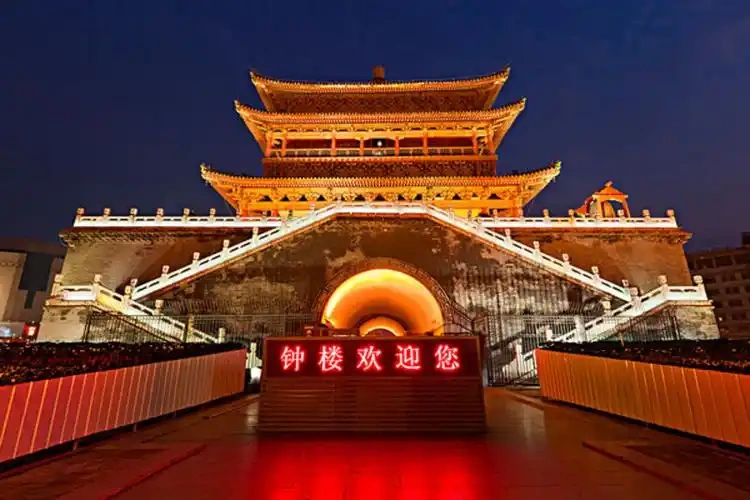
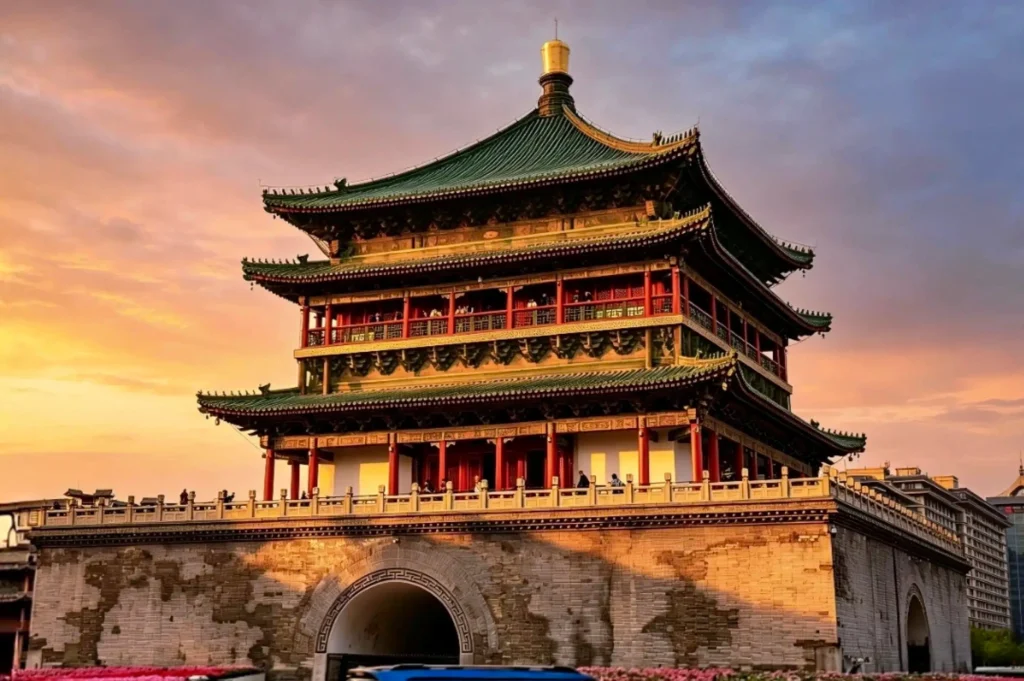
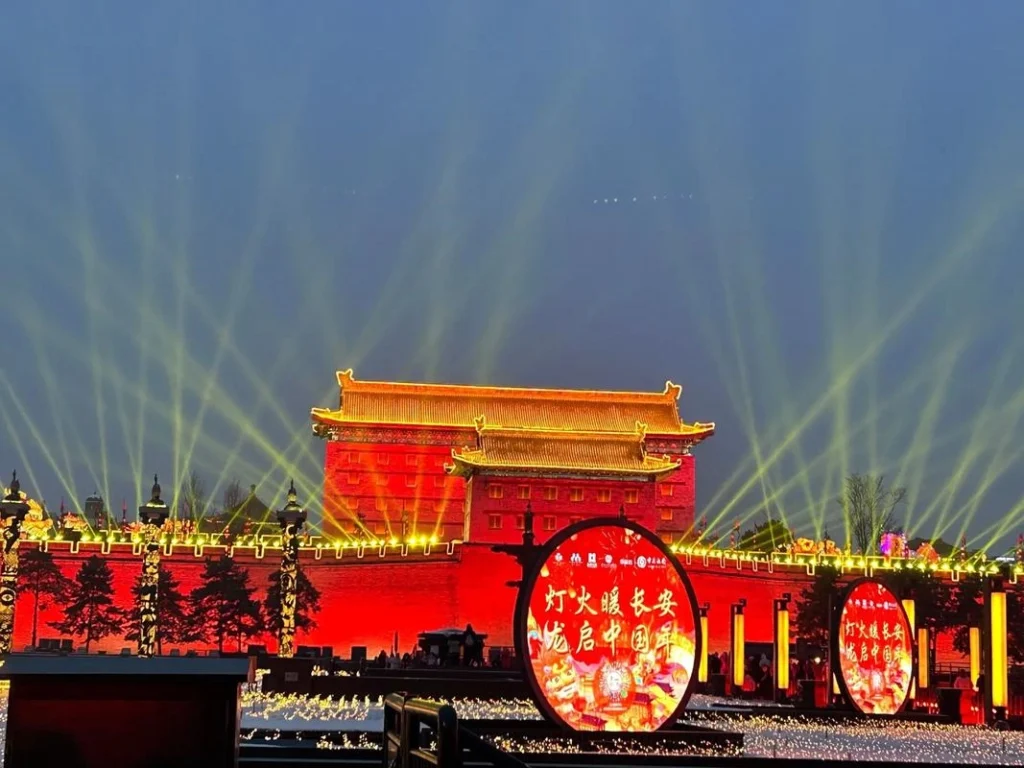
The Bell and Drum Towers served as the “alarm clocks” of ancient Xi’an—the Bell Tower rang to announce the dawn, and the Drum Tower beat to signal the evening. Today, they stand tall in the city center, having become Xi’an’s most prominent landmarks. The Bell Tower is situated at the intersection of four major thoroughfares and looks spectacular from any direction; the Drum Tower is located northwest of the Bell Tower, just a few minutes’ walk away. This pair is one of Xi’an attractions, and their dazzling golden glow after dark is truly mesmerizing.
Admission to the Bell and Drum Towers is 30 yuan each, or 50 yuan for a combined ticket, and they remain open until 10:00 PM. We highly recommend visiting in the evening; once the towers are illuminated, the red walls and golden tiles against the night sky make every snapshot look like a professional photo. Plus, Hui Muslim Street is right next to the Drum Tower, so after exploring the Bell and Drum Towers, you can head straight there for a meal—a seamless transition to your next activity.
Huaqing Palace—The Imperial Hot Spring Retreat of the Tang Dynasty
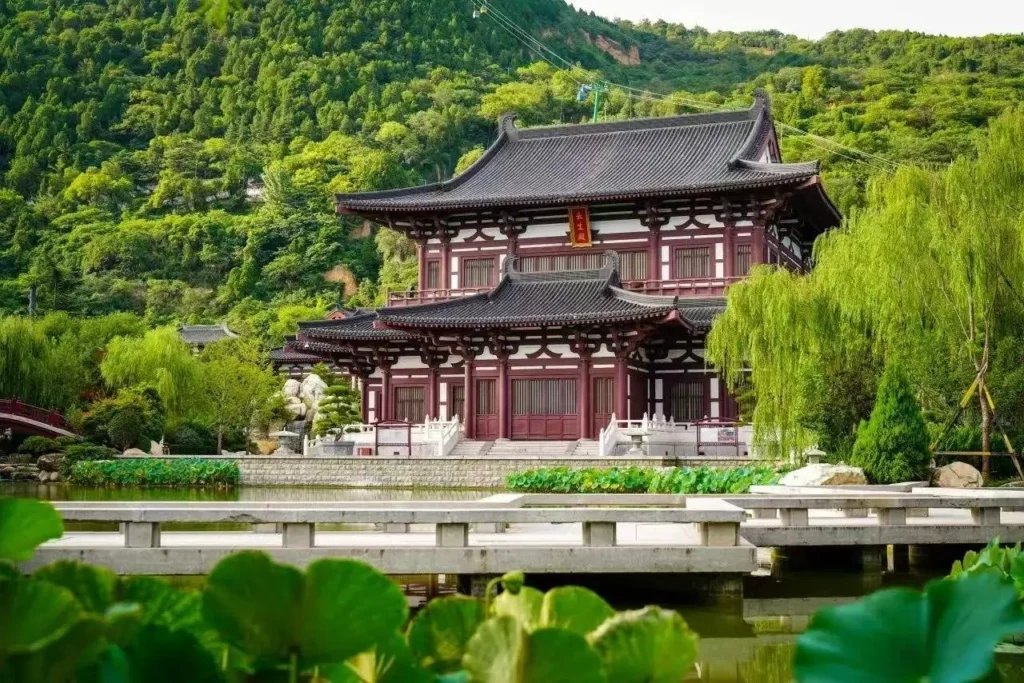
Huaqing Palace is world-renowned for the love story between Emperor Xuanzong of Tang and Yang Guifei, but its history goes far beyond that—it has served as an imperial hot spring retreat since the Zhou Dynasty, with Emperor Xuanzong being merely its most famous occupant. The “Beacham Pool” within the palace is said to be where Yang Guifei bathed, while the “Lotus Pool” was the emperor’s private bath. These Tang Dynasty imperial bath sites are remarkably well-preserved; standing by the pools and imagining the scenes from a thousand years ago truly feels like stepping back in time.
Admission to Huaqing Palace is 120 yuan, which includes access to the Mount Li Scenic Area; it opens at 7:30 a.m. In addition to the imperial bath ruins, the scenic area also features the Five-Hall Site of the Xi’an Incident, where modern and ancient history converge in the same place—a truly unique experience. If you visit between April and October, don’t miss the evening live-action performance The Song of Everlasting Sorrow. Set against the backdrop of Mount Li and the starry sky, it brings a Tang Dynasty love story to life in a deeply moving and stirring way. Tickets for the performance must be purchased separately and booked in advance, as they sell out quickly during peak season.
Shaanxi History Museum—“Give me a day, and I’ll give you ten thousand years”
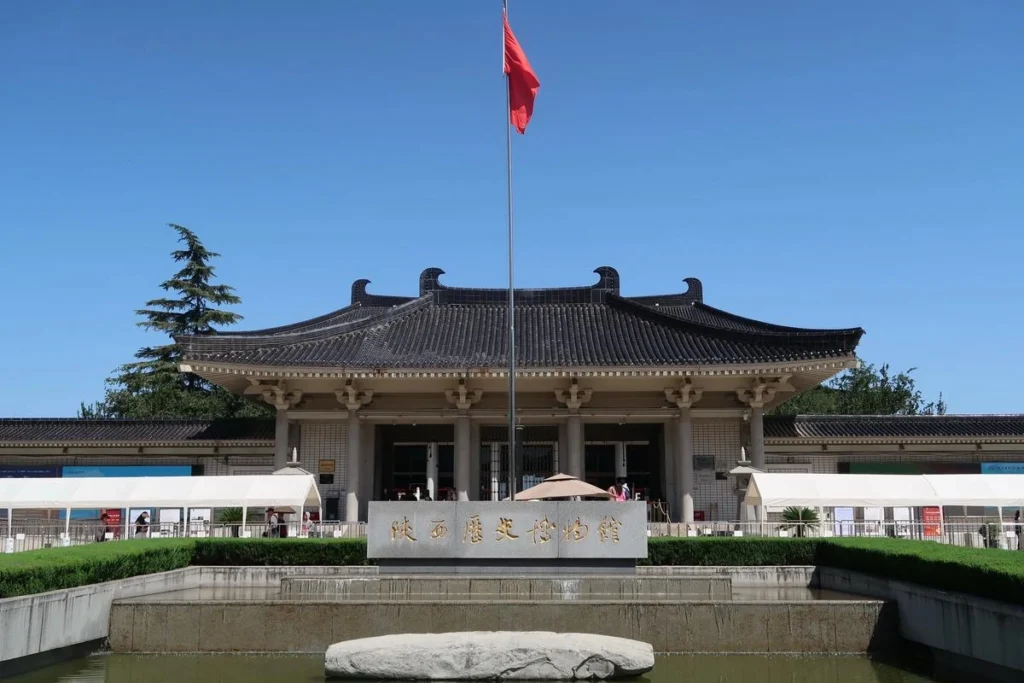
If the Terracotta Army showcases the military might of the Qin Dynasty, then the Shaanxi History Museum takes you on a journey through the entire history of Chinese civilization. With a collection of over 1.7 million artifacts spanning from prehistoric times to the Tang Dynasty, every piece has been carefully selected. Zhou Dynasty bronze ware, Han Dynasty gold ingots, Tang Dynasty Sancai pottery, Tang Dynasty murals… After a full tour, you’ll truly understand why Xi’an is called the “Ancient Capital of Thirteen Dynasties.” When listing things to do in Xi’an, this museum is often underestimated, but it’s absolutely worth setting aside half a day for.
The museum is free to enter, but you must book in advance—and securing a reservation is incredibly difficult. Daily slots are limited and sell out instantly. Bookings are made through the official WeChat public account; we recommend setting an alarm a few days in advance and being ready to pounce. If you really can’t get a free ticket, you can purchase a ticket for the “Treasures of the Tang Dynasty” exhibition (30 yuan)—there are usually tickets left, and you’ll get to see even more precious artifacts. The museum is closed on Mondays and open from 9:00 AM to 5:30 PM (last admission at 4:30 PM).
Insider tip: The free-ticket scramble is real, but the paid Tang Treasures hall is quieter, cooler, and arguably better lit. If you’re here for the artifacts (not the bragging rights), skip the fight and pay ¥30.
Hui Muslim Street—Xi’an’s Culinary Universe
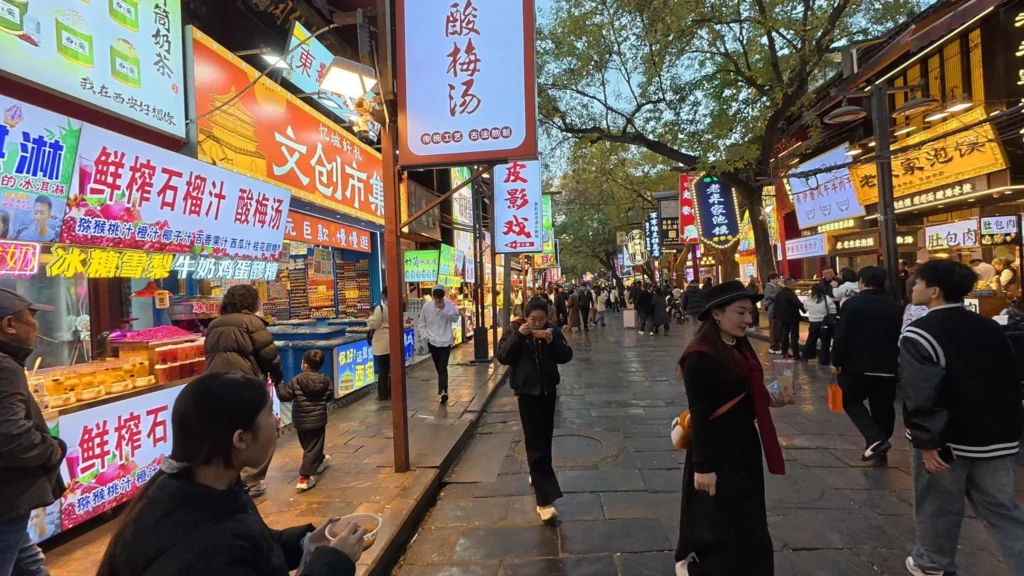
Just past the Drum Tower lies Xi’an Muslim Street, Xi’an’s liveliest food street and a must-visit destination for anyone coming to Xi’an. The air is thick with the aroma of cumin, chili oil, and grilled meat, and every few steps, vendors enthusiastically offer samples. Hui Muslim Street is at its liveliest after dusk, when it’s brightly lit and bustling with people—the vibrant atmosphere is truly infectious. Strolling through Hui Muslim Street is definitely the most relaxed and enjoyable part of things to do in Xi’an.
Although some say Hui Muslim Street has become “too touristy,” to be honest, there are still some real gems—the key is finding the right place. Look for stalls with long lines and lots of locals; the taste and price won’t disappoint. As for what to eat and how to eat it, I’ll go into more detail in the food section below.
Tang Dynasty Peony Garden—Step into the Golden Age of the Tang Dynasty
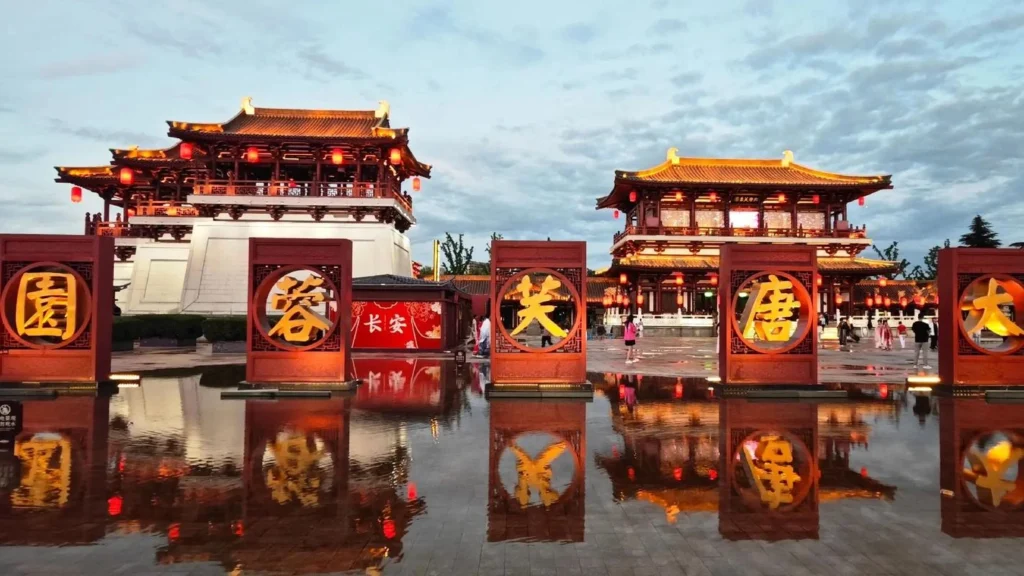
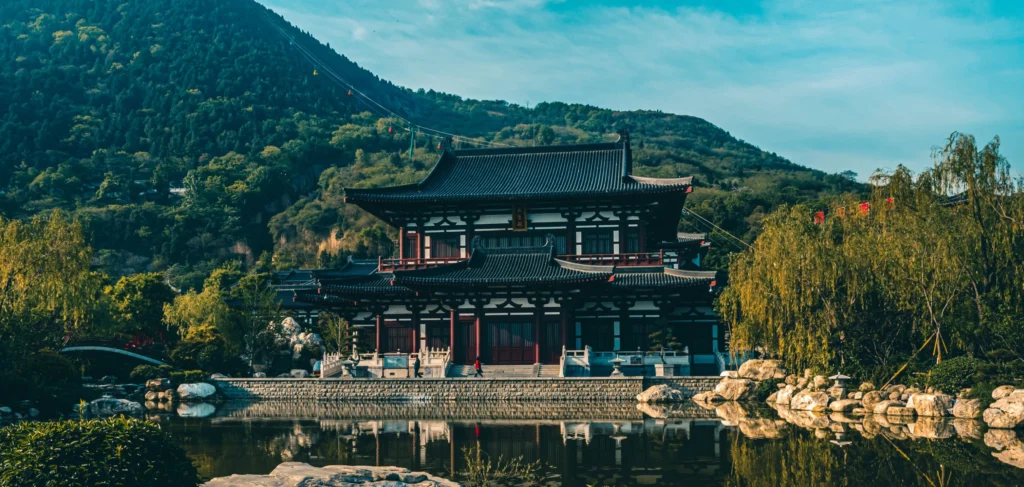
Tang Dynasty Peony Garden is China’s first imperial-style theme park that comprehensively showcases the splendor of the Tang Dynasty. With landmarks such as the Purple Cloud Tower, the Court Ladies’ Pavilion, and the Imperial Banquet Hall, the entire garden is like a living painting of the Tang Dynasty’s golden age. During the day, explore the garden and admire the architecture, but the most breathtaking moment comes at night when the lights come on—the entire park glows with golden splendor, reflecting on the lake, and every snapshot you take will look like a classic ancient-style masterpiece.
Admission is 120 yuan, but it is waived if you purchase tickets for a show within the park. The park features special performances such as “Dreaming of the Tang Dynasty” and “Chasing Dreams in the Tang Dynasty,” which are well worth seeing. Opening hours are 9:00 AM to 10:00 PM. We recommend entering in the afternoon and staying until evening to see the illuminations for the most complete experience.
Mount Li—Natural Beauty in an Imperial Garden
Mount Li lies directly behind Huaqing Palace and served as an imperial garden during the Zhou, Qin, Han, and Tang dynasties. Though not particularly high, the mountain is renowned for its stunning scenery and numerous historical sites. From the summit, you can enjoy a panoramic view of the Guanzhong Plain. Admission to Huaqing Palace includes access to the Mount Li scenic area, so if you’re visiting Huaqing Palace, you might as well climb Mount Li while you’re there—half a day is plenty of time.
Mount Hua (Huashan) — The Day Trip Every Local Recommends
This is the gap in almost every “things to do in Xi’an” list, and the one locals push hardest. Mount Hua is one of China’s Five Great Mountains, a knife-edge granite massif ~120 km east of the city. Its reputation for vertigo-inducing plank walks is earned — but you don’t need to hug a cliff to love it. The cable cars do the scary part; the summit views over the Qinling range are the payoff.
How to get there: high-speed train from Xi’an North to Huashan North (~30–40 min, ~¥54.5); then a shuttle bus to the foothill. Ticket: ~¥160, plus cableway (West cableway one-way ~¥80, round ~¥140–150 — verify current pricing). Most visitors do the West Peak cableway up and down to save time, or hike the classic Huashan Yu (夜爬) route overnight to catch sunrise.
Plan it as a full day. Leave Xi’an by 7:30, you’re back by evening. Go on a weekday and a clear day — clouds erase the view and weekends clog the cableways. Bring layers; the summit runs 10°C colder than the city.
Datang Everbright City (大唐不夜城) — The Night Street That Rivals the Sights
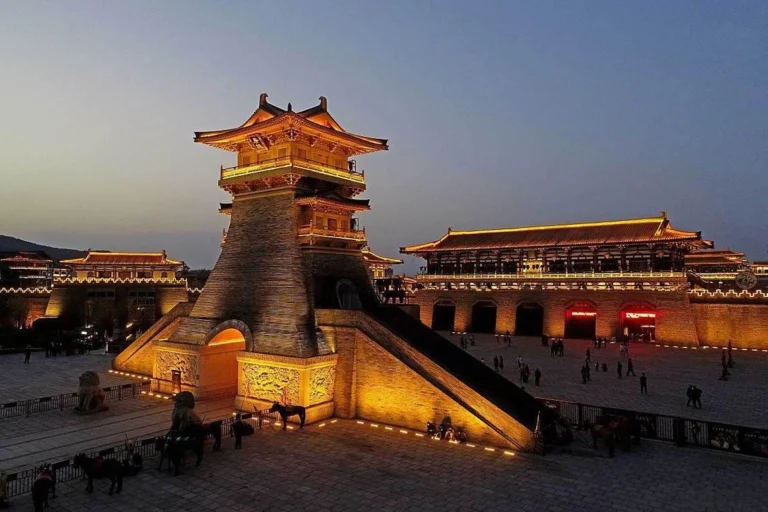
If you only do one thing after dark, make it this. A ~2 km pedestrian spine running from the Big Wild Goose Pagoda to Qujiang, Datang Everbright City recreates Tang imperial grandeur in neon: towering gateways, costumed performers, statue-lined avenues, and the famous “tumbler girl” (不倒翁小姐姐) interaction that goes viral every season. It’s free, it’s walkable, and it captures modern Xi’an better than any museum.
Best between 20:00 and 22:00, when the performances peak and the crowds (yes, there are many) create the spectacle. Pair it with the Big Wild Goose Pagoda fountain show a short walk north. Eat beforehand — the street snacks are pricey; the atmosphere is the product.
Insider tip: The “tumbler girl” and big stage shows run on a published schedule that shifts by season. Ask your hotel for that night’s times, then arrive 15 minutes early to actually see past the phones.
Xi’an Food — Where Locals Actually Eat
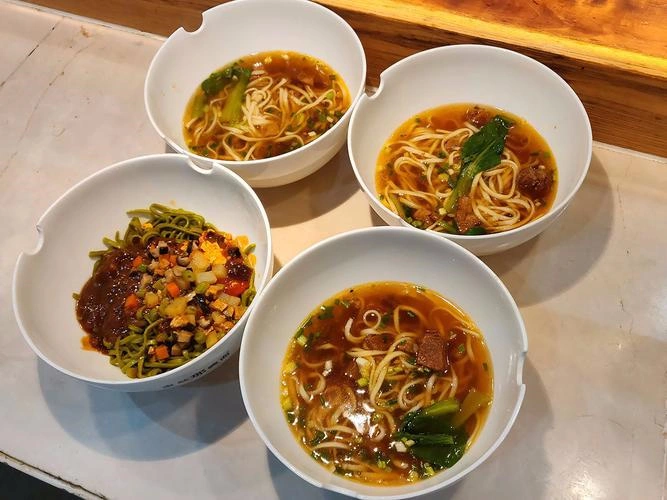
Visiting Xi’an isn’t just about sightseeing—the food is the real highlight. Xi’an cuisine centers on noodle dishes and features bold flavors, heavily influenced by Silk Road culture. The following are culinary experiences you simply can’t miss when planning your “Things To Do In Xi’an”.
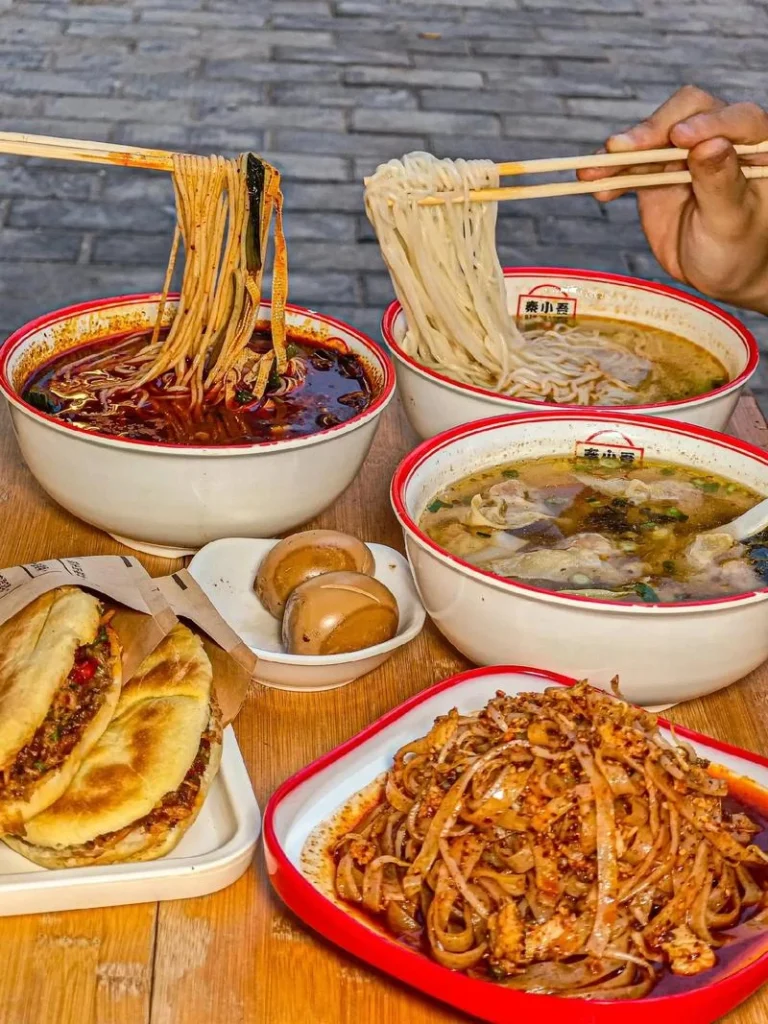
roujiamo: often called the “Chinese hamburger”—though it’s nothing like a hamburger at all. A crispy, toasted white bun is filled with braised pork that’s been stewed until tender and falling-apart. The juices soak into the bread, making every bite fragrant and satisfying. You can find great versions on Hui Muslim Street and in Yongxing Lane.
Yangrou Paomo: This dish has a particularly strong sense of ritual—you’re served a bowl of soup and a piece of flatbread. You have to tear the bread into small pieces yourself (the smaller, the better), then take it to the chef to have it doused with piping-hot lamb broth, served with glass noodles and lamb. The process of tearing the bread is an experience in itself. The soup is rich and the bread is chewy; a bowl of this in winter will warm you right to the core.
Liangpi: is a summer lifesaver: cold wheat noodles topped with chili oil, vinegar, garlic water, and shredded cucumber—tangy, spicy, and refreshing, costing just a few yuan a bowl.
Guantang Bao: are similar to xiaolongbao but with a Northwest-style filling; be careful when biting into them—sip the broth first, then enjoy the meat filling. Sour and spicy dumplings are tangy and appetizing, offering an authentic Shaanxi flavor. If you’re craving something sweet, try a serving of sesame cold rice cake—chilled glutinous rice wrapped in sesame paste, with a light, sweet flavor that isn’t cloying.
Where locals really eat (the differentiator): The Muslim Quarter is great once, but Xi’an residents mostly avoid it for daily food. Three better bets:
- Yongxing Fang (永兴坊) — cleaner, government-curated Shaanxi snacks from across the province; try the shuai wan jiu (break-the-bowl liquor ritual) and Zichang paper-wrapped pancakes.
- Local huimin side streets off the main Muslim Quarter drag — walk one block away from the Drum Tower and prices drop 30–50%.
- Qujiang / Xiaozhai for modern Shaanxi-cuisine restaurants with seats, A/C, and menus you can read.
Practical Information
Best Time to Visit
Spring (March to May) and fall (September to November) are the best seasons to visit, as the weather is pleasant and ideal for cycling along the city walls and exploring outdoor attractions. Summer in Xi’an is very hot, with temperatures frequently exceeding 35°C in July and August, making outdoor activities quite strenuous. Winter is cold but less crowded, which actually makes visiting attractions like the Terracotta Army a better experience. Try to avoid the Spring Festival holiday and the National Day holiday in the first week of October, as all attractions are packed with tourists during those times.
How to Secure Tickets
Free tickets for the Shaanxi History Museum can be reserved through the official WeChat public account. Tickets are released a few days in advance, so you’ll need to act fast. If you can’t get them, buy a 30-yuan ticket for the “Treasures of the Tang Dynasty” exhibition—tickets are usually available. You can buy tickets for the Terracotta Army on-site, but lines are long during peak season, so it’s recommended to book online in advance. Tickets for the “Song of Everlasting Sorrow” performance at Huaqing Palace are in high demand from April to October, so book at least two to three days in advance.
Where to Stay for Convenience
The area near the Bell and Drum Towers is the most convenient—Hui Muslim Street is right outside your door, and the City Wall and the Bell and Drum Towers are within walking distance. There are plenty of hotel options available at various price points. If you’re looking for a better atmosphere, the Qujiang New District around the Big Wild Goose Pagoda is a great choice. It features beautiful night views, plenty of restaurants, and is close to both the Tang Dynasty Ever-Bright City and the Tang Dynasty Peony Garden.
What Most Guides Get Wrong About Xi’an
This is the part the copycat lists skip. Five corrections that will save you time, money, and disappointment:
Myth 1: “Spend a full day at the Terracotta Army.” True only if you linger at every exhibit. Strategically, 3–4 hours covers Pits 1–3 and the bronze chariots comfortably. Pair it with Huaqing the same day and you’ve done the east route by dinner.
Myth 2: “The Muslim Quarter is the best food in Xi’an.” It’s the most famous, not the best. Locals eat at Yongxing Fang and the side streets a block off the main drag — cheaper, cleaner, and more authentically Shaanxi.
Myth 3: “Fight for the free Shaanxi History Museum ticket.” The ¥30 Tang Treasures paid hall is quieter, cooler, and shows finer objects. Pay and enjoy instead of refreshing a WeChat page.
Myth 4: “The City Wall bike ride is great at noon.” Midday sun on 14 km of open brick is punishing. Sunset turns the same ride into the city’s best photo op. Time it 17:00–19:00.
Myth 5: “Xi’an is only about ancient history.” Its nightlife — Datang Everbright City, Qujiang’s bars, the fountain shows — is a top-tier reason to visit in its own right. Plan at least one night out.
Xi’an by Time of Day — Beat the Crowds
Most “things to do in Xi’an” articles list sights; few tell you the hour that makes or breaks each one. Use this as your daily clock:
| Time | Move | Why |
| 08:00–08:30 | Terracotta Army at opening | Beats the tour buses that arrive after 10:00 |
| 12:00–14:00 | Lunch + indoor sight (Shaanxi History Museum / Tang Treasures) | Avoids the harsh midday sun |
| 15:30–17:00 | City Wall bike ride | Sunset light, cooler air |
| 17:30–19:00 | Bell & Drum Towers / Big Wild Goose Pagoda (exterior) | Lit up after dark |
| 20:00–22:00 | Datang Everbright City + fountain show | Peak performances, best atmosphere |
Recommended Itineraries
One-Day Itinerary
City Highlights: In the morning, cycle along the City Wall, then visit the Big Wild Goose Pagoda and Ci’en Temple. Have lunch near the Big Wild Goose Pagoda, and in the afternoon, visit the Shaanxi History Museum (if you’ve secured a reservation) or explore the Bell and Drum Towers. In the evening, stroll through Hui Muslim Street while enjoying some street food, and watch the Big Wild Goose Pagoda fountain show . The pace is brisk but not rushed, covering all the core highlights of Xi’an’s must-see attractions.
Two-Day Itinerary
Day 1: Explore the Eastern Route: Head straight to the Terracotta Army in the morning for 3–4 hours, visit Huaqing Palace and Mount Li in the afternoon, and watch the “Song of Everlasting Sorrow” performance in the evening (seasonal).
Day 2: Stay in the city center: cycle along the city walls, visit the Big Wild Goose Pagoda, the Shaanxi History Museum, the Bell and Drum Towers, and Muslim Quarter; in the evening, take a stroll through Tang Dynasty Everbright City. Two days is just enough time to cover the highlights of Xi’an’s must-do activities without feeling rushed or exhausted.
Three-Day Itinerary (Add the Gaps)
Day 3: Mount Hua day trip (leave 07:30, back by evening) or, if you’d rather stay in town, Tang Paradise by day → Yongxing Fang for food → Datang Everbright City → a Qujiang bar. This is the day that turns a standard trip into the one you tell stories about.
FAQ
Xi’an is a city that captivates you the more you get to know it. The grandeur of the Terracotta Army, the breeze along the city walls, the lively atmosphere of Hui Muslim Street, and the lights of Tang Dynasty Everbright City… You have to be there in person to truly experience each of these. As you plan your 2026 trip to Xi’an, start by booking tickets for the Shaanxi History Museum and the Terracotta Army, then set aside some time to wander aimlessly—the best experiences in this city are often the ones you didn’t plan for.