Xi’an Delicious Food: How the Silk Road Shaped Its Flavors
- Where Does Xi'an's Flavor Come From: A Millennium-Long Fusion of the Silk Road and Halal Cuisine
- Don’t Just Stick to Beiyuanmen: Five Must-Visit Alleys in the Hui Quarter
- 12 Must-Try Dishes: From Roujiamo to Yangrou Paomo
- How Does Xi'an Cuisine Differ from Sichuan and Cantonese Cuisine? A Chart That Explains It All
- How Much Will It Cost? The Real Per-Person Budget for 2026
- Eat Like a Local: The Art of Breaking Steamed Bread and Tips for Newcomers
- FAQ
- In Closing
Before coming to Xi’an, I thought roujiamo was just a Chinese hamburger, and that chili oil was the only flavor it had. It wasn’t until I spent an afternoon tearing apart buns on Hui Muslim Street that I realized this city has kneaded over a thousand years of Silk Road history into its dough. If you’re searching for “what to eat in Xi’an” or looking for a truly authentic guide to the Xi’an Muslim Street, this guide to Xi’an delicious food is here to tell you: Xi’an’s culinary delights aren’t limited to the main street near the tourist attractions—they’re a trail of flavors that has wafted all the way from the eastern end of the Silk Road to the present day. In addition to “what to eat,” I’ll also lay out the real expenses for the question everyone cares about most: “how much does food cost in Xi’an.” To systematically explore and understand Xi’an delicious food, the list and expense breakdown below are all you need.
Where Does Xi’an’s Flavor Come From: A Millennium-Long Fusion of the Silk Road and Halal Cuisine
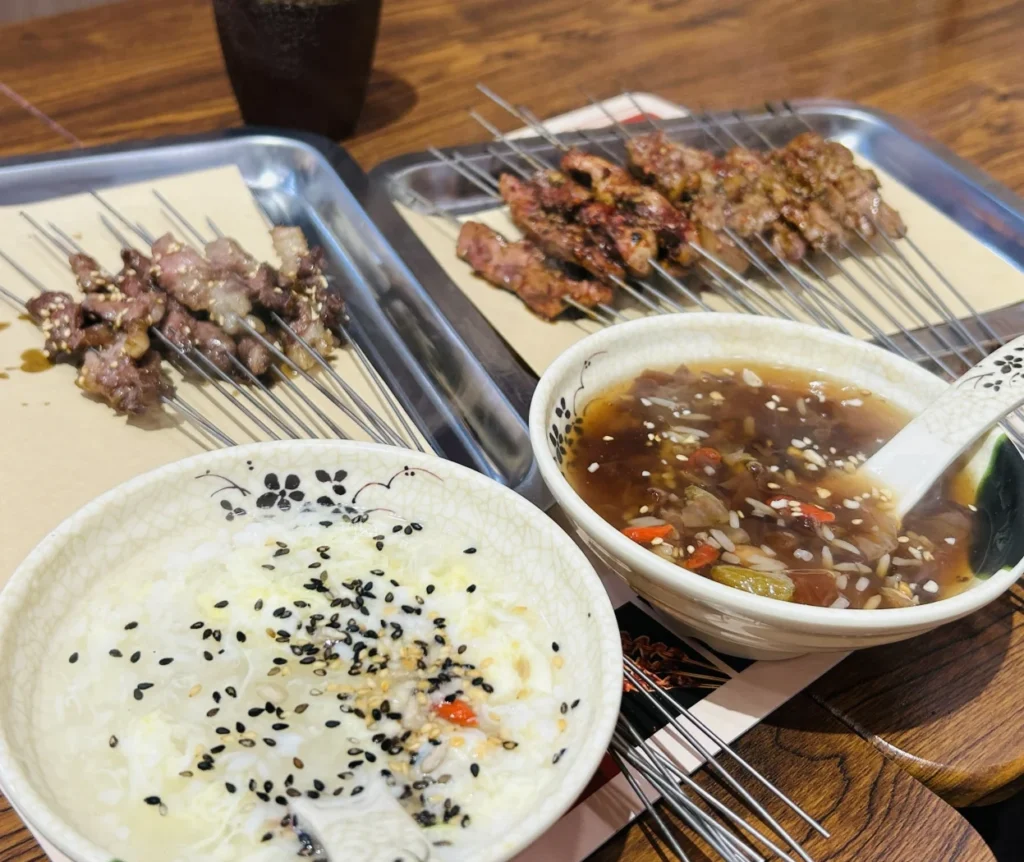
When many people eat Xi’an delicious food, they only notice the cumin and chili oil filling their mouths, without realizing that these two ingredients are themselves “imported.” Cumin traveled eastward along the Silk Road from the Western Regions, while chili peppers didn’t arrive from the Americas until as late as the Ming Dynasty; they met the Central Plains’ noodles, beef, and mutton in Chang’an, and were then reinterpreted by the Hui community according to Islamic dietary laws, eventually evolving into what we know today. Xi’an’s Hui Muslim Street has been a stopping point for merchants and travelers from the Western Regions since the Tang Dynasty. The oldest surviving mosque was built in 1278, and the more than 20,000 Hui residents in the community have turned “halal” into a culinary belief—which explains why the answer to “Is the food in Xi’an’s Muslim Quarter halal?” is a resounding yes: Hui Street and the entire Hui Quarter are almost 100 percent halal, and pork and pork products are nowhere to be found. For example, the grilled lamb skewers sold on the street and the naan-baking techniques originating from Central Asia both carry distinct Western Regions influences; even the bowl of hulatang that Xi’an locals enjoy for breakfast is often traced back to the spicy soups of the Hui people. The Silk Road was not merely a trade route; it was also a conveyor belt that carried flavors all the way from Samarkand to Chang’an. (For a more in-depth exploration of famous halal dishes, see “10 Halal Dishes from Xi’an’s Muslim Quarter.”) Only by understanding this connection can you truly appreciate Xi’an’s delicious food and grasp the chapter of world history behind it.
Don’t Just Stick to Beiyuanmen: Five Must-Visit Alleys in the Hui Quarter
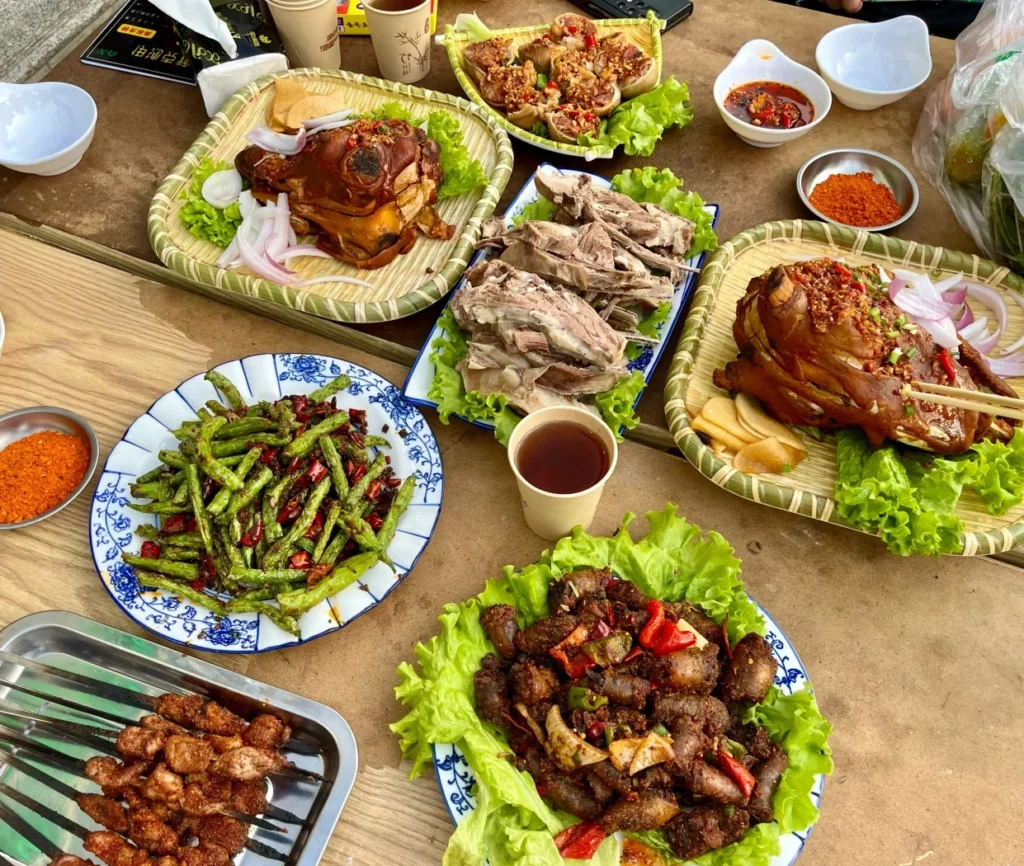
A reliable Xi’an local food guide will break down Xi’an’s delicious cuisine into two categories: “main streets for the hustle and bustle, alleys for the real flavors.” Before discussing whether the food in the Xi’an Muslim Quarter is halal, let’s first clarify the boundaries of the Hui Quarter: it refers to the Hui ethnic enclave around Beiyuanmen and Dapi Yuan, where halal cuisine is the norm. Almost every Xi’an Muslim Quarter food guide directs you straight to Beiyuanmen’s main street, but after eating there, locals head straight into the alleys. A true Xi’an local food guide should highlight five golden alleys: Dapi Yuan (packed with old-school eateries and the birthplace of Jia San’s soup-filled buns), Sajin Bridge (the soul of the morning market, where spicy soup pairs perfectly with a steamed bun filled with cured beef), Xiyangshi (home to a whole row of Dingjia’s crispy pork), Miaohou Street, and Xuexi Alley (the quietest, hiding the most authentic home-style dishes of the Muslim Quarter) . It’s not until after 6:00 p.m. that the alleys truly come to life—the crackling of stoves, the sizzle of cast-iron griddles, and the constant chorus of greetings create a vibrant, down-to-earth atmosphere that the main streets can never replicate.
Prices in these alleys are often only half what you’d pay on the main street—where you’ll frequently encounter scams like “duck meat passed off as lamb” or “pomegranate juice diluted with water”—while the old shops in the alleys have thrived for decades on the backs of word-of-mouth recommendations from the neighborhood. So the essence of this Xi’an Muslim Quarter Food Guide is this: don’t just trust the signs on the main street. Head deeper into the alleys, and when you catch the scent of cumin, turn in—you’ll know you’re on the right track.
12 Must-Try Dishes: From Roujiamo to Yangrou Paomo
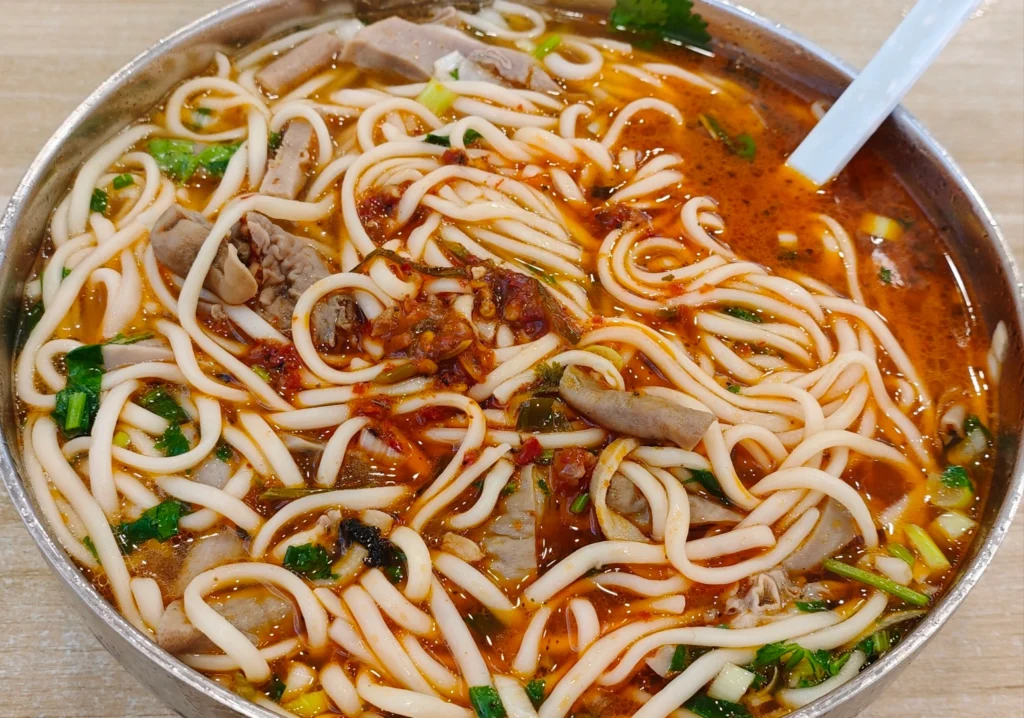
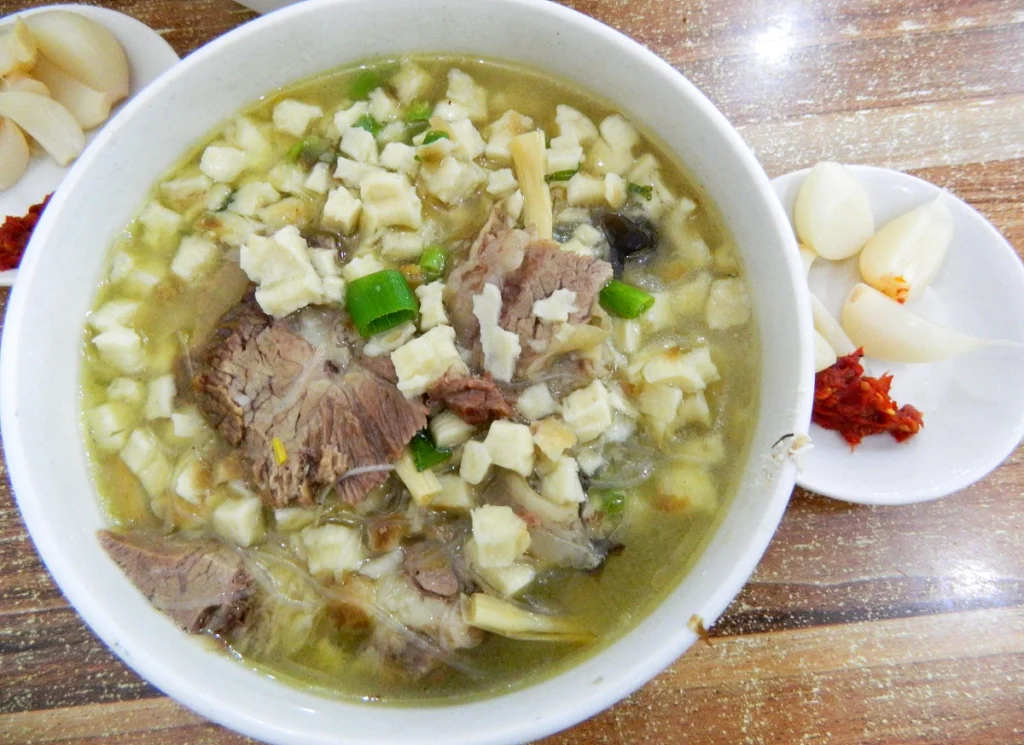
When it comes to the best food to eat in Xi’an, I’ve put together a quick reference list for first-time visitors. Before I dive into this list of the best food to eat in Xi’an, let me just say this: the flavor profile of Xi’an cuisine is essentially “noodles + lamb + vinegar.” The 12 dishes below form the bedrock of Xi’an’s delicious cuisine—and they’re the first names you should jot down when searching for “what to eat in Xi’an.”
| Must-Try | Price per Person | Where to Eat |
| Roujiamo (with braised pork) | ¥8–12 | Lao Bai Jia and Fan Ji in the alley |
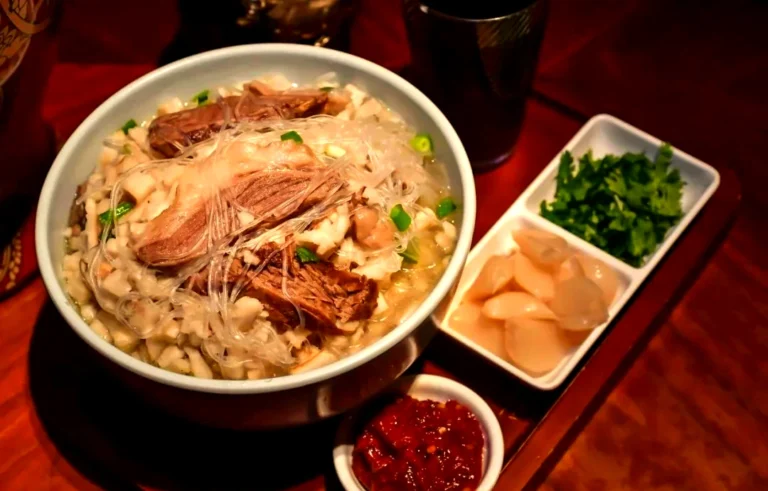
| Lamb Paomo | ¥30–45 | Tongshengxiang, Lao Mijia (break the bread yourself) |
| Biangbiang Noodles | ¥18–28 | Any restaurant that advertises “hand-pulled noodles” |
| Liangpi (with sesame paste / vinegar sauce) | ¥8–12 | Any long-established restaurant in the Hui Quarter |
| Jia San Soup Dumplings | ¥20–30 | Jia San, Dipi Yuan |
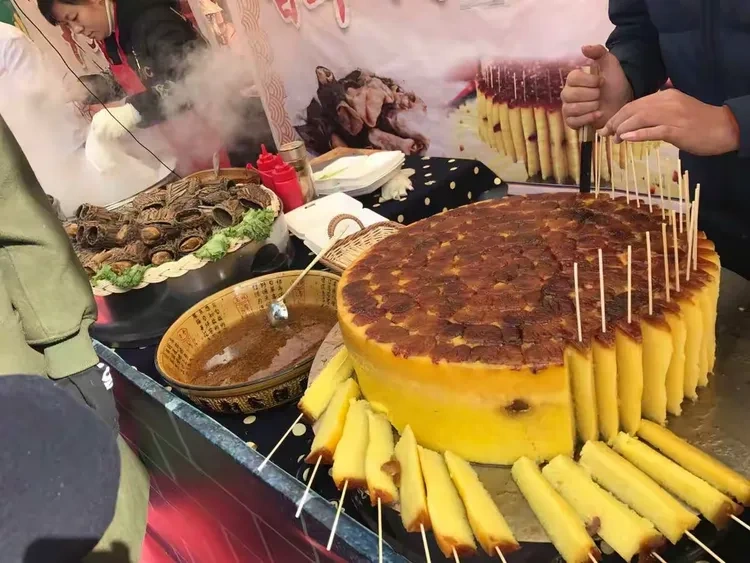
| Zenggao | ¥6–10 | Freshly steamed early in the morning in the Hui Quarter |
| Persimmon Cakes | ¥5–8 | Autumn and Winter Special, Freshly Fried on Hui Muslim Street |
| Grilled Lamb Skewers | ¥3–6 per skewer | Sajinqiao Night Market |
| Spicy Soup | ¥8–12 | Sajinqiao Morning Market |
| Sour Soup Dumplings | ¥15–25 | Dapiyuan |
| Mirror Cake / Honeyed Dates | ¥5 | Xiyang Market |
| Bingfeng Soda | ¥3 | Available citywide—the drink that brings joy to Xi’an residents |
If I had to recommend just three of the best foods to eat in Xi’an, I’d choose roujiamo, yangrou paomo, and biangbiang noodles—they perfectly encapsulate the three essential elements of Xi’an cuisine: noodles, lamb, and spice.
How Does Xi’an Cuisine Differ from Sichuan and Cantonese Cuisine? A Chart That Explains It All
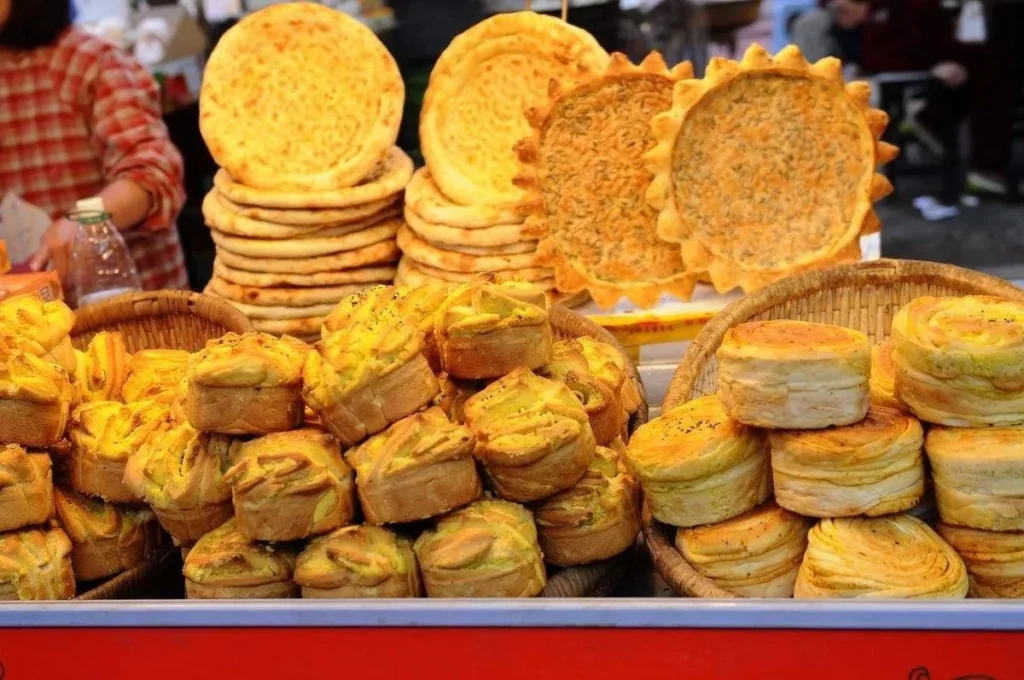
Why is Xi’an cuisine not spicy but fragrant, and not umami-rich but hearty? It becomes clear when you place “Xi’an delicious food” within the national culinary landscape:
| Dimension | Xi’an | Sichuan Cuisine | Cantonese Cuisine |
| Main Staples | Noodles | Rice | Rice |
| Protein | Beef and Lamb | Pork / Fish | Seafood |
| Flavor Base | Vinegar + Cumin + Chili Oil | Doubanjiang + Sichuan Peppercorns | Fermented Black Beans + Ginger and Green Onions |
| Core Cooking Techniques | Boiling / Steeping / Pan-frying / Tossing | Stir-frying / Sautéing | Steaming / Blanching |
| Spice Profiles | Imported from the Western Regions | Local Spicy and Numbing Flavors | Minimalist Flavor Enhancement |
In a nutshell: Xi’an cuisine is a “northwestern narrative of noodles and lamb,” which is fundamentally different from the “southeastern lyricism of water and freshness” found in Sichuan and Cantonese cuisines. This is also what makes Xi’an cuisine so uniquely irreplaceable among China’s regional cuisines.
How Much Will It Cost? The Real Per-Person Budget for 2026
Whenever someone asks, “How much does food cost in Xi’an?”, I don’t want to just reply, “It’s cheap.” Here’s the real breakdown: street snacks cost ¥5–15 each; local noodle shops and paomo restaurants run ¥25–55 per person; eating on the go along the main street of Hui Muslim Street costs about ¥60–100 per person; If you want to sit down at a restaurant and eat your fill, the cost depends on your budget. Backpackers can get by on ¥150–250 a day, while those seeking a more comfortable trip will find ¥300–450 enough to sample all the signature dishes. The best way to explore is to wander the alleys in the evening and wrap up the night with a sit-down meal of paomo at a restaurant—this lets you avoid the midday crowds while catching the peak cooking hours. Want to know the money-saving tips for “how much does food cost in Xi’an”? The answer is the same as always—explore the alleys. Compared to trendy restaurants that often cost over a hundred, Xi’an’s best value-for-money finds are hidden in the morning market at Sajin Bridge—and that’s probably the most charming aspect of Xi’an’s delicious food.
Eat Like a Local: The Art of Breaking Steamed Bread and Tips for Newcomers
There’s a secret code to enjoying Xi’an’s delicious food. Breaking steamed bread: the smaller the pieces, the more flavorful they are—local elders can break them into pieces as small as soybeans; for biangbiang noodles, watch the chef’s rhythm as he slaps the dough on the cutting board; and when eating roujiamo, hold it upright and bite into it while it’s hot so the juices don’t drip all over your hands. Five Tips for First-Timers: ① “Freshly sliced lamb” on the main street is often mixed with duck meat—stick to long-established shops with a halal sign; ② Ask if pomegranate juice and sour plum soup are freshly squeezed; ③ When ordering spice level, specify “mild” or “not spicy (bu la)”; otherwise, it’s assumed to be extremely spicy; ④ Don’t be afraid to tear the bread yourself when ordering paomo—machine-cut pieces are a cut below in texture; ⑤ Have small bills and change ready—many shops in the old alleys only accept cash. By the way, liangpi comes in two styles: sesame paste and vinegar sauce. The sesame paste version is rich, while the vinegar sauce version is refreshing—why not order both bowls on your first try? Once you’ve got these tips down, you’re well on your way to “eating like a Xi’an local.” Save this Xi’an local food guide and follow it on your next visit.
FAQ
In Closing
The flavor of Xi’an has never been just a single dish, but rather a journey—the Silk Road brought in cumin and faith, the Hui Muslim community made halal cuisine a part of daily life, and the noodles of the Central Plains blended it all into a warm, comforting whole. Next time someone asks, “What to eat in Xi’an?” don’t just toss them a “must-try” list. Lead them down into the alleys and let Xi’an’s delicious food tell this millennia-old story for you. Bring an empty stomach and some loose change—let’s go.