Xi’an Muslim Street Food: 10 Halal Dishes & 1,300 Years of History
- One Silk Road, a Millennium-Old Hui Quarter: The Cultural Roots of Xi'an Muslim Street Food
- Famous Dishes from Xi'an Muslim Street: 10 Must-Try Halal Specialties
- 1. Yangrou Paomo (Lamb Stew with Bread) — Xi'an's "Soul Bowl"
- 2. Roujiamo (Roujiamo) — The Past and Present of the "Chinese Hamburger"
- 3. Biangbiang Noodles—Noodles That Can’t Be Described in a Single Word
- 4. Liangpi (Cold Noodles) + Roujiamo—Xi'an's "Dynamic Duo"
- 5. Zenggao (Steamed Glutinous Rice Cake) — A Sweetness Steamed Over a Thousand Years
- 6. Hulatang (Spicy Meatball Soup) — A Morning Ritual for Xi'an Local
- 7. Dried Beef—Rich Flavor Developed Over Time
- 8. Jia San Soup Dumplings—A Surprise of Juicy Goodness in Every Bite
- 9. Persimmon Pies—The Taste of Autumn
- 10. Sour Plum Tea / Pomegranate Juice — The Perfect Drinks for Street Food Tours
- Xi'an Muslim Street Food Guide: A Practical Guide
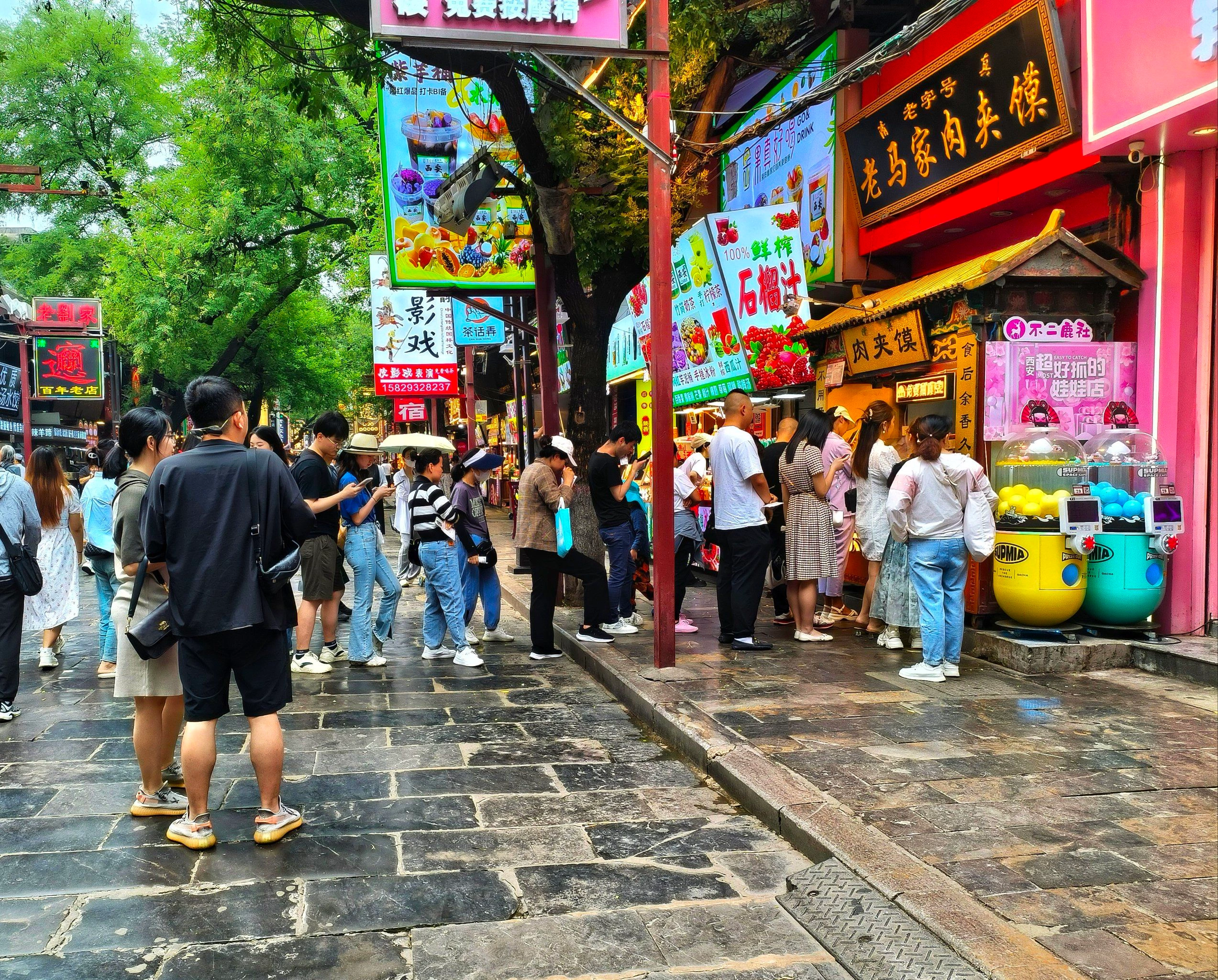
Walking along the stone-paved road north of Drum Tower, the air is filled with the smoky aroma of grilled lamb. Mixed with the sweet, sticky scent of steamed glutinous rice cakes, this is the heart of Xi’an Muslim street food—Hui Muslim Street. With a history spanning 1,300 years, more than 60,000 Muslim residents have lived here for generations. Over 300 varieties of halal snacks have emerged from these streets and alleys. From the spices brought by Silk Road caravans during the Tang Dynasty to the bustling atmosphere found in every nook and cranny today, Xi’an Muslim street food is not merely a feast for the taste buds, but a living history of halal culinary culture.
One Silk Road, a Millennium-Old Hui Quarter: The Cultural Roots of Xi’an Muslim Street Food
Where Did Hui Muslim Street Come From?
The history of Hui Muslim Street dates back to the Tang Dynasty (618–907). At that time, Chang’an was the world’s largest international metropolis. Arab and Persian merchants traveling along the Silk Road settled here. They brought with them the Islamic faith as well as culinary traditions centered on beef and lamb. This community was thus named “Hui Fang”—the neighborhood of the Hui people. Through the Song, Yuan, Ming, and Qing dynasties, Hui Fang continued to expand. Today, it has become a vast Muslim enclave comprising more than a dozen streets and alleys, including Beiyuanmen, Beiguangji Street, Xiyangshi, Dapi Yuan, and Sajin Bridge.
The Three Principles of Halal Cuisine
The essence of Xi’an Muslim street food lies in the concept of “halal.” The core rules of halal are simple: no pork, no blood, and no animals that have died naturally. All meat must be slaughtered in accordance with Islamic law. This means that the cuisine on Muslim Street features beef and lamb as the main ingredients. Combined with ingredients such as wheat flour, glutinous rice, and red dates, this creates a unique culinary system centered on noodles and beef or lamb. There is not a trace of pork to be found anywhere on the street. For Muslim travelers, this is the most reassuring culinary destination in the Xi’an Muslim street food guide.
Great Mosque: Understand the Culture Before Savoring the Cuisine
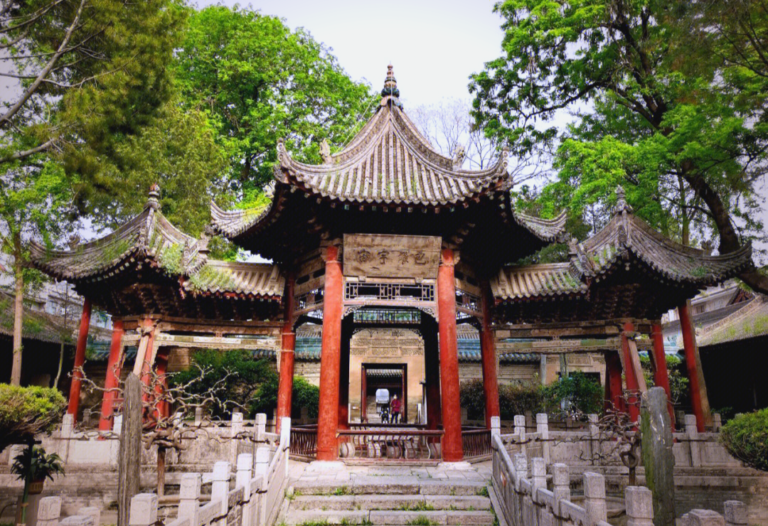
Beyond the culinary delights, Hui Muslim Street is home to a cultural landmark that is not to be missed. The Great Mosque of Huajue Alley was founded in 742 AD (the first year of the Tianbao era of the Tang Dynasty). It is one of the oldest and largest mosques in China. Unlike mosques in the Middle East, the Great Mosque features traditional Chinese garden-style architecture. Its upturned eaves, bracket systems, and inscribed steles perfectly illustrate the fusion of Islamic culture and Chinese tradition. Please note the dress code for visitors: avoid sleeveless tops; long sleeves are recommended.
Famous Dishes from Xi’an Muslim Street: 10 Must-Try Halal Specialties
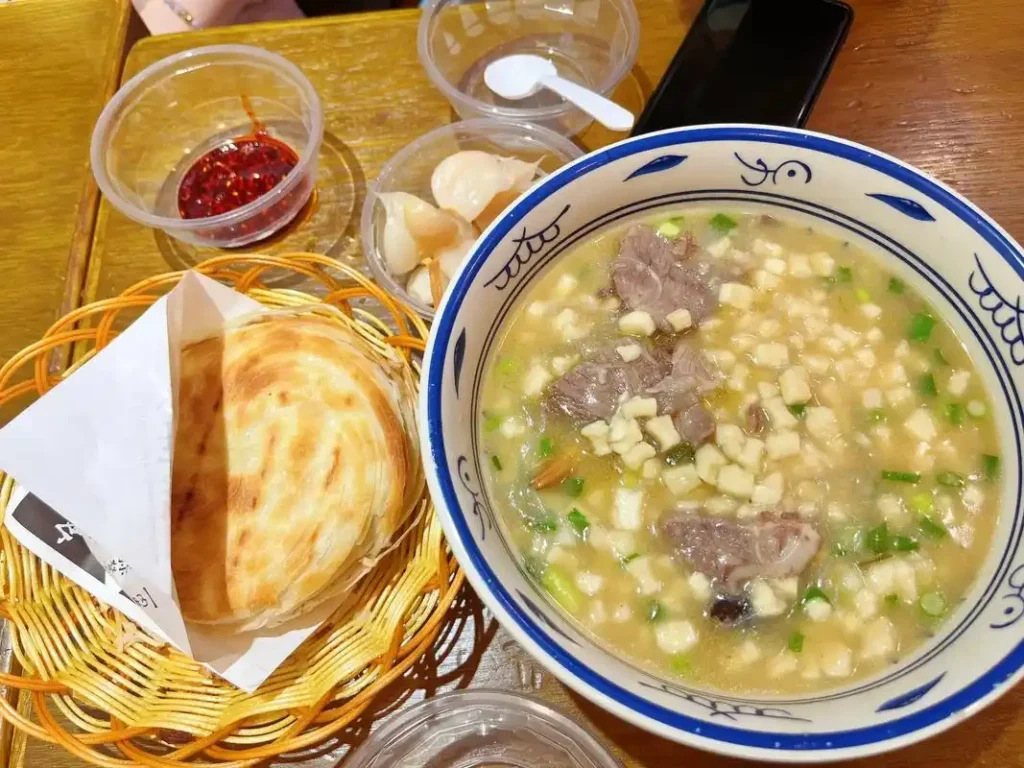
1. Yangrou Paomo (Lamb Stew with Bread) — Xi’an’s “Soul Bowl”
Yangrou Paomo is undoubtedly the No. 1 dish among the famous dishes of Xi’an Muslim Street. Eating it is a ritualistic experience. First, tear the steamed bread into small pieces about the size of soybeans with your own hands. The smaller the better, as this allows the bread to fully absorb the rich flavor of the lamb broth. Then hand the torn pieces to the chef. The dish is served with piping hot lamb broth, accompanied by glass noodles, wood ear mushrooms, and daylily buds. Recommended restaurants: Yizhenlou (Dapiyuan), Lao Sunjia. (Source: chinahighlights.com)
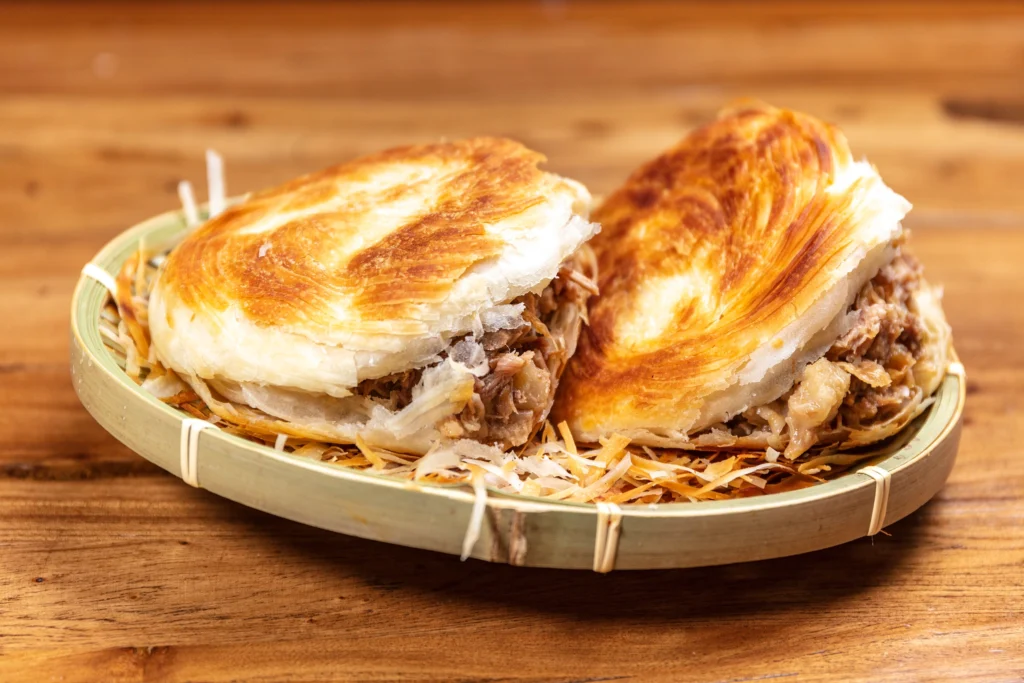
2. Roujiamo (Roujiamo) — The Past and Present of the “Chinese Hamburger”
When American businessman Jason Wang opened more than a dozen “Xi’an Famous Foods” locations in New York, roujiamo officially went global. The roujiamo served on Hui Muslim Street features tender, braised cured beef sandwiched between a freshly baked flatbread. Crispy on the outside and tender on the inside, it bursts with juicy flavor with every bite. Unlike a hamburger, the flatbread for roujiamo is baked fresh, carrying the aroma of charcoal.
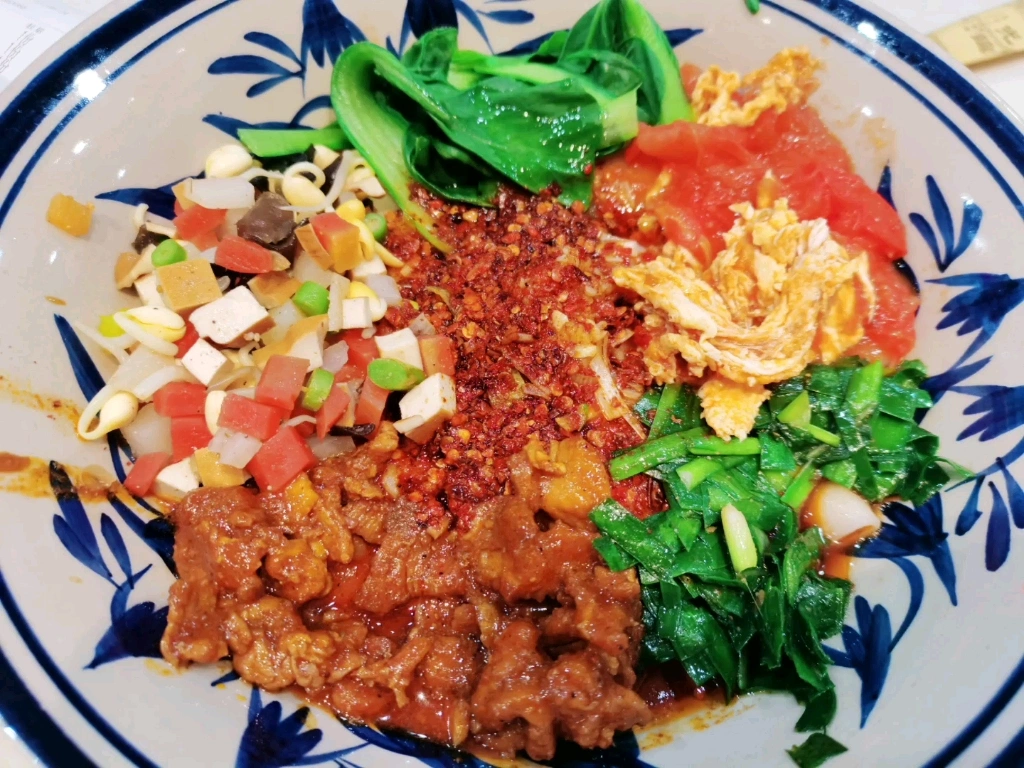
3. Biangbiang Noodles—Noodles That Can’t Be Described in a Single Word
The name “Biangbiang Noodles” comes from the “biang biang” sound made when the noodles are slapped against the cutting board. Locals even created a Chinese character for this sound—with 56 strokes, it may be the character with the most strokes in the Chinese language. The noodles are about 1 meter long and 3 centimeters wide. Served in a bowl bigger than your face, tossed with chili oil, vinegar, and minced meat, it’s a real treat! This is the most visually striking dish among Xi’an’s Muslim street foods.
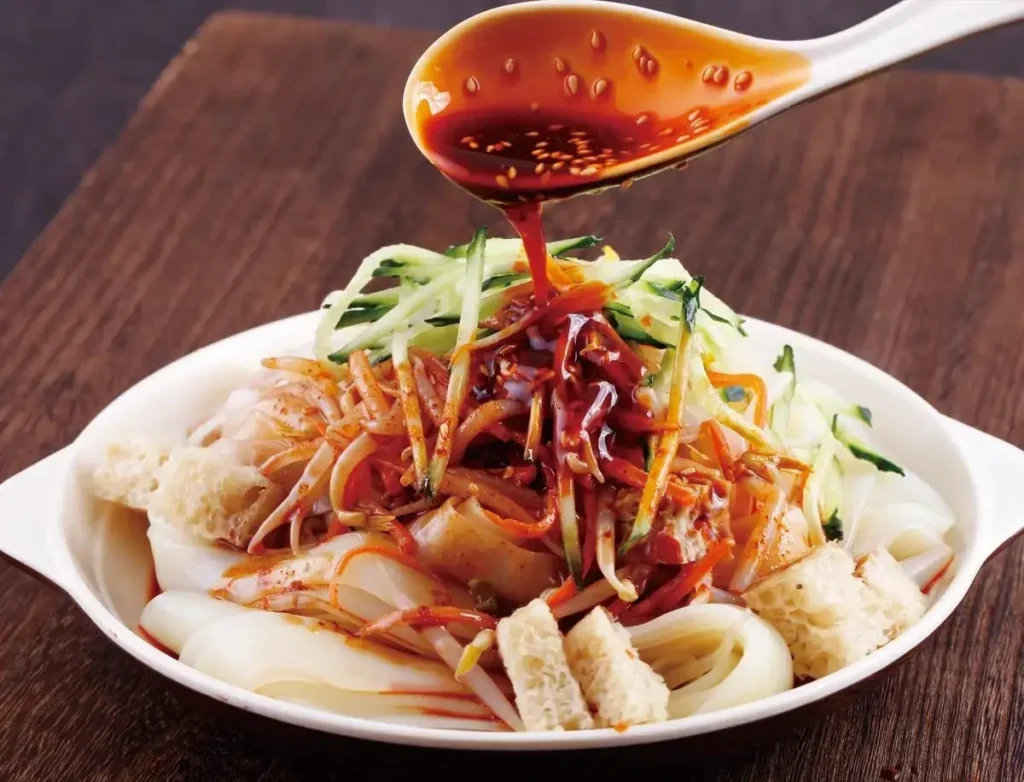
4. Liangpi (Cold Noodles) + Roujiamo—Xi’an’s “Dynamic Duo”
Shiny white liangpi, bright green diced celery, and vibrant red chili oil. The colors of the liangpi alone are enough to whet your appetite. On Hui Muslim Street, liangpi and roujiamo paired with a bottle of Bingfeng soda make up the classic “Xi’an meal.” Recommended: Sheng Zhiwang Sesame Paste Liangpi Shop—their sesame paste liangpi offers a distinct flavor profile.
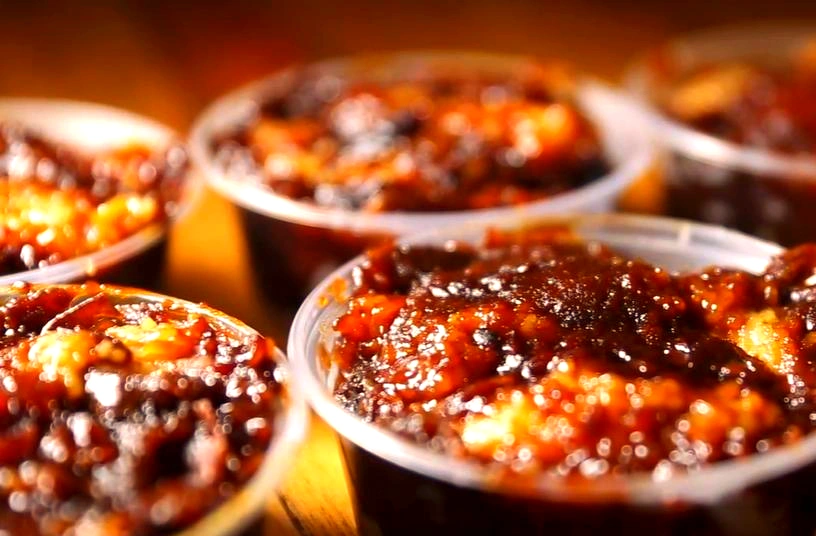
5. Zenggao (Steamed Glutinous Rice Cake) — A Sweetness Steamed Over a Thousand Years
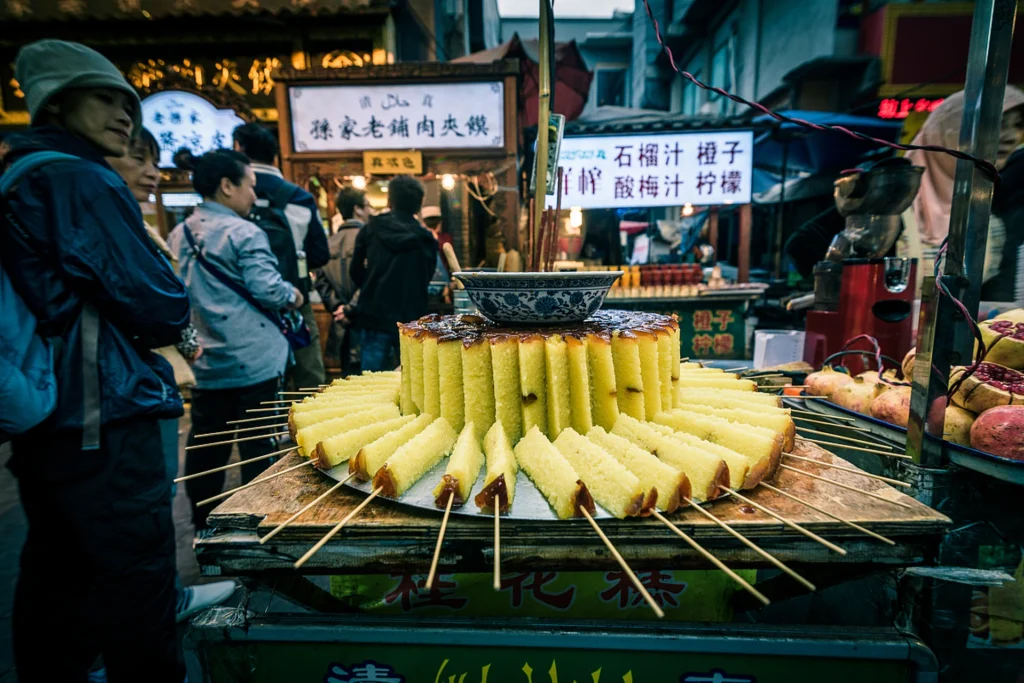
Zenggao is made by steaming glutinous rice and red dates in an ancient “zeng” (steamer). It is one of the most traditional desserts among the famous dishes of Xi’an Muslim Street. The glutinous rice is soft and chewy, the red dates are sweet and fragrant, and a sprinkle of osmanthus flowers adds an unforgettable aftertaste. Recommended: Southeast Asian Zenggao (Xiyangshi), Ma Wenzhang Fat Man’s Zenggao (Sajinqiao).
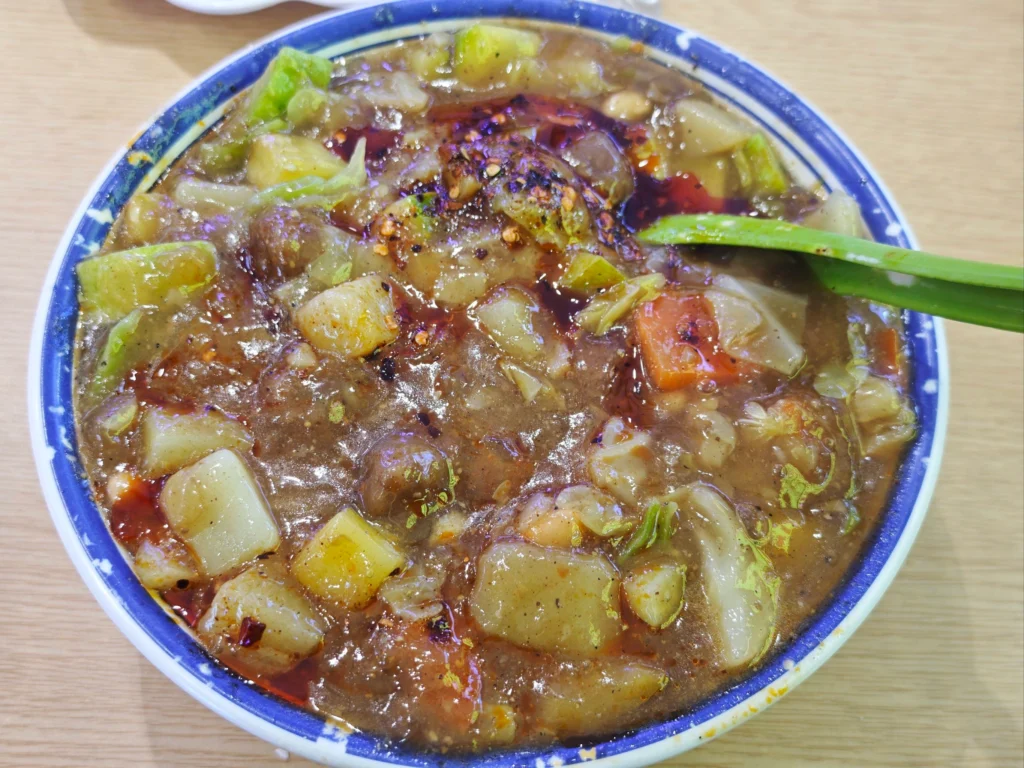
6. Hulatang (Spicy Meatball Soup) — A Morning Ritual for Xi’an Local
If you want to experience the most authentic breakfast on the Xi’an Muslim Street Food Guide, Hulatang is the way to go. Beef meatballs, potatoes, carrots, and napa cabbage simmer in a rich, peppery broth. Paired with a steamed bun stuffed with cured beef, this is how Xi’an locals kick off their day. Shajinqiao is a popular spot for locals to grab breakfast, and it’s much more affordable than the main street.
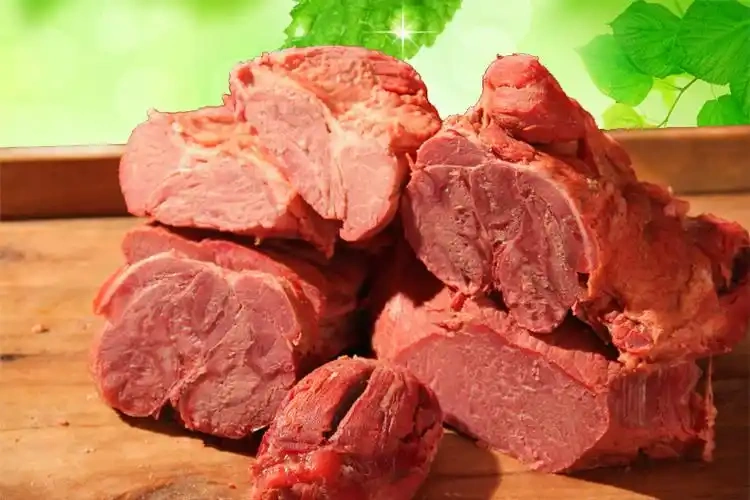
7. Dried Beef—Rich Flavor Developed Over Time
Dried beef is one of the signature dishes of the Hui Quarter. Carefully selected beef is salt-cured, sun-dried, and braised. It’s delicious whether thinly sliced and served in a bun or eaten on its own. Recommended: Xi Hulanan Dried Beef (North Guangji Street)—locals swear by this place.
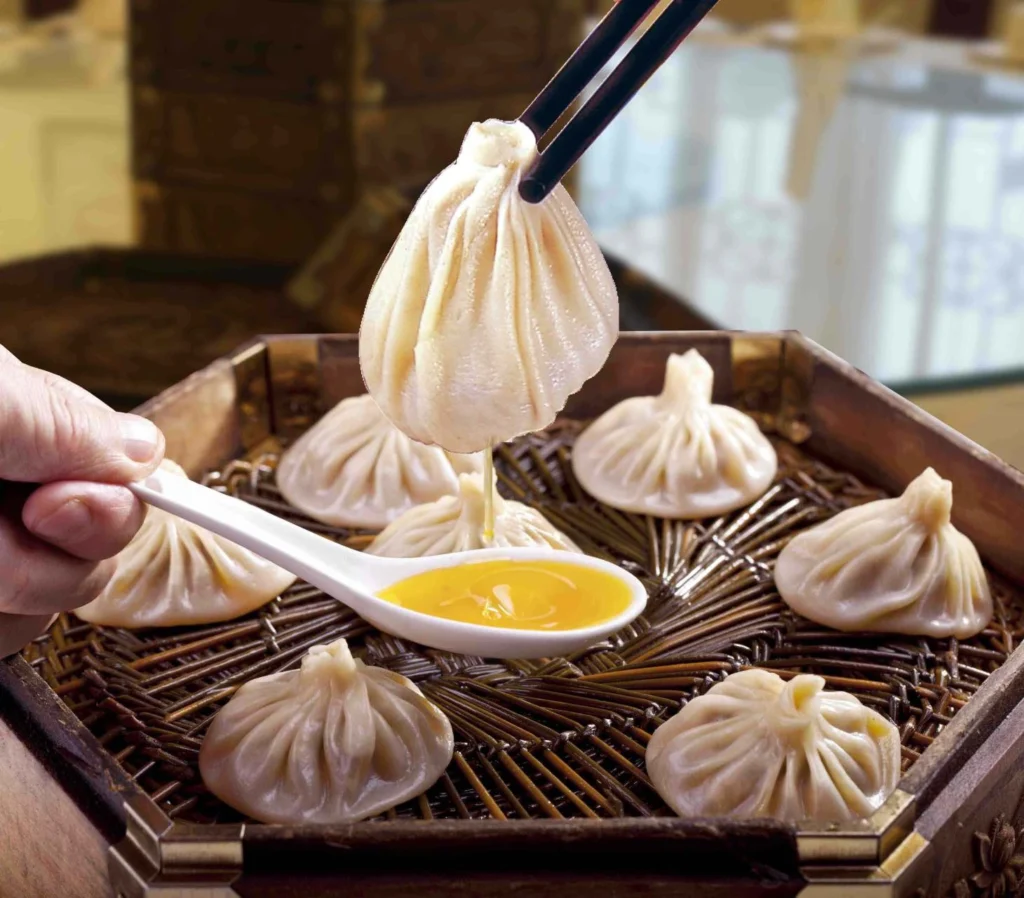
8. Jia San Soup Dumplings—A Surprise of Juicy Goodness in Every Bite
The essence of soup dumplings lies in the technique of “biting a hole first, then sipping the broth.” Gently bite into the dough, and the savory beef broth gushes out. Dip it in vinegar and chili oil for a rich, layered flavor. Jia San Soup Dumplings is the most famous soup dumpling shop in the Muslim Quarter, located right on Xiyangshi Street.
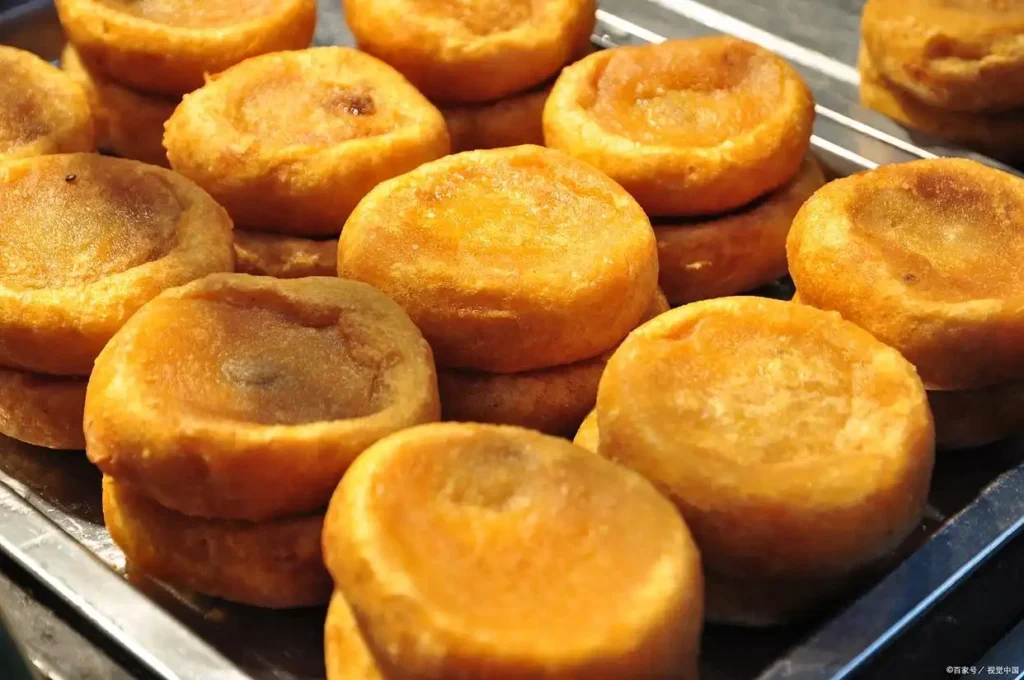
9. Persimmon Pies—The Taste of Autumn
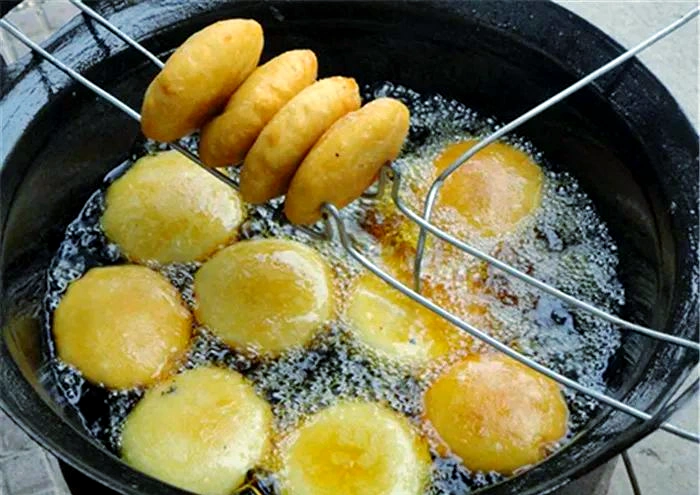
Every autumn, when the Huojing persimmons ripen, long lines form at the persimmon pie stalls on Hui Muslim Street. The pies are made with a crust of persimmon and flour, filled with walnuts, sesame seeds, rose jam, and other ingredients, and pan-fried until golden brown on both sides. Recommended: Lao Xu’s Persimmon Cakes (North Guangji Street), Liu Ming’s Persimmon Pancakes (Sajinqiao)
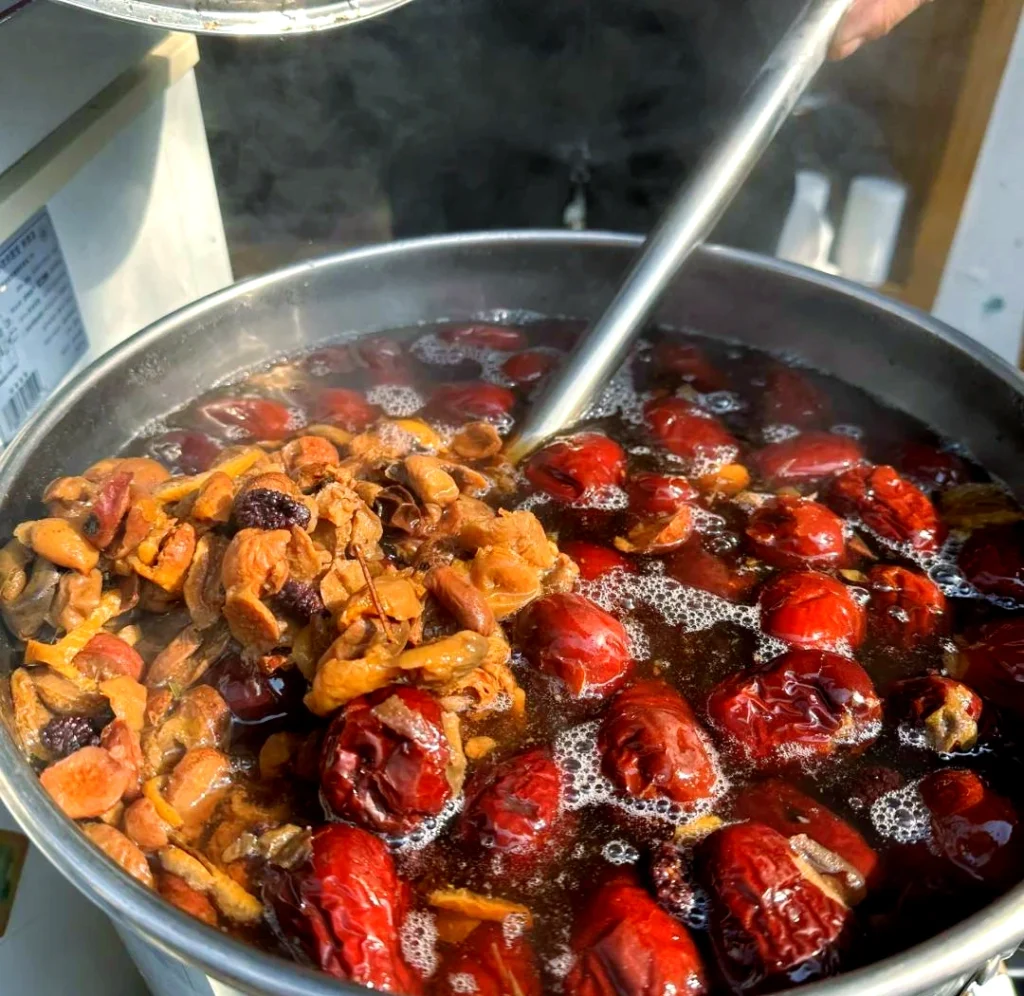
10. Sour Plum Tea / Pomegranate Juice — The Perfect Drinks for Street Food Tours
When you’re eating on the go, you’ll definitely want a drink in hand. The sour plum tea on Hui Muslim Street is made by simmering black plums, hawthorn berries, and osmanthus flowers. It’s refreshingly cool and sweet-and-sour—the perfect way to cut through the richness of the food. The pomegranate juice is freshly squeezed from Lintong pomegranates and boasts a vibrant, tempting red color. Recommended: Grandma Hua’s Plum Tea (Dapiyuan).
Xi’an Muslim Street Food Guide: A Practical Guide
How to Get There?
The subway is the most convenient option. Take Subway Line 2 or Line 6 to Bell Tower Station. Exit at Exit B and walk west for about 6 minutes; pass by the Drum Tower, and you’ll arrive at Beiyuanmen Main Street. If you want to avoid the crowds and head straight to the local area, we recommend taking Line 6 to Guangji Street Station. Enter the heart of the Muslim Quarter from North Guangji Street.
When should I go?
Hui Muslim Street is open all day, but most shops operate from around 8:00 AM to 11:00 PM. Before 10:00 AM, there are fewer visitors, making it a great time to take photos at a leisurely pace. In the evening, after sunset, the lights come on, creating the liveliest and most atmospheric atmosphere—though it’s also the busiest time. We recommend setting aside 2–3 hours for your visit.
Main Street vs. Side Streets: Which to Choose?
Beiyuanmen Main Street is highly commercialized, with a high concentration of stalls but relatively high prices. The side streets and alleys—such as Beiguangji Street, Xiyangshi, Dapi Yuan, and Sajinqiao—are where the true essence of Xi’an Muslim street food lies. You’ll find the same delicious food at more affordable prices and with a more authentic flavor.
What should you keep in mind?
Most snacks cost between 5 and 15 yuan, and both cash and mobile payments are accepted. Remember to haggle when buying souvenirs. If you plan to visit the Grand Mosque, be aware of the dress code: long sleeves and long pants are recommended. Most vendors don’t speak much English, but they all have calculators, so just look at the numbers.
Walking through the Hui Quarter, which dates back 1,300 years, every bite of Xi’an Muslim street food tells a story of the Silk Road. From the ritual of tearing the bread by hand for Yangrou Paomo to the aroma of charcoal-grilled bread in Roujiamo. From the traditional steaming of zenggao to the lingering pepper notes of hulatang. These famous Xi’an Muslim street dishes are more than just food; they are the living cultural code of a millennium-old Muslim community. Next time you visit Xi’an, don’t just snap photos on the main streets. Venture into the back alleys—that’s where the true treasures of the Xi’an Muslim street food guide lie.